Persona Marketing in The Andromeda Era

Passionate content and search marketer aiming to bring great products front and center. When not hunched over my keyboard, you will find me in a city running a race, cycling or simply enjoying my life with a book in hand.
Meta’s Andromeda doesn’t just “improve automation.” It upgrades the retrieval layer – the moment Meta decides which ads even make the shortlist. And when that shortlist changes, so does the playbook: performance starts hinging less on tiny targeting tweaks inside Advantage+ and more on the inputs the system can learn from – your creative coverage and your signals.
Meanwhile, the bar for relevance keeps climbing, and the rewards for getting personalization right keep stacking over time. That’s why persona marketing is shifting from a nice-to-have brand exercise into a practical performance lever: it gives you a repeatable way to generate multiple strong angles that Andromeda can match to different people, earlier in the decision process.
Meta’s move is the platform signal. McKinsey’s research data is the business case. The takeaway is the same: if personalization compounds, then creative variety (grounded in real buyer personas) becomes one of the highest-ROI levers you can pull.
TL;DR
- Meta’s Andromeda makes the retrieval stage smarter, so your ads win or lose earlier based on creative coverage and signals – not micro-targeting tweaks.
- As relevance expectations rise, personalization becomes a compounding performance advantage, not just a nice-to-have.
- Persona marketing creates multiple coherent angles for different decision-makers inside the same ICP, giving automation better options to match and learn from.
- Effective personas are built from real buyer evidence and only matter if they directly change briefs, hooks, objections, proof points, and landing pages.
- Treat personas as hypotheses: keep fields practical, validate fast, and refresh regularly as offers, objections, and channels shift.
- Operationalize with a loop that turns personas into message maps and weekly creative batches, then feeds winners back into the next cycle.
What Persona Marketing Is (And What It Isn’t)
Persona marketing is the practice of building messaging and creative around buyer personas. These are research-backed representations of real buyers’ goals, pain points, and behaviors.
The point is to get specific about what different decision-makers are trying to achieve, so your ads and landing pages can speak to their reality instead of a generic audience blob. A practical definition of a buyer persona treats it as a tool for creating clearer, more relevant messaging.
What it isn’t: a static slide deck that gets made once, shared once, and never changes what you actually ship. Personas only earn their keep when they show up in briefs, hooks, objections, proof points, landing page copy, and the weekly creative plan. If the persona doesn’t change what you test, it’s not an operating system, it’s documentation, which is why a structured guide will help you focus on turning persona insights into usable marketing inputs.
Personas also solve a different problem than targeting. An ICP tells you which companies you want to win, while personas help you communicate to the different people inside those companies who care about different outcomes and risks.

Persona Marketing Best Practices (the Non-Negotiables)
When using persona marketing, there are certain things you should do regardless of the situation.
The first non-negotiable is evidence. Personas built from internal assumptions tend to produce generic messaging, because they reflect what your team hopes is true instead of what buyers actually say and do during a real decision.
Start with a consistent research method that surfaces buying context, not just preferences. The Buyer Persona Institute’s interview approach is a strong benchmark because it’s designed to uncover the mindset shifts, tradeoffs, and triggers that show up later as objections and “why now” moments in ads.
Next, keep the persona fields practical, so they translate into briefs and scripts. A “Five Rings” style structure like priority initiatives, success factors, barriers, journey, and decision criteria forces you to document the parts that actually change messaging and proof, while cutting the fluff.
Finally, treat personas as hypotheses that need validation and refresh. A lightweight testing cadence works well in practice because it builds in feedback loops as offers change, new objections emerge, and channels evolve.
To sum it up – build personas from real buyer evidence, document only decision-driving fields, and refresh them often enough that your creative stays aligned with current motivations and risks.
Why Andromeda Changes Persona Marketing
Andromeda is important because it upgrades the retrieval stage, which is the step that decides which ads are even eligible to compete for delivery. When retrieval gets smarter, the platform can do more of the matching earlier, so performance depends more on your inputs and creative coverage than on constant manual audience tinkering.
In practical terms, this pushes you to think in persona angles. If you only have one “best” message, you force the system to stretch that message across different motivations, and it usually breaks on relevance and conversion intent. Persona marketing gives you multiple coherent messages that still fit your ICP, so the system has more high-quality options to match to different buyers as it learns. Meta’s Advantage+ audience approach reflects this shift toward broader delivery where your job is to supply better creative inputs.
It also raises the bar on creative variation that is genuinely different, not the same ad with a new headline. Personas help you vary the promise, proof, and objection handling while staying consistent on the core value prop, which is exactly the type of diversity you want feeding an automated delivery system. Meta’s creative best practices is a good checkpoint for what Meta expects advertisers to control as automation does more of the distribution work.
The macro trend supports the same playbook: personalization leaders capture more upside because relevance compounds across the journey, not just in one ad impression. McKinsey’s personalization-at-scale report underscores that the value gap grows when personalization is implemented well, which makes persona-driven messaging a practical way to keep pace as platforms automate more matching.
If Andromeda improves how ads get shortlisted, persona-led creative variety becomes a direct lever for reach, relevance, and efficiency.
How to Do Persona Marketing Now (Step-By-Step Playbook)
Persona marketing only pays off when it’s an operating loop that feeds your creative calendar. The goal is simple: turn buyer evidence into a small set of personas, then turn each persona into repeatable ad angles you can ship and test every cycle.
Here is a simple loop you can follow:
- Collect inputs across the funnel (calls, surveys, CRM notes, on-site behavior, support tickets).
- Draft 3 – 6 personas that are meaningfully different in goals and objections.
- Validate quickly with real customers, then tighten language and decision drivers.
- Translate each persona into a creative plan.
- Measure results and refresh the persona assumptions as your market and offer shift.
To activate personas for paid social, build a simple “message map” per persona: top goal, top pain, why now trigger, top objection, and the proof they need to believe you. That map should directly produce hooks, opening lines, demos, testimonials, and offers.
Finally, keep ICP and personas working together in your account structure. Your ICP keeps budget focused on the right customer type, while personas drive the variation in creative messaging for the individuals inside those accounts.
Billo Workflow: Persona-Based Script Generation at Scale
Persona marketing breaks down when the work stops at “we have personas.” The real leverage comes from turning each marketing persona into repeatable scripts and angles you can ship every week, without rewriting everything from scratch.
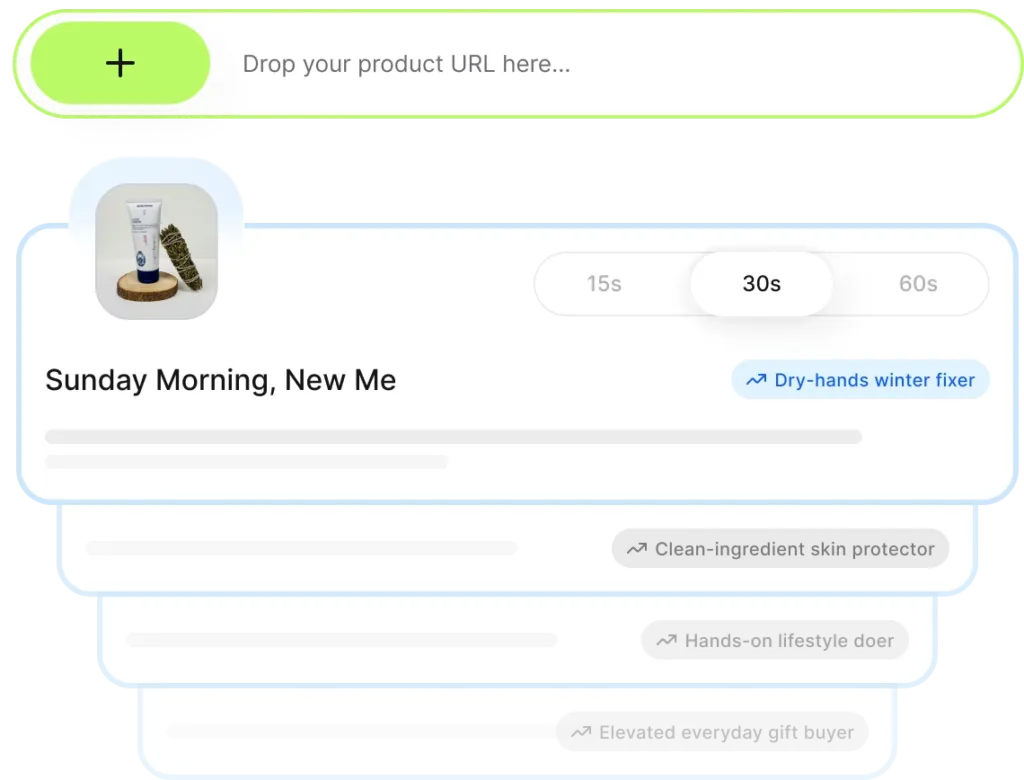
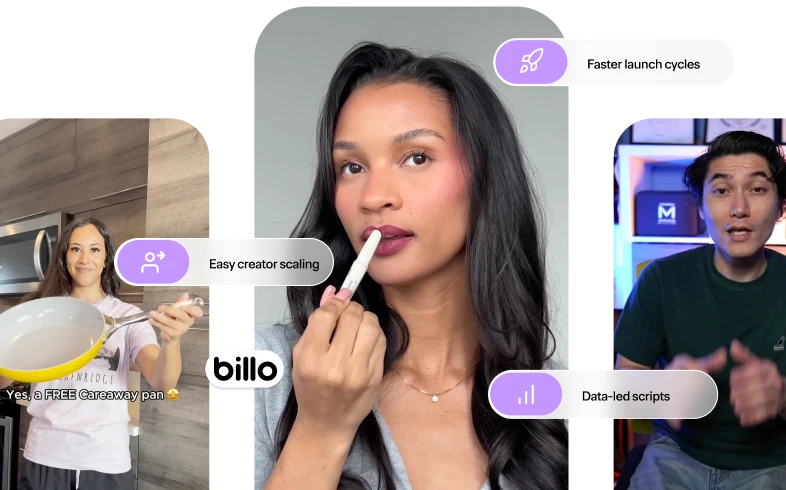
Billo’s script generator identifies top buyer personas from your product link and then generates data-backed scripts for each separate persona. That matters in an Andromeda-style delivery environment because you want multiple persona-specific angles ready to go, so the system has better “candidates” to retrieve and match to different motivations.
A simple way to run this workflow is to treat each persona as its own script batch: generate several hooks and openers, vary the objection you handle, and rotate proof types (demo, testimonial, comparison) while keeping the core promise consistent. Then you feed the winners back into the next round so the persona gets sharper over time instead of staying generic.
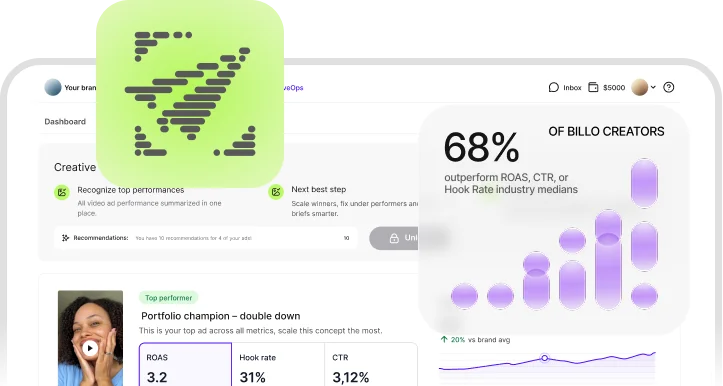
Billo goes one step further with this – matching each individual persona script to best performing creators in its database. Making the decision making process more swift.
Summary & Next Steps
To implement persona marketing, start by locking in 3-6 personas based on real buyer evidence, then keep them tight enough that each one changes your hooks, objections, and proof. If you cannot turn a persona into a clear messaging matrix (goal, pain, why now, objection, proof), it’s not ready to drive performance.
Next, operationalize those personas into a creative pipeline that outputs multiple persona-specific scripts every cycle. That steady volume is what keeps you from relying on one “winner” until it fatigues, and it gives Meta’s more automated delivery systems more relevant options to match to different buyers.
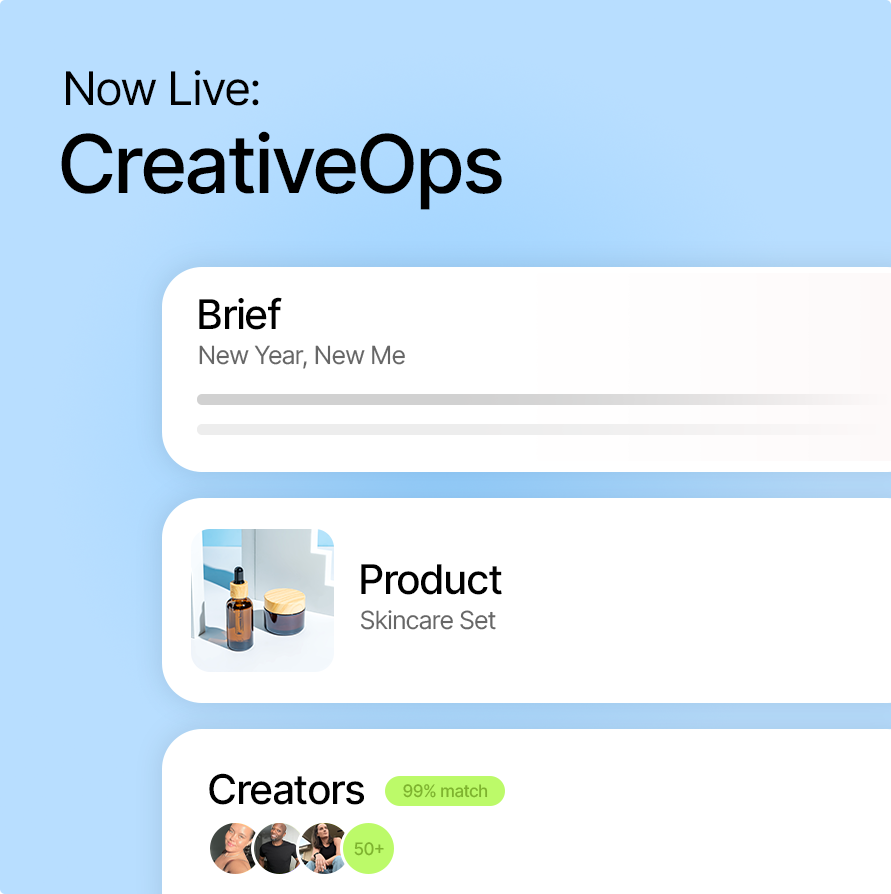
Finally, treat persona marketing like an operating system, not a one-time exercise. Refresh personas as signals shift, feed learnings back into the next batch of scripts, and keep the loop moving so relevance compounds over time. See how Billo CreativeOps engine can hep you set up persona marketing based process.
FAQs
How many personas should I start with?
Start with 3–6. Fewer than that usually collapses into generic messaging, while more than that becomes hard to keep updated and operational. A good test is whether each persona creates clearly different hooks, objections, and proof points without forcing it.
What’s the difference between an ICP and a buyer persona?
Your ideal customer profile (ICP) defines which companies or customer types you want to win. A buyer persona defines the different people inside those accounts and what drives their decisions, including motivations, anxieties, and what proof they need to say yes.
How often should I update personas when platforms are heavily automated?
Update them when reality changes, not on a calendar. In practice, do a lightweight check-in monthly or quarterly, and refresh immediately when you see new objections in sales calls, a new offer or positioning shift, or a noticeable change in who is converting and why.
What if I don’t have enough customers for interviews yet?
Use whatever “buyer evidence” you can access right now: early sales conversations, competitor reviews, support questions, on-site behavior, and any inbound form responses. Treat the personas as working hypotheses, keep them simple, and tighten them as you collect more real conversations and conversion data.


Authentic creator videos, powered by real performance data
22,000+ brands use Billo to turn UGC into high-ROAS video ads.


Meta Ads Safe Zones: A Guide to the 2026 Unified...
Meta just made the biggest change to ad creative specs [...]...
Read full article
The Ultimate Content Pipeline for Ads: Never Run...
Automated ad platforms have made targeting, bidding, and optimization almost [...]...
Read full article
Meta Andromeda Update Explained: Creative Volume...
Meta Andromeda update marks a major shift in how ads [...]...
Read full article