Marketing to Gen Z: Everything You Need to Know (+ Examples)

Gen Z now makes up nearly 30% of the global population and a growing share of the workforce. They’re digitally native, socially conscious, and skeptical of traditional advertising.
For marketers, that’s both a challenge and an opportunity. While Gen Z rejects inauthentic or performative branding, they embrace brands that align with their values, entertain them, and involve them in the story.
Nearly every Gen Z teen owns a smartphone, and almost half say they’re online “almost constantly.” This always-connected behavior means your strategy must be mobile-first, visually dynamic, and data-backed.
TL;DR:
- Marketing to Gen Z means reaching digital natives who live online, value authenticity, and expect purpose from brands.
- 95% of Gen Z teens own a smartphone and 97% go online daily.
- Gen Z buyers prioritize ethics, diversity, and sustainability.
- The best Gen Z campaigns are video-first, community-driven, and often built around user-generated content (UGC).
- Winning tactics include short-form storytelling, creator collaborations, second-screen engagement, and transparent social commerce.
- This guide explores what sets Gen Z apart, which brands are doing it best, and how your marketing can connect authentically across TikTok, YouTube, and beyond.
What Is Marketing to Gen Z?
Marketing to Gen Z is about authenticity, speed, and shared values, not traditional ads.
Born between 1997 and 2012, this digital-native generation grew up online, blending entertainment, community, and commerce. 95% of teens have smartphone access and 97% go online daily, nearly half “almost constantly.” They’re connected, informed, and quick to filter out anything inauthentic.
While 86% of Gen Z expect brands to take social or environmental stands. To engage them, focus on real storytelling, creator-led content, and transparent communication that earns trust rather than attention alone.
Where Gen Z Actually Spends Time Online
The always-connected lifestyle means Gen Z expects brands to meet them where they already live: on their phones, across multiple platforms, all day long.
| Platform | Share of U.S. Gen Z Teens Using | Primary Purpose |
|---|---|---|
| YouTube | ~93% | Learning, entertainment, product discovery |
| TikTok | ~63% | Short-form content, trends, social shopping |
| Snapchat | ~60% | Messaging, filters, private sharing |
| ~59% | Visual storytelling, influencer culture | |
| ~32% | Family and group interactions | |
| Reddit / Discord | Smaller share | Communities and discussions |
Generation Z vs. Millennials
Marketing to different generations requires different strategies.
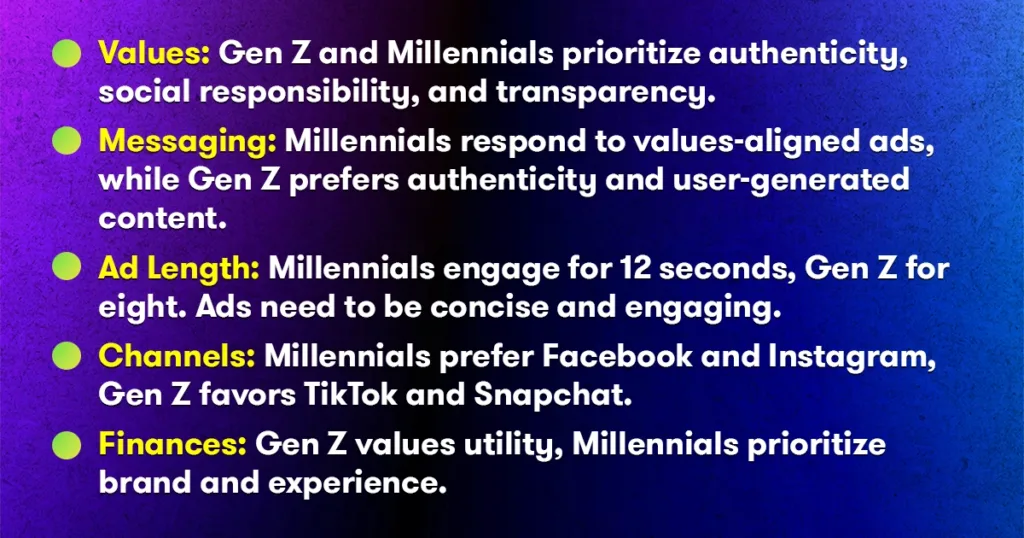
While Millennials helped shape the digital marketplace, Gen Z was born into it – their relationship with technology, authenticity, and brands is completely native. Here’s how their values, habits, and purchase behaviors diverge:
| Category | Millennials | Generation Z |
|---|---|---|
| Digital Behavior | Early adopters of social media and mobile shopping | True digital natives who blend entertainment, search, and commerce seamlessly, with 95% owning a smartphone and 97% online daily |
| Values | Favor purpose-driven, socially conscious brands | Expect brands to prove transparency, inclusion, and sustainability, with 86% saying companies should take social or environmental action |
| Ad Tolerance | Engage with ads reflecting experiences or aspirations | Highly skeptical of traditional advertising; prefer creator-led and user-generated content |
| Attention Pattern | Engage for roughly 12 seconds per ad on average | Scroll faster, valuing instant relevance over duration |
| Preferred Platforms | Facebook, Instagram, YouTube | TikTok, YouTube, and Snapchat dominate, with Gen Z spending over 5 hours a day on social media |
| Buying Behavior | Brand loyalty shaped by lifestyle fit | Price- and purpose-driven; research products thoroughly before purchasing |
Why Marketing to Gen Z Requires a Different Playbook
Millennials embraced brand storytelling. Gen Z rewrote it by turning brands into collaborators, not broadcasters.
They reward creativity, humor, and community over polish and promotion. For marketers, success lies in co-creating content, empowering authentic voices, and showing values in action rather than stating them.
Takeaway: The difference isn’t just in platforms-it’s in perspective. Effective marketing to Gen Z means participating in their culture, not interrupting it.
Examples of the Best Gen Z Marketing
The best way to discover how to reach Generation Z is to explore examples from companies that do it exceptionally well. While there’s no single formula you can use, getting inspired by success and adapting it to your brand and goals is the fastest way to achieve results.
Here’s how four companies are doing it right.
1. Levi’s: Buy Better, Wear Longer
Levi’s has kept its legacy relevant by aligning its marketing with Gen Z’s sustainability values.
The “Buy Better, Wear Longer” campaign focuses on conscious consumption and quality—encouraging buyers to keep clothes longer to reduce waste.
The brand’s ongoing circular denim initiatives and resale programs extend this message beyond advertising, turning sustainability into proof of purpose. This resonates strongly with younger consumers, echoing Deloitte’s findings that Gen Z prioritizes brands making measurable social impact.
Why it works: It connects climate-conscious values with practical style. Making sustainability part of the brand identity, not a slogan.
2. Aerie: #AerieREAL
Aerie’s long-running #AerieREAL campaign centers on unretouched imagery and inclusive representation. The brand showcases diverse body types, encourages customers to share their own photos, and promotes self-confidence over perfection.
By 2024, #AerieREAL content had surpassed 10 billion views on TikTok (TikTok Creative Center, 2024), illustrating how UGC can build community at scale.
Why it works: Aerie proves inclusivity isn’t a campaign theme – it’s an ecosystem built on authenticity and user participation.
3. Duolingo: Duo the Owl
Duolingo turned its green mascot into a Gen Z icon through bold, humorous, and occasionally chaotic social content. On TikTok, the brand’s owl participates in viral trends, jokes about notifications, and interacts with fans in an unapologetically weird tone that mirrors Gen Z humor.
This personality-driven approach helped Duolingo reach over 10 million TikTok followers by 2024 (Sprout Social, 2024). Its social team uses creator-style storytelling instead of corporate polish—transforming a learning app into a cultural meme.
Why it works: It humanizes a tech brand by embracing the same authenticity, irony, and energy that define Gen Z humor.
Spotify: Wrapped
Spotify’s annual Wrapped campaign is a masterclass in personalization and shareability. By turning user data into social storytelling – top artists, genres, and minutes listened, Spotify makes each listener the hero of their own music year.
One campaign that’s been a resounding success is Spotify Wrapped. Started in 2016, it has since become one of the most popular annual social media campaigns, generating millions of shares and likes throughout TikTok, Instagram, X (formerly Twitter), and other platforms.
For example, the release of Spotify Wrapped resulted in a staggering 425 million Tweets in just three days at the end of 2022. The gamification of user listening habits resonated with Gen Z audiences, encouraging people to share their stats, such as for which artists they were in the top 1%, 0.5%, and even 0.05% of all listeners.
This helped create a stronger connection with the artists but also reinforced the user’s desire to stay on the platform and learn interesting facts about their listening habits next year. At the same time, sharing Spotify Wrapped on social media has become a way to connect with others through shared interests and unique listening habits, which Gen Z audiences care about.
Why it works: It transforms user data into identity and community – two forces that drive Gen Z loyalty and brand love.
Best Practices for Marketing to Gen Z
Reaching Gen Z requires more than clever ads, it takes empathy, authenticity, and adaptability. This audience expects brands to reflect their values, speak their language, and earn their trust.
Here are the essential principles shaping successful marketing to Gen Z.
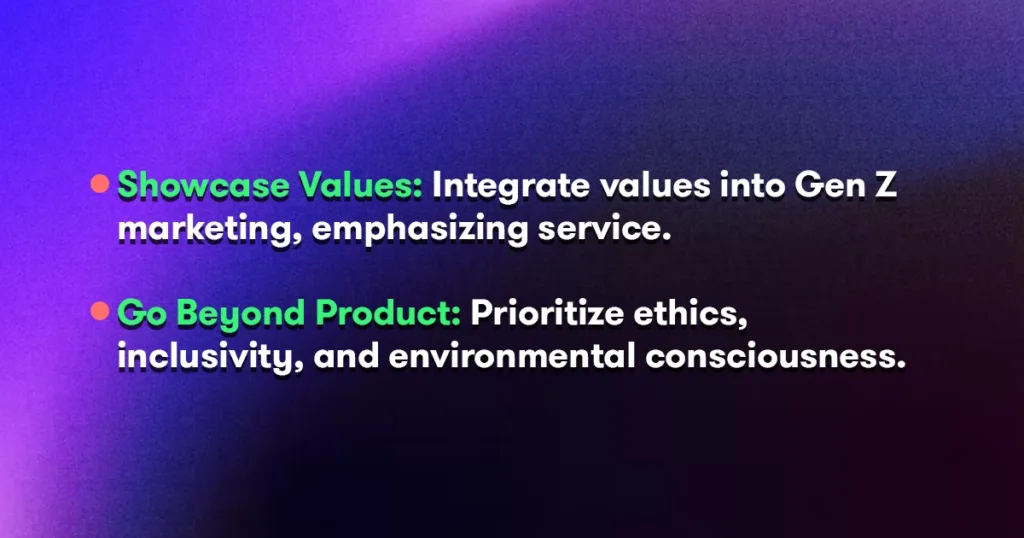
Lead with Values
Gen Z buyers choose brands that stand for something meaningful. They expect companies to show purpose through action – sustainability, inclusivity, and fair treatment of people.
Brands that integrate social impact into their business models earn lasting loyalty. Whether it’s reducing waste, supporting marginalized voices, or maintaining ethical supply chains, impact has to be visible and consistent.
Tip: Values shouldn’t sit in your mission statement, they should appear in every campaign, caption, and product update.
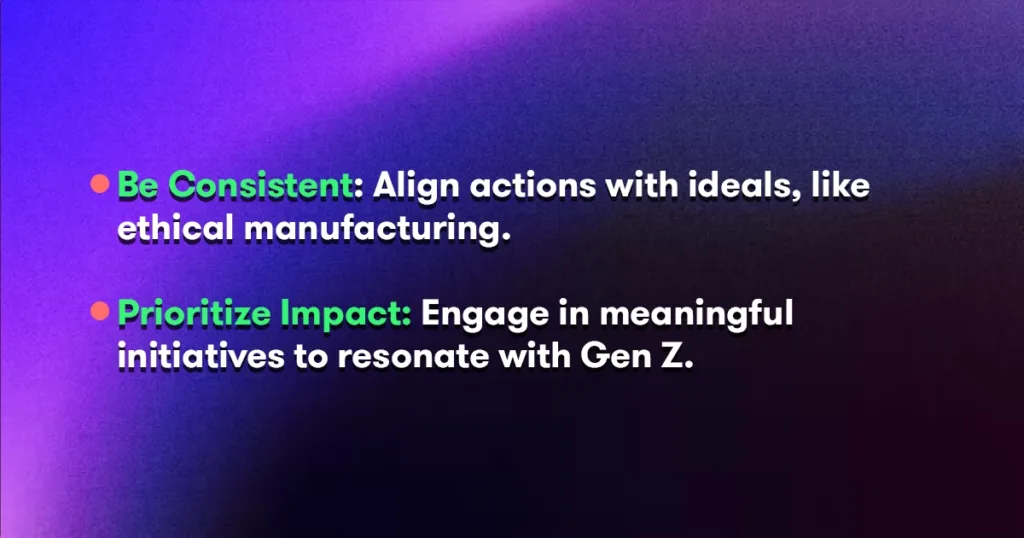
Be Genuine
Gen Z spots performative marketing instantly. They reward honesty, humor, and vulnerability over polished perfection. Brands that acknowledge mistakes or share real stories humanize themselves and build credibility.
Empty activism or “woke-washing” backfires fast. Genuine marketing comes from actions that match words – proof, not positioning. Using formats like UGC even for digital products can be the right way to go here.
Tip: Authenticity isn’t saying what Gen Z wants to hear. It’s showing who you really are.
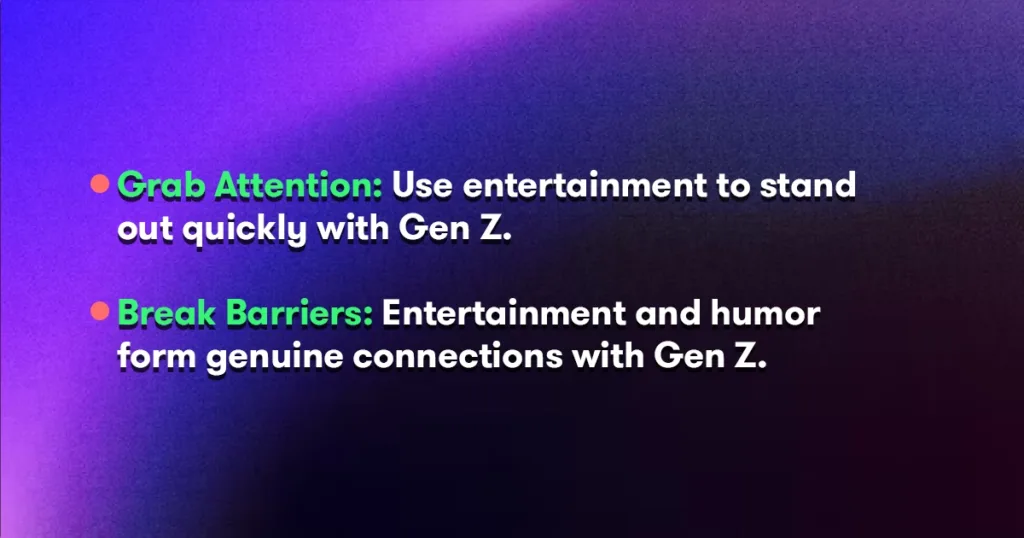
Be Entertaining
Entertainment is Gen Z’s entry point to every platform.vThey scroll through fast-paced, funny, and visually dynamic content that feels spontaneous rather than scripted. Educational or product content performs best when it’s wrapped in humor, irony, or creativity.
Short-form video is now the default storytelling format. Focus on dynamic pacing, trending sounds, and relatable creators instead of high production value.
Tip: If it feels like an ad, it’s too slow. Hook them in the first three seconds with emotion or entertainment.
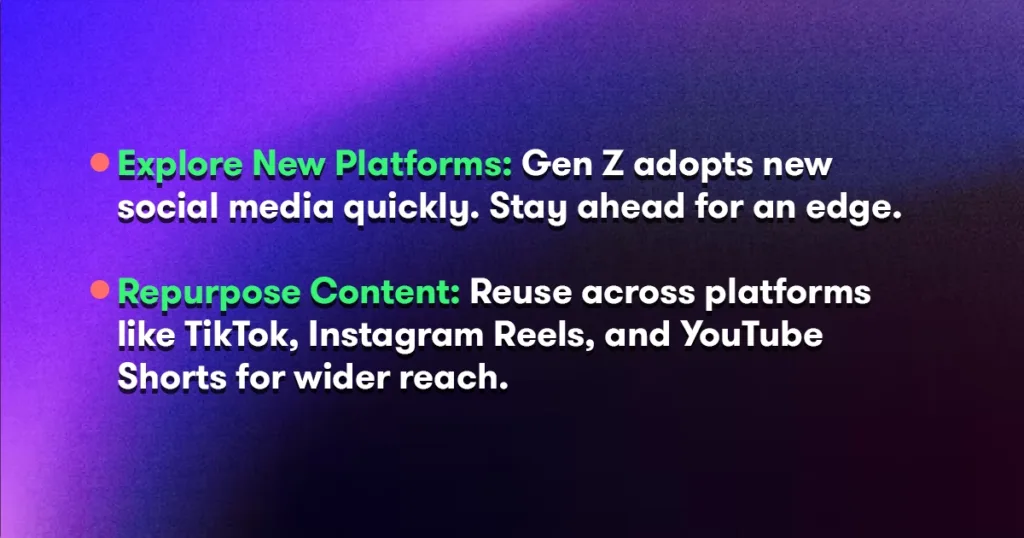
Choose the Right Platforms
Gen Z’s digital world revolves around video-first platforms like TikTok, YouTube Shorts, and Instagram Reels. They still use Snapchat for messaging and YouTube for long-form content, but each platform plays a different role in discovery, education, and connection.
Instead of spreading thin across every channel, master a few key platforms and tailor your tone, format, and posting cadence to each. The same content repurposed intelligently can perform across ecosystems.
Tip: Create for the platform first, then adapt. TikTok humor doesn’t translate 1:1 to YouTube.
Encourage Conversations
Gen Z values community more than one-way communication. They follow brands that listen, reply, and invite participation. Interactive formats – polls, Q&As, comment threads, and duets – build long-term engagement.
Community is the new loyalty program. The more you create space for dialogue, the more your audience becomes part of your brand story.
Tip: Treat every comment as a chance to co-create, not to correct.
Personalize the Experience
Gen Z expects relevance without intrusion. They appreciate personalization when it feels useful, not manipulative. That means using data ethically to recommend content or products that genuinely fit their interests.
AI and creative testing tools now make it easier to personalize visuals, tone, and timing. What matters most is transparency – make it clear how data improves their experience and protects their privacy.
Tip: Personalization builds trust only when it respects boundaries and adds value.
Social Media Tips & Strategies for Gen Z Marketing
At this point, everybody knows to post consistently and use the right hashtags. But if you want to figure out how to market to Gen Z and get their attention on social media, you will need to go further and find ways to stand out in their already crowded feeds.
To help you get on the right track with your social media marketing to Gen Z, here are a few tips to consider.
Creator Partnerships That Build Trust
Gen Z trusts creators more than companies. Partner with influencers, customers, and employees who reflect your brand’s values, then give them space to tell real stories. Smaller creators often outperform celebrities because their audiences feel like friends, not followers.
Encourage user-generated clips, duet challenges, or product try-ons that feel spontaneous. When creators’ authentic voices lead, your brand earns credibility without forcing a pitch.
Tip: Choose partners for alignment, not audience size – relatability drives conversion.
Video Storytelling That Hooks Fast
Short-form video is Gen Z’s default language. Every piece of content competes with humor, trends, and memes, so you have seconds to earn attention.
Lead with energy – a movement, question, or reaction – before mentioning your product. Mix lo-fi storytelling with creative pacing, trending sounds, and bold text. End with a clear, satisfying payoff that rewards the scroll.
Tip: If the first frame wouldn’t stop your own thumb, re-shoot it.
Community and Conversation as the New Loyalty
Gen Z doesn’t want followers; they want belonging. Brands grow faster when they treat audiences as collaborators rather than spectators.
Host live Q&As, polls, and comment threads that invite opinions. Share fan-made posts, highlight top commenters, and respond casually in your brand’s tone. When people feel heard, they return – not for deals, but for dialogue.
Tip: The most loyal Gen Z customers are the ones who help shape your next idea.
Social Commerce That Converts
Gen Z shops directly inside the apps where they socialize. Make discovery and checkout frictionless with shoppable videos, creator storefronts, and transparent pricing.
Show products in use, not isolation – reviews, reactions, and creator demos all add credibility. Pair entertainment with clarity: what it is, how it helps, and how to get it fast.
Tip: Treat every post as part of the funnel – awareness, engagement, and purchase now happen in one feed.
Continuous Experimentation
Trends move hourly, not quarterly. Test new formats weekly, measure hook rates and shares, then refine quickly. Consistency matters more than perfection; what works today may fade next month.
Document learnings so your team reacts to data, not assumptions. The brands that stay relevant are the ones that evolve as fast as their audience.
Tip: Build a repeatable testing loop – launch, learn, adapt, repeat.
Measurement & Iteration Framework
Marketing to Gen Z succeeds when creativity meets data. They move fast and so should your feedback loop. Use this simple framework to test, learn, and refine campaigns in real time.
| Step | Goal | What to Measure | How to Adapt |
|---|---|---|---|
| 1. Hypothesize | Define what your creative should achieve (awareness, engagement, conversions). | — | Write one clear goal per test. |
| 2. Launch | Release 3–5 content variations per theme. | Hook rate, 3-second hold, click-through rate. | Track which message or tone grabs attention fastest. |
| 3. Analyze | Review data within 48–72 hours. | Saves, shares, comments, completion rate. | Double down on content that sparks conversation. |
| 4. Iterate | Refine visuals, pacing, or tone based on what performed best. | ROAS, engagement rate, retention. | Drop weak creatives and remix top ones. |
| 5. Scale | Amplify what works through paid and creator partnerships. | Cost per engagement, conversion lift. | Repurpose proven ideas across platforms. |
The Bottom Line: Marketing to Gen Z in 2025
Gen Z has redefined what marketing means. They’re connected, creative, and selective – choosing brands that feel human, not transactional. To reach them, marketers must blend storytelling with substance, and innovation with integrity.
The formula is simple but demanding:
- Lead with purpose.
- Speak with authenticity.
- Entertain without pretending.
- Listen more than you promote.
The most successful brands – whether it’s Levi’s with sustainability, Aerie with inclusivity, or Duolingo with humor understand that marketing to Gen Z isn’t a campaign; it’s a conversation. When you show real people, real values, and real impact, Gen Z doesn’t just follow your brand—they build it with you.

SEO Lead
Passionate content and search marketer aiming to bring great products front and center. When not hunched over my keyboard, you will find me in a city running a race, cycling or simply enjoying my life with a book in hand.
Make creator marketing a data-backed growth channel

Related from Creative Insider
Snapchat ads for ecommerce: what works, what doesn’t, and how to start
Social Commerce: Turn A 15-Second Scroll Into A Sale Without The Traditional Funnel