Ad Hooks That Scale: Turning 1 Winning Angle Into 20 Performing Variations

Performance teams often think they need endless novelty, but newer cross-channel studies show the opposite. Recent research from EDO and Affinity Solutions (2025) found that creative quality drives three times more sales impact than frequency. While digital testing platforms like CreativeX report that even small improvements in creative execution lead to meaningful reductions in cost per completed view.
As platform algorithms continue prioritizing early attention, the first seconds of an ad increasingly dictate distribution and downstream performance. So, teams gain more by iterating ad hooks from proven angles than by inventing entirely new concepts.
TL;DR
- Ad hooks are scalable creative patterns, not single clever lines.
- One winning angle can generate 20+ ad hooks with minimal lift.
- Creative fatigue comes from failing to refresh hooks, not from repeating angles.
- First 1 to 3 second metrics reveal winners quickly.
Hooks vs Angles: Why Teams Confuse Them
Teams often treat hooks and angles as interchangeable ideas, but they serve different roles in performance creative. Clarifying this distinction helps teams scale winning concepts through many ad hooks instead of rebuilding ads from scratch each week.
Angles communicate the core promise and emotional tension
Angles define what the ad is about: the promise, the contradiction, and the emotional payoff. Research highlights that creative quality remains the largest performance driver, so angle clarity matters more than production polish.
Hooks deliver that angle in the first seconds
Ad Hooks are repeatable expression patterns – questions, contradictions, POV opens, and visual reveals. hThey translate the angle into an attention-grabbing moment. Because platforms reward strong early engagement, hooks influence distribution and watch-time more than any other part of the ad.
Why teams confuse them?
Teams mix hooks and angles when they assume the opening line is the angle. In reality, the angle is the strategic idea; the hook is one of many ways to express it.
When teams separate the two, they gain the ability to produce dozens of high-performing variations without changing the underlying story.
Why Scaling Hooks Matters
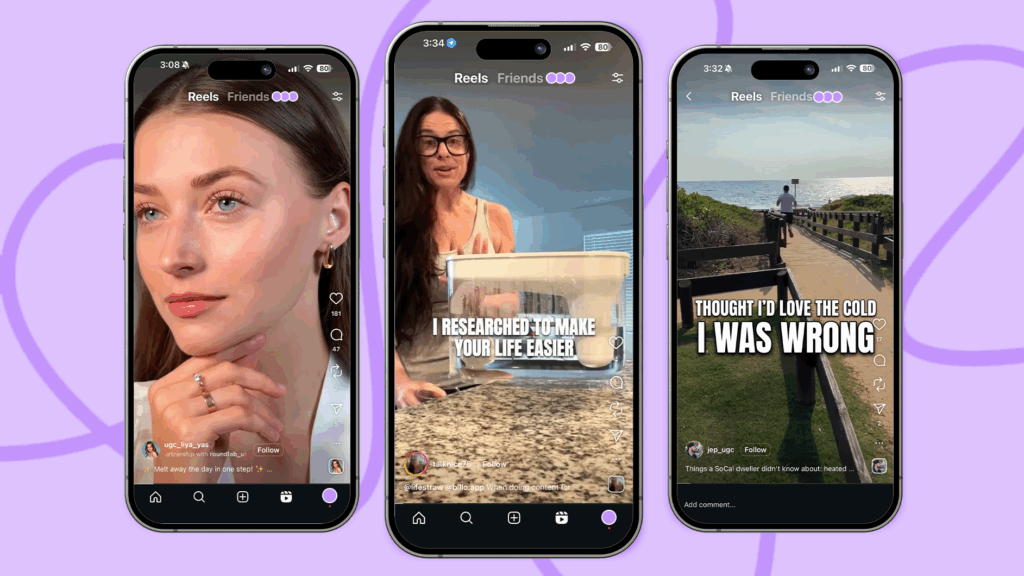
Scaling hooks protects performance by keeping the first seconds of an ad fresh without abandoning proven angles. This creates more variation for algorithms to test while reducing the production load on creative teams.
Let’s dig into more specific examples:
1. Creative fatigue happens faster than most teams expect
As frequency rises, engagement drops. Meta-focused data shows creative fatigue appearing within 7 to 10 days, which pushes CAC upward if hooks are not refreshed. Rapid ad hook variation helps maintain performance while keeping the core message stable.
“Volume is very important here – we pump out dozens of versions a week with different scenes, thumbnails, different voices. Each platform needs its own format anyway, so we tighten or reframe for TikTok versus YouTube versus LinkedIn.” – Paulina Gębczyk, Marketing Lead at CrustLab
2. Incremental variation outperforms net-new concepts
Paid social platforms reward small creative changes (new intros, visuals, or CTAs) more than full script rewrites. Iterating ad hooks enables faster testing cycles, making it easier to identify improvements in thumbstop rate, hold rate, and CTR.
“When we have a hook that’s working, the best thing to do is copy-paste with variations rather than reinventing the wheel. Generally, I stick to that core emotional trigger (which may be curiosity, or wonder, or a pain point) and build new visuals, pacing, and openings around that.” – Rob Dillan, Founder at EVhype.com
3. Scaling spend increases demand for more hook variations
DTC scaling case studies reveal teams often need 5 to 8 new variations every two weeks as budgets rise. Hook-focused iteration supports this throughput by producing more testable assets without reinventing the underlying angle.
“To make a winning hook last longer, keep the hook identical but change the colours or music; tweaking one element at a time gives you more mileage.” – Runbo Li, CEO at Magic Hour
4. Angles drive sustained ROAS; hooks prevent early burnout
Most teams overinvest in new ads and underinvest in angle multiplication. When the angle is strong, varied hooks extend its lifespan. When fatigue hits claim-heavy hooks quickly, diversifying formats early helps maintain stability.
“Stick with our winning ad and make small tweaks – background music, headline animation – testing one thing at a time beats reinventing everything.” – Will Melton, CEO at Xponent21
5. Meta Andromeda update
With the Adromeda update, multiplying the angle with the help of different hooks allows you to scale the number of creatives and test easily. Feed the demand, without having to reinvent the wheel.

The One-Angle Scaling Framework
Scaling a single angle into many ad hooks becomes easier when you break it into psychological components and rebuild them across multiple formats. This framework helps teams turn a proven message into a repeatable source of variations:
Step 1: Identify the psychological promise behind the winning angle
Spot the core emotional trigger, like “better for less” or “effortless upgrade” which makes the angle resonate.
Step 2: Validate the angle using early-performance indicators
Confirm the angle’s scalability by checking whether three-second hold rates and thumbstop rates consistently outperform benchmarks.
Step 3: Deconstruct the angle into claim, tension, proof, and resolution
Break the message into its key components to isolate the tension that drives curiosity and makes the hook compelling.
Step 4: Pair the angle with visual proof to increase believability
Reinforce the promise with UGC-style visuals that build trust and improve retention.
Step 5: Convert the angle into multiple hook types
Express the same tension through varied formats – questions, contradictions, POV opens, or testimonials to expand test volume.
Step 6: Use a hook system, not one-off ideas
Keep the angle constant while diversifying expressions to reduce fatigue and maintain a fast testing cadence. Get more UGC hooks ideas.
Ways to Multiply a Single Idea
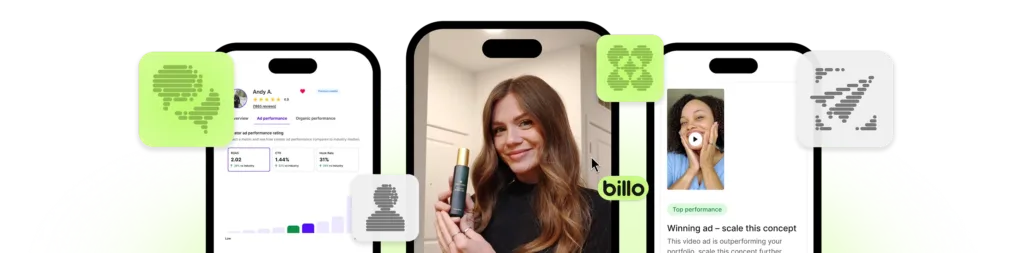
Short‑form platforms reward structural variation. Once a winning angle is identified, you can multiply it across different ad hooks that trigger different curiosity patterns while keeping the core message intact.
Some of the options may be to:
- Transform the angle into short, punchy statements. Crisp, high-contrast claims grab attention fast.
- Rewrite the angle as a compelling question. Questions create unresolved tension that encourages viewers to keep watching.
- Use POV-driven openings. POV hooks mirror natural storytelling on TikTok and Reels, increasing relatability and trust.
- Reframe the angle as a testimonial. Testimonial-driven hooks rely on social proof heuristics and often improve believability, especially in UGC environments.
- Turn the angle into visual pattern interrupts. Texture macros, side-by-side comparisons, price overlays, and other visual shifts boost thumb-stop rate without changing the underlying copy.
- Shift the CTA to change behavioral framing. CTA variations (like “Stop overpaying,” “Try this instead,” or “Upgrade your routine”) let the same angle adapt to different intent levels, from awareness to conversion.
“I’d take the original ad copy and just change the pronouns. For instance, “I struggled with X, and this product helped me achieve Y” becomes “Do you struggle with X? This product can help you achieve Y.” – Janelle Warner, Co-director at Born Social
Metrics to Track When Testing Hooks
Evaluating ad hooks effectively comes down to watching the earliest signals of attention and intent. These reveal within hours whether a variation has real potential or is already losing momentum.
The first thing to look at is the 1–3 second hold rate, which is the quickest indicator of hook strength and a strong predictor of downstream performance. If people stay past the opening beats, the hook is doing its job. Thumb-stop rate is another reliable early signal, especially since it correlates closely with CAC efficiency – many teams improve TSR simply by adjusting the hook instead of rewriting the entire ad.
From there, it’s important to look at how attention translates into action. A hook can drive a high CTR but still underperform if those clicks don’t convert. This usually means the hook created interest but not accurate expectations.
And throughout all of this, watch for signs of creative fatigue: rising CPMs, declining CTR, and softer ROAS. These shifts often mean the hook has run its course, and refreshing variations is the fastest way to stabilize performance again.
For more on optimizing ad testing cycles, explore Billo’s guide on ad iterations. Twenty hook variations on the same shot and pace still read as one ad to Meta – see how pace and format turn hook variety into real creative diversity.
Examples: One Angle → 20 Hooks
This section shows how a single angle can generate many ad hooks variations.
The angle used here is: “I replaced X with Y and saved money or got better results.” Each format triggers a different curiosity pattern while preserving the underlying tension.
Short hook variations that compress the contradiction
- I replaced X with Y and saved money.
- X costs $200… Y costs $32.
- Better results, less money.
- Stop overpaying for the same outcome.
- Luxury pricing doesn’t equal better results.
Questions that raise unresolved tension
- Why spend $200 when this works better?
- Is expensive skincare actually better?
- What if the cheaper option wins?
POV formats that feel relatable
- I used to waste money on skincare…
- I thought price meant quality – until this.
Testimonials that strengthen trust
- I’ve tried everything; this is the first that worked.
- I didn’t believe the hype… until I tried it.
Visual pattern interrupts that boost thumb-stop rate
- Macro texture comparison.
- Before-and-after split screen.
- Price overlay: $200 vs $32.
- Real bathroom unboxing.
- Ingredient list side-by-side.
- Green-screen store shelf comparison.
CTA-led variations that shift intent
- Stop paying more than you need to.
- Get luxury results without luxury pricing.
How to Systemize Creative Production
Scaling creative gets much easier when teams rely on systems instead of starting from scratch each time. One of the most effective habits is building a clear taxonomy that outlines your angles, hook types, visuals, and CTAs, because it removes the guesswork and turns variation into a repeatable process. Pair that with a creative library and you’re no longer reinventing assets you already know perform – everything you need is documented, searchable, and ready to reuse.
From there, modular scripting speeds things up even more. When hooks, bodies, proof points, and CTAs are treated as interchangeable building blocks, you can generate dozens of variations without touching the core message. This works even better when creators, editors, and performance teams operate within a shared workflow, keeping output aligned with both brand standards and performance goals.
And while many teams focus on sourcing more creators, the real bottleneck is almost always iteration speed. Frequent refresh cycles beat the occasional hero creative every time, especially in UGC environments where performance shifts quickly and audiences tire fast.
Billo: Systems outperform guesswork
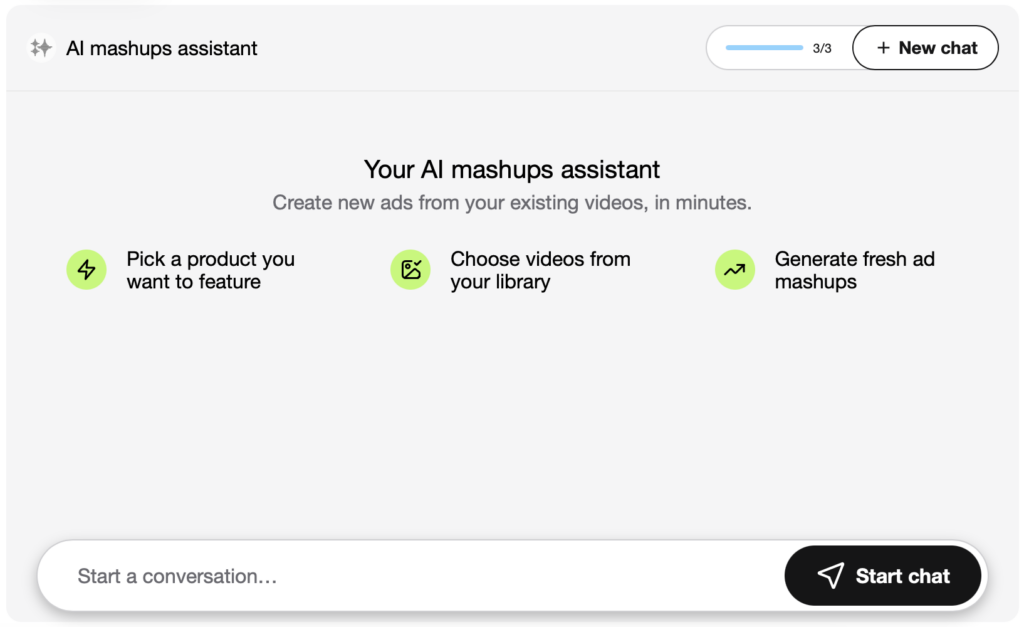
Use systems like Billo to scale creatives for different ad hooks easily. With the help of CreativeOps Script generator, see what winning angles work best for your product. Then match with creators and order additional hooks for your creatives immediately. One order – multiple ads ready to go.
You can also easily freshen up the creatives by using Ad variations to produce new variations and narratives for the existing ads instantly.
Summary & Next Steps
Scaling creative isn’t about reinventing angles every week. It’s about multiplying what already works through systematic variation. When teams separate angles from ad hooks, refresh openings frequently, and rely on structured workflows, they unlock consistent performance without burning resources.
FAQs
How many hook variations should a team test per winning angle?
How often should hooks refresh?
Do platforms require different hooks?

SEO Lead
Passionate content and search marketer aiming to bring great products front and center. When not hunched over my keyboard, you will find me in a city running a race, cycling or simply enjoying my life with a book in hand.
Make creator marketing a data-backed growth channel

Related from Creative Insider
Snapchat ads for ecommerce: what works, what doesn’t, and how to start

Social Commerce: Turn A 15-Second Scroll Into A Sale Without The Traditional Funnel