Cyber Monday Marketing: 14 Strategies to Drive More Sales

A practical guide to Cyber Monday marketing for ecommerce brands: 14 proven strategies to drive more traffic, conversions, and revenue, updated with 2025 data.
TL;DR
- Cyber Monday 2025 hit $14.25 billion in a single day, the biggest online shopping day in history. The brands that won it started planning 3 months out.
- A dedicated landing page, countdown urgency, and early email capture are non-negotiable.
- User-generated content (UGC) outperforms brand-produced creative in BFCM retargeting, especially content that leads with the deal in the first 3 seconds.
- Social media’s share of Cyber Monday revenue grew 54.5% in 2025. Short-form video is no longer optional.
- Set up cart abandonment emails before the sale starts; most shoppers who add to cart do not complete the purchase.
- BNPL crossed $1 billion on Cyber Monday 2025 for the first time. Offering it removes the biggest checkout barrier for high-ticket items.
Cyber Monday is no longer just the Monday after Thanksgiving. For most ecommerce brands, it has become the single highest-revenue day of the year, and in 2025, U.S. consumers proved it by spending $14.25 billion online in a single day. Adobe Analytics, which tracked spending across U.S. retailers throughout the 2025 holiday season, confirmed it as a new all-time record.
The brands that won it didn’t figure out their strategy in November. They started building audiences, testing creatives, and warming up their email lists months earlier, because by the time Cyber Monday arrives, the ad auction is expensive, competition is fierce, and there is no room for guesswork.
If you want a piece of that record spend in 2026, this guide is your starting point. Below are 14 proven Cyber Monday marketing strategies, from landing pages and offer structure to social ads, email, cart recovery, and BNPL, with everything updated for how shoppers actually behave today.

Why Cyber Monday Marketing Matters More Than Ever
Cyber Monday gives online businesses a time-limited window to drive serious revenue before the holiday season peaks. With 75% of U.S. adults shopping between Thanksgiving and Cyber Monday, a well-executed campaign can reach customers exactly when they are in active buying mode.
But the opportunity is bigger than one day. Cyber Monday 2025 saw 75.9 million U.S. consumers shop online in a single day, up from 64.4 million in 2024. And 57.5% of those purchases happened on mobile devices, accounting for $8.2 billion in spend. If your campaigns are not built for mobile, you are already at a disadvantage before the sale starts.
For small and mid-sized businesses, Cyber Monday is also one of the few moments when you can genuinely compete with larger brands. Customers are actively searching for deals across categories, and strong offers paired with authentic creative can perform well above your usual weight class.
14 Cyber Monday Marketing Strategies
Let’s look at each of these in detail.
1. Create a Dedicated Cyber Monday Landing Page
A landing page built specifically for your Cyber Monday campaign does two things: it gives shoppers a clear, distraction-free environment to act on your offers, and it becomes a targeting asset you refine and reuse every year.
Keep it simple. A cluttered page with too many deals or competing CTAs loses conversions. Focus on one primary offer above the fold, a clear headline, and a mobile layout that loads fast. Strip out the global navigation if your platform allows it. Remove anything that pulls attention away from the deal.
When you think about retargeting, build your landing page with segmentation in mind. Someone who browses your skincare section is a different buyer than someone who explores electronics, and you can serve each one a different follow-up ad based on what they engaged with.
| Imagine a shopper who clicks your Cyber Monday email, lands on your homepage, and spends three minutes hunting for the deals page. They leave. A dedicated landing page eliminates that friction entirely. |
2. Reveal Exclusive Offers
Beyond standard percentage discounts, exclusive offers give shoppers a reason to choose your store over a competitor offering the same amount off. Think free product bundles with qualifying orders, early access for email subscribers, or a limited gift-with-purchase.
| Imagine scrolling through your feed on Cyber Monday and seeing a dozen ads that all say ‘30% off everything.’ Then one says: ‘Free gift bag with every order over $90, today only.’ That second one makes you stop. The discount is not even the point. |
Ulta Beauty offered a free beauty bag with 22 samples for online purchases over $90. Target has run ‘buy one, get one 50% off’ variations that drive bulk purchases without a straight percentage cut. Both create a sense of getting something extra, and that feeling is what separates a scrolled-past ad from a sale.
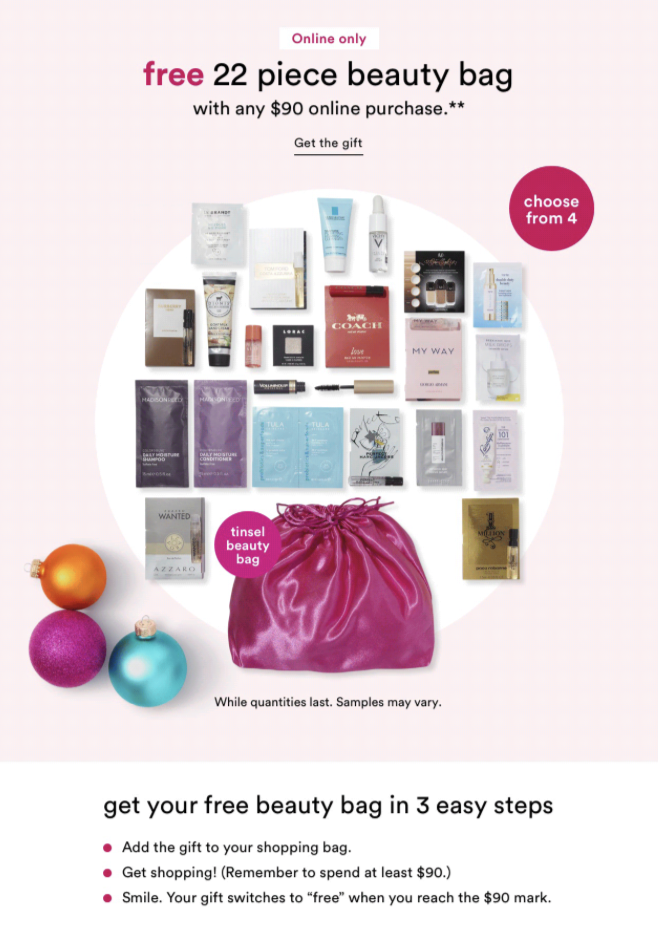
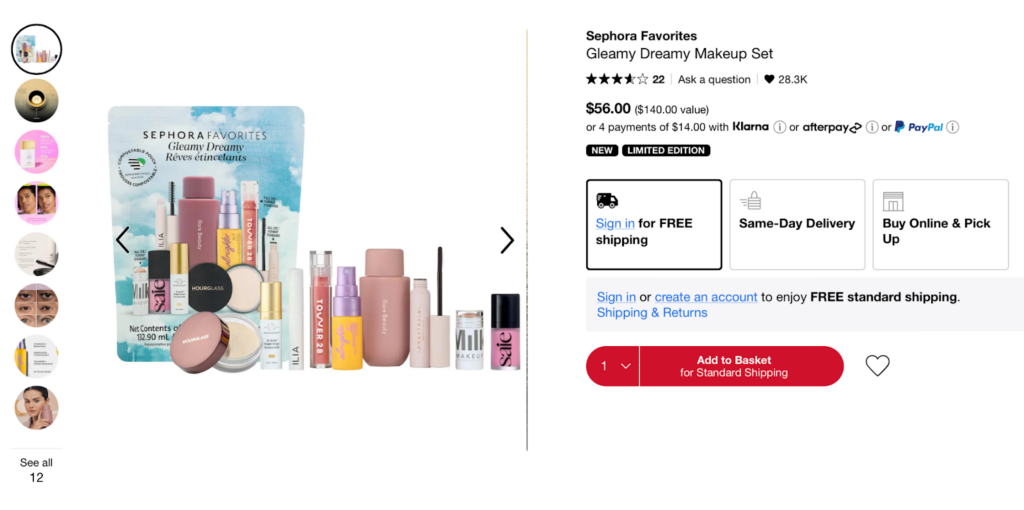
Showing the value clearly matters just as much as the offer itself. Display the retail price of bundled items next to the bundle price. Sephora does this brilliantly, anchoring the saving so the deal feels concrete rather than abstract.
3. Create a Sense of Urgency
Cyber Monday lasts 24 hours. That natural deadline is your most powerful marketing tool, but only if you use it actively throughout the day.
| Imagine you have added something to your cart but you are not quite convinced. Then you notice a countdown timer: 3 hours, 47 minutes remaining. Suddenly ‘I’ll think about it’ becomes ‘I should decide now.’ I have to agree: a well-placed countdown timer is one of the simplest and highest-return additions you can make to a Cyber Monday page. |
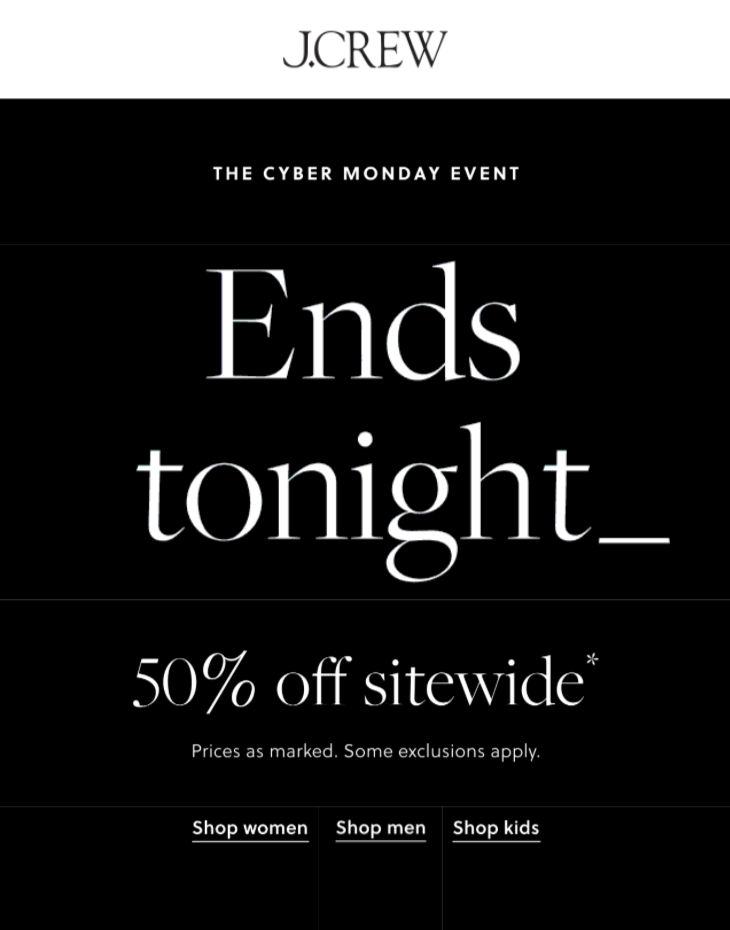
Add a countdown to your landing page and product pages. Send a ‘sale ends tonight’ email at midday. Launch flash deals that rotate every few hours to keep shoppers checking back. J.Crew used time-stamped email reminders throughout Cyber Monday, a simple tactic that consistently drives late-day conversions.
Having said that, urgency only works when it is genuine. Customers who see ‘only 3 left!’ on a product that never actually runs out will stop trusting it. Use real scarcity where you have it, and time-based urgency everywhere else.
4. Partner with UGC Creators
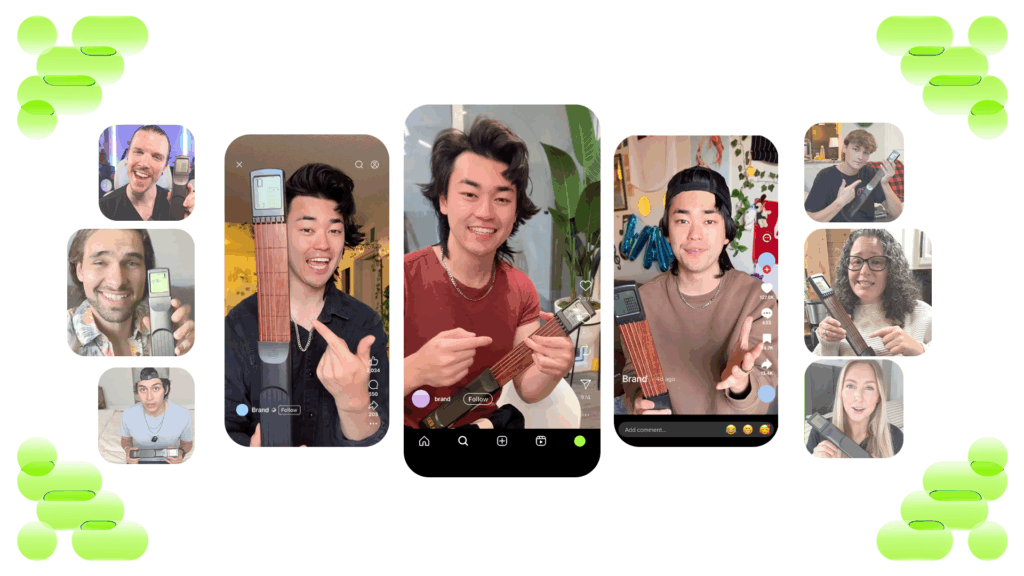
I’ll be honest: this is the area where I see brands leave the most money on the table during BFCM. UGC creators are a distinct category from influencers. What you are paying for is their ability to produce authentic, peer-to-peer content that performs in paid ads. Their follower count is largely irrelevant.
A creator unboxing your product and talking through your Cyber Monday deal feels fundamentally different from a polished brand video. It is the kind of content that stops the scroll in a feed full of promotional noise. For retargeting audiences who have already seen your product once, UGC with genuine social proof consistently drives higher conversion rates than studio-produced creative.
For Cyber Monday specifically, the brief matters more than usual. You need creators producing content that:
- Leads with the deal: price, discount percentage, or offer value in the first 3 seconds
- Creates urgency: ‘this price is only live today’ or ‘I can’t believe they’re doing this’
- Shows the product in use, not just held up to camera
- Ends with a direct CTA: ‘link in bio’ or ‘swipe up to shop’
On timing: order your BFCM creator videos at least 6 to 8 weeks before the event. That gives you time to receive content, test it in paid campaigns during October, and identify which hooks and creators are driving results while you can still act on those insights.
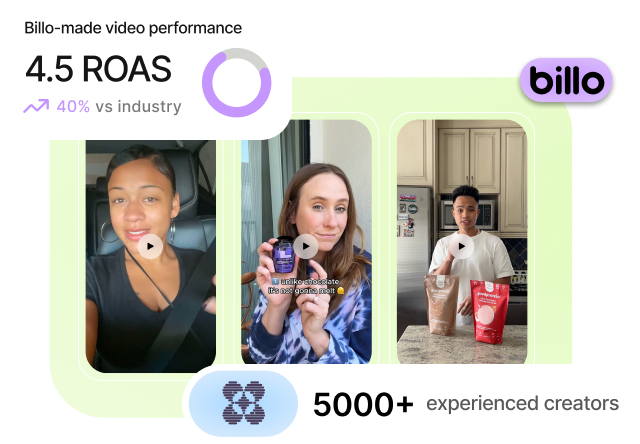
Billo connects ecommerce brands with 5,000+ vetted creators who produce conversion-focused video content, including BFCM-specific briefs tested across hundreds of campaigns. If you are planning ahead for this year, it is worth getting your creator pipeline moving early.
5. Group Products in Bundles
Product bundles increase average order value and simplify the buying decision for shoppers who want to spend but are not sure exactly what to buy. They are also a practical way to move excess inventory before year-end.
| Imagine your customer wants to treat themselves but feels a little guilty about buying three separate things. A well-priced bundle removes that internal negotiation entirely: it is one decision, one product, one great value. The guilt evaporates. |
Sephora’s ‘Sephora Favorites’ bundles are a masterclass in this: nine bestselling products at a significant discount versus buying individually, with the retail value of individual items shown next to the bundle price. You can do this with any product range. A skincare brand could bundle cleanser, moisturiser, and SPF; a homewares brand could bundle candles, a diffuser, and a tray.
6. Create Different Gift Guides
Not every Cyber Monday shopper knows exactly what they want, as many are buying gifts. Gift guides remove decision paralysis and position your brand as a helpful curator rather than a pushy seller.

| Imagine a shopper who wants to buy a gift for their mum. They land on your homepage and see 400 products. They leave. Now imagine they land on a ‘Gifts for her under $60’ page. That is a completely different shopping experience, and a far more likely conversion. |
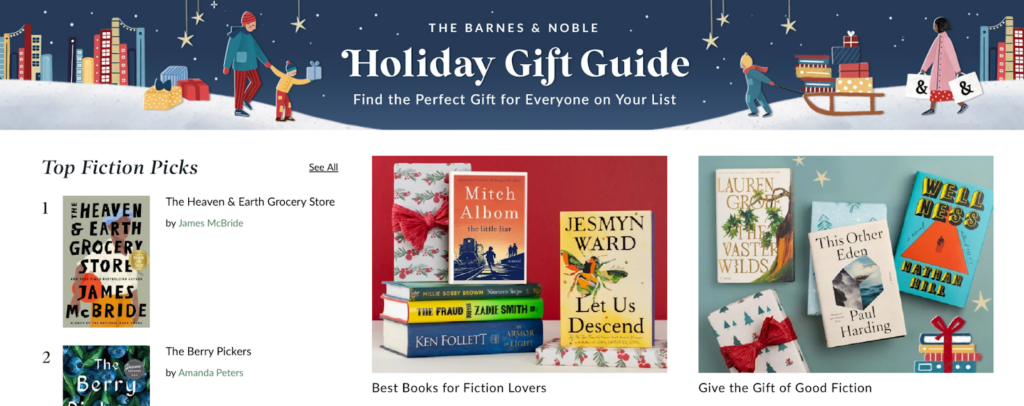
Build guides organised by recipient (for him, for her, for kids), by interest (the homebody, the fitness enthusiast, the bookworm), or by budget range. John Lewis structures theirs by recipient; Barnes & Noble goes by interest category. Either approach works: choose the one that maps best to your product range.
Practical tip: publish your gift guides in October, before BFCM, so they have time to gain search traction and be shared on social before the sale window opens.
7. Upsell and Cross-Sell
Both tactics increase revenue per transaction without acquiring a new customer, which makes them especially valuable during a period when ad costs are high and every click is expensive.
| Imagine a shopper browsing white canvas sneakers on your site. You offer an upsell to a premium leather version at a slightly higher price, and a cross-sell for cleaning spray and a waterproofing kit. They came for one product and are now considering three. Both moves make sense, and neither feels pushy if the recommendations are genuinely useful. |
Build these recommendations into your product pages and cart. Cyber Monday shoppers are making decisions fast; the upsell needs to be visible at the moment of intent.
8. Offer Free Shipping
Free shipping is expected on Cyber Monday. The Baymard Institute ranks unexpected shipping costs as the number one reason shoppers abandon their carts, and that expectation keeps growing. If your standard policy includes a minimum purchase threshold, consider waiving it for Cyber Monday, or make the threshold very visible throughout the shopping experience so shoppers add items to qualify.
| Imagine getting to checkout after finding the perfect deal, then seeing a $9.99 shipping fee appear. That single line has ended more Cyber Monday purchases than almost anything else. I am sure you will agree: it is an almost physical reaction when it happens. |
Lululemon offered free shipping with no minimum purchase in their Cyber Monday email. If blanket free shipping is not viable for your margins, a free shipping threshold such as ‘free shipping on orders over $75’ can actually increase AOV as shoppers top up their cart to qualify.
9. Use Organic and Paid Social Media
Social media’s share of Cyber Monday revenue hit 3.6% in 2025, a 54.5% increase year-over-year according to Adobe Analytics. The channel is growing fast, and short-form video is driving most of it.
| Imagine watching a 12-second TikTok of someone showing exactly what they just bought on sale, unboxing it live, reacting to the deal. That is more compelling than any promotional banner a designer can produce. I am sure you will agree: the brands you actually remember from last Cyber Monday were the ones whose content stopped you mid-scroll. |
For organic: start posting about your Cyber Monday offers the week before. Build anticipation with teaser content: ‘something big is coming Monday’ or a sneak peek of your offer. Use Instagram Reels and TikTok for reach, and Stories for urgency mechanics and countdown stickers.
For paid social: retarget warm audiences from the preceding weeks with short, direct ads that lead with the deal. Keep them under 15 seconds, put the offer in the first 3 seconds, and refresh creatives at least once during the event. Ad fatigue sets in fast when every brand is running BFCM ads simultaneously.
One more thing worth noting: traffic from generative AI platforms to retail sites grew 670% year-over-year on Cyber Monday 2025 according to Adobe Analytics. Making sure your product listings are detailed, structured, and review-rich gives you a better shot at being surfaced by AI shopping tools, a new discovery channel that is growing quickly and will matter more every year.
10. Treat Your Email Subscribers
Your email list is your highest-converting Cyber Monday channel, particularly subscribers who have been active in the past 90 days. Before the event, segment your list. Your top-tier customers, recent buyers, lapsed subscribers, and new sign-ups all warrant different messaging.
| Imagine you have 10,000 people on your email list. You send one generic ‘sale is live’ email to everyone and get a 1.2% click rate. Now imagine you segmented: your top buyers got early access, your lapsed subscribers got a re-engagement offer, your recent sign-ups got a first-purchase incentive. Same list, completely different results. That is what segmentation does. |
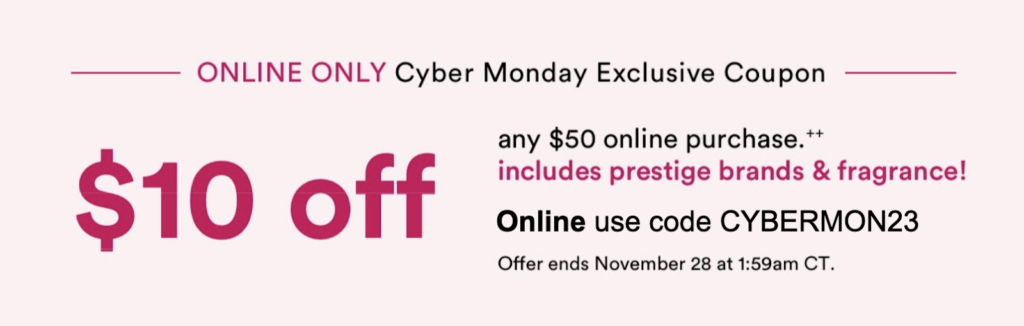
Ulta Beauty gave email subscribers an extra $10 off when purchasing online, a simple exclusive that made subscribers feel valued and gave them a concrete reason to act. Identify your most loyal tier and prepare something specific for them: early access, a higher discount, or a first look at your best bundle.
Time your Cyber Monday sends carefully:
- Sunday night: ‘Tomorrow is the day’ teaser to build anticipation
- Monday morning: main sale announcement with your primary offer
- Monday midday: ‘best sellers’ or ‘trending now’ to surface popular items
- Monday 8 to 10pm: ‘final hours’ send. Cyber Monday 2025 saw $16 million spent every minute during this window
If you are with me so far, let’s keep going.
11. Send Cart Abandonment Emails
A large proportion of shoppers who add something to their cart on Cyber Monday will not complete the purchase. They get distracted, they are comparison shopping, or they hit an unexpected cost at checkout and close the tab.
| Imagine you have spent the last three weeks building your Cyber Monday audience, driving traffic to your landing page, and running retargeting ads. A shopper adds your best product to their cart, then closes the browser. Without a cart abandonment email sequence, that customer is gone. With one, you have three more chances to bring them back. |
Set up a sequence before the event starts: a first email within one hour of abandonment while the item is still top of mind, a follow-up 24 hours later with social proof such as reviews and ratings, and a final reminder 48 to 72 hours later with a small incentive if your margins allow.
What makes them work: a subject line that references the specific product, a clear image of the abandoned item, and a single CTA back to checkout. Keep them short. The goal is to remove friction, not to re-sell from scratch.
12. Launch a Cyber Monday Contest
Contests serve two purposes during Cyber Monday: they generate content you can repurpose as social proof, and they create engagement at a time when every brand is competing for attention with discounts alone.
| Imagine asking your customers to show you how they use your product during your Cyber Monday sale. Some share it on their stories. Others tag their friends. You end up with a library of authentic content, a wave of social proof, and a handful of new customers, all from one well-structured contest. That content keeps working for you long after the sale ends. |
The format matters. A ‘comment to win’ post on Instagram generates engagement but produces nothing reusable. A stronger approach: a ‘show us how you use it’ or ‘share your unboxing’ contest tied to your sale. Require a purchase or a wish list share to enter, and choose a winner from submissions.
Keep entry mechanics simple. The more steps required, the more drop-off you will see, especially on mobile. One action is almost always better than two.
13. Extend Into Cyber Week
Not everyone shops on the day. Some people miss Cyber Monday entirely, others are still comparing options on Tuesday, and some are looking for gifts later in the week. Extending your sale into Cyber Week keeps momentum going and captures buyers who were not ready to commit on Monday.
| Imagine a customer who spent Cyber Monday comparing options and decided to wait. By Tuesday morning, your sale is over. They buy from a competitor who extended theirs. Cyber Week exists to capture exactly this buyer: the deliberator, the one who needed one more day. |
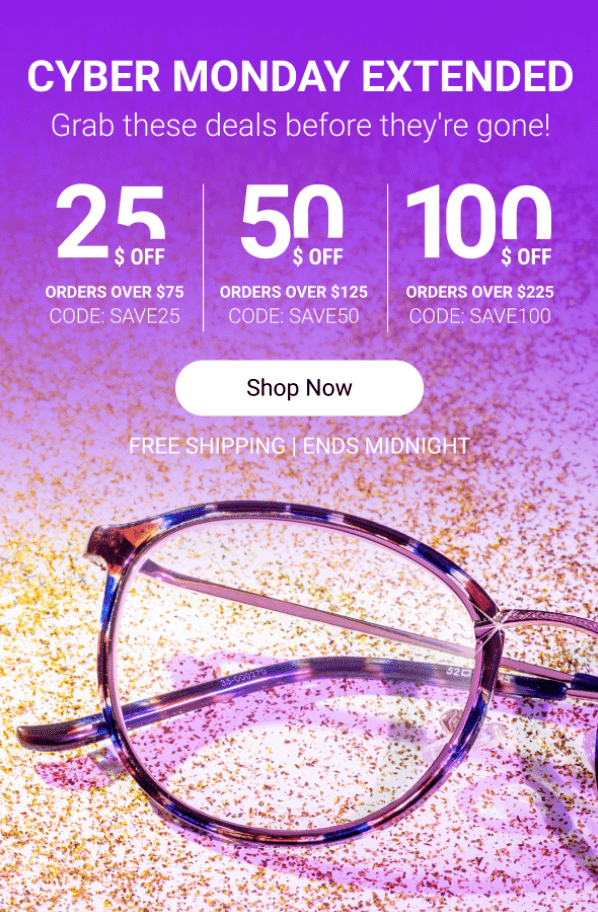
Glasses USA offered a sliding discount scale throughout Cyber Week: the more you spent, the more you saved. That encouraged higher-value purchases and gave latecomers a clear incentive. You do not need to maintain the same depth of discount through the whole week. A slightly reduced offer like ‘Cyber Week prices, last 3 days’ still converts well for people who missed Monday.
Refresh your messaging as the week progresses. ‘Last chance’ copy with a countdown to the end of Cyber Week maintains urgency without feeling like a never-ending sale.
14. Offer Buy Now, Pay Later
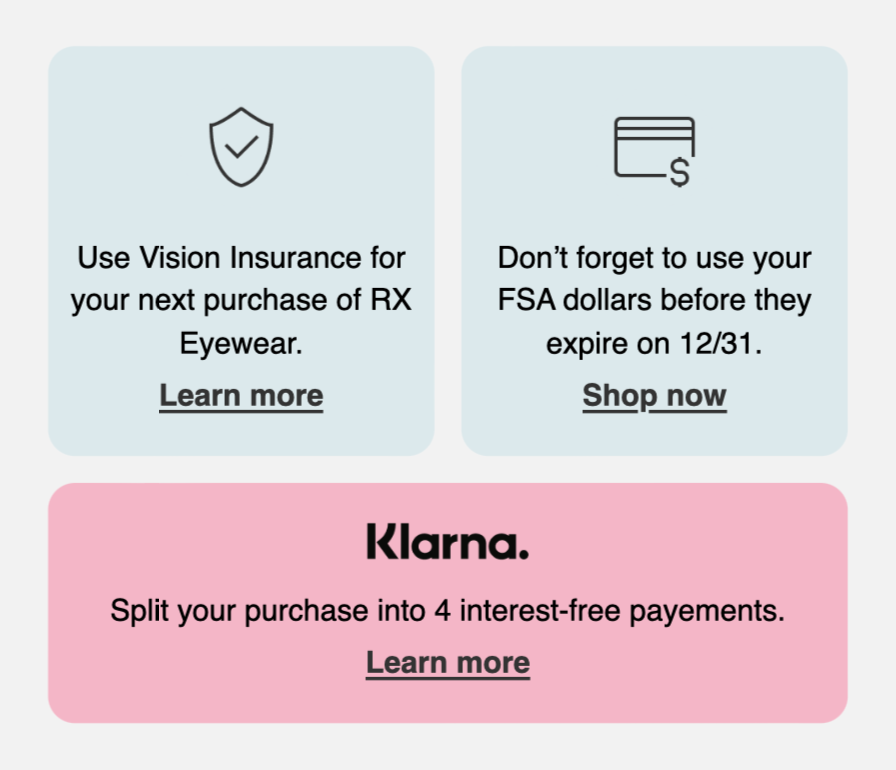
Cyber Monday 2025 was the first time in ecommerce history that BNPL crossed $1 billion in purchases in a single day: $1.03 billion spent via BNPL options, up 4.2% year-over-year according to Adobe Analytics. BNPL has become a mainstream payment behaviour, and brands that do not offer it are losing high-ticket sales at checkout.
| Imagine a shopper who finds your best Cyber Monday bundle, $180 worth of products they genuinely want. Without BNPL, they hesitate and leave. With it, they split the cost into three $60 payments and check out immediately. That sale happens because of a payment option, not because of a bigger discount. |
BNPL providers include PayPal Pay Later, Klarna, Afterpay, and Shop Pay Installments. If your platform supports it, make sure BNPL is visible on product pages and at checkout, not buried as a footnote. Frames Direct advertised their BNPL option prominently in their Cyber Monday email and saw higher average order values as a result.
Winning Cyber Monday Starts Before November
Cyber Monday is not won in the week it happens. It is won in the months of preparation before it. The brands that come out ahead are those that have already built their audiences, tested their creatives, and lined up their offers well in advance, so that when Monday arrives, they are executing a plan rather than scrambling to build one.
If you are thinking about getting your BFCM creator content sorted before the rush, it is worth taking a look at how Billo works. We connect brands with vetted creators who know how to shoot for the BFCM environment: deal-announcement hooks, unboxing retargeting ads, urgency creative. The earlier you start, the more time you have to test what works before November.
FAQs
When should I start planning my Cyber Monday marketing?
What is the difference between Black Friday and Cyber Monday marketing?
Which channel drives the most Cyber Monday sales?
Do I need a separate Cyber Monday campaign if I already ran Black Friday promotions?
How can small brands compete on Cyber Monday with a limited budget?

SEO Lead
Passionate content and search marketer aiming to bring great products front and center. When not hunched over my keyboard, you will find me in a city running a race, cycling or simply enjoying my life with a book in hand.
Make creator marketing a data-backed growth channel

Related from Creative Insider
Snapchat ads for ecommerce: what works, what doesn’t, and how to start

Social Commerce: Turn A 15-Second Scroll Into A Sale Without The Traditional Funnel