The Transformation Arc Is the Most Repeatable Winner
The single most common structure among the top-performing ads was a transformation arc. The creator starts in a relatable “before” state and ends in a credible “after” state, with the product as the reason they got there.
The highest-ranked ad in the entire dataset uses this pattern. The creator opens with “this was me not too long ago,” walks the viewer through the shift, and closes with where they are now. Four other top performers follow the same arc, each in a different category: household products, gifts, apparel, and furniture.

This pattern is very versatile, working well across different categories such as supplements, home products, apparel, furniture, and food subscriptions. It works in every one of those categories because the structure is doing the heavy lifting, not the product itself.

If you’re briefing creators for this structure, the most important instruction is to make the “before” state specific and personal. “I used to hate doing X” lands much better than “a lot of people struggle with X.” The more personal the starting point, the more the viewer identifies with it, and the more credible the transformation feels by the time the product appears.
Niche-Call Hooks Let the Ad Skip the Bridge Entirely
Five top-performing ads open by naming exactly who the ad is for. In half a second, the viewer knows whether to keep watching or scroll past. One ad opens with “Fellas, let’s be honest…” Another leads with “This is the best way to save time as a pumping mom.” Others call out whiskey fans, well-dressed men, or pet owners dealing with dirty filters.
The structural effect of this pattern is significant: most of these ads skip the Bridge beat entirely. When the Hook already pre-qualifies the audience, the ad doesn’t need to spend time earning belief as the viewer self-selects in and the ad can jump straight to the pitch.

That’s a meaningful efficiency gain in a format where every second matters. A niche-call hook compresses the ad’s job by removing one of the four beats without losing any persuasive force. The viewers who stay past the hook are already the right audience, and they already trust that this creator is speaking to them specifically.
The practical takeaway for creator briefs is straightforward: give the creator a specific audience to call out in the first line. “If you’re a [specific type of person]…” or “This is for [specific group]” are both reliable openers. Avoid generic hooks like “You need to see this” or “I just found something amazing.”
The niche-call works because it filters. A broad hook can’t do that.
Gift Framing Doubles the Reason to Buy
Another common trait for the ads in the dataset is framing the product as a gift, and their CTAs consistently give the viewer two reasons to purchase – one for themselves and one for someone else.
One ad closes with “I highly recommend the product for yourself or as a gift.” Another positions a subscription box as “a perfect gift for yourself or a friend.” A third features a creator shouting out their spouse for gifting them the product, then pivoting the CTA to position it as a winner “for any product lover.”
What stood out to us is that this pattern showed up in categories you wouldn’t naturally associate with gifting. Filters, apparel basics, and subscription services all appeared in the dataset with gift framing. The framing itself is what created the gift occasion, not the product category.

If you’re testing this pattern, the brief should instruct the creator to mention both purchase occasions in the CTA. A single line that covers “for yourself or as a gift” is enough. The dual framing works best when it feels like a natural afterthought rather than a scripted pitch. The strongest examples in the dataset sounded like the creator genuinely believed the product made a good gift, and added the suggestion casually.
Endorsement-Wrapped CTAs Outperformed Every Generic Close
The CTAs that ranked highest in the dataset weren’t “buy now” or “click the link below.” Instead, they were direct instructions wrapped in personal endorsement, and the difference in performance between endorsement-wrapped CTAs and generic ones was consistent across the entire ranking.
Here are some of the closing lines from the top performers:
- “You got to try the [product]. It’s going to change your life.”
- “Trust me, go check out the [product].”
- “I highly recommend the [product] for yourself or as a gift.”
- “I honestly waited too long to upgrade. So don’t do it. This is worth every bit of the hype.”
- “Try this out for yourself and trust me, it will make your routine so much easier.”
- “I challenge you to put on these and see why they’re the best.”
Every one of these lines does two things at once – it tells the viewer what to do, and it vouches for the product in the same breath. The creator sounds like a friend making a genuine recommendation, not a salesperson hitting their mark. That combination of directness and personal stake is what separates the top-performing CTAs from the generic closers that filled the bottom half of the ranking.

The refined rule we took from this data is that you should be direct, but sound like a friend. Top-ROAS ads don’t just command, they command and vouch at the same time.
If your creator brief says “end with a CTA,” that instruction is too vague. The brief should specify that the closing line needs to include a personal endorsement alongside the action. “Go check out [brand]” is fine, but it won’t land as well. “Trust me, go check out [brand], it’s worth it” is what the top performers actually sound like.
Hype-Aware Openers Build Trust in Saturated Categories
Many of the top-performing ads in our data set open by acknowledging that the viewer has already seen ads in this category. One creator starts with “By now you’ve seen the ultimate old-fashioned box.” Another opens with “I bought the chair just because of the hype.” A third leads with “I just found THE BEST Italian food subscription,” signaling awareness that the viewer has heard that claim before.
In every case, the creator sounds credible because they’ve positioned themselves as someone who has already navigated the noise. The viewer doesn’t have to fight through the “this is just another ad” reflex because the creator has already named it and moved past it. The hype acknowledgment functions as a trust-building mechanism: I’ve seen what you’ve seen, and I’m going to tell you what’s actually worth it.

This pattern is especially valuable in saturated verticals like furniture, food subscriptions, and beauty, where viewers are exposed to dozens of similar ads every week. In those categories, a creator who opens with a standard benefit claim is competing with every other ad the viewer has already scrolled past. A creator who opens by acknowledging the saturation immediately stands apart.
For creator briefs in competitive categories, the instruction is to open with honest acknowledgment rather than a fresh pitch. This gives the creator permission to be real about the landscape, which makes everything that follows more believable.
How to Apply These Patterns to Your Next Creator Brief
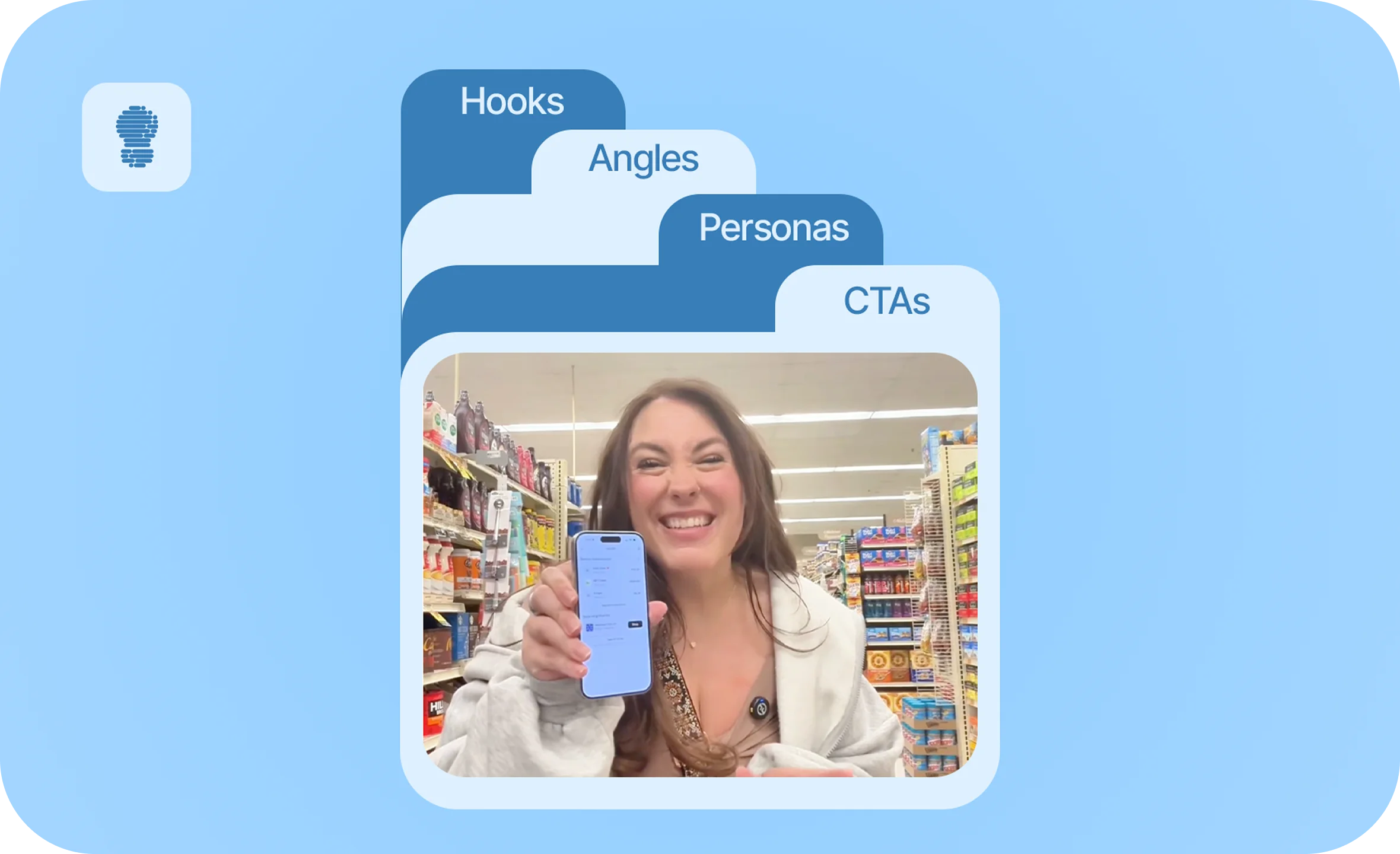
The structural insight that runs through all five patterns is that a winning UGC ad is a coherent four-beat arc where each beat has a specific job.
- The Hook earns the watch
- The Bridge earns the belief
- The Middle delivers the pitch
- The CTA earns the click.
When those beats line up and each one does its work, the format performs across virtually any vertical.
Here is our take on how to structure a winning pattern
Start by building the Transformation Arc into your next round of creator briefs.
It was the most common structure among the top performers, it works across categories, and it gives the creator a clear narrative to follow. Ask them to describe a specific, personal “before” state and show how the product got them to the “after.” That single instruction produces a more structured ad than most open-ended briefs.
Layer in a Niche-Call Hook if your product has a clear target audience.
The data showed that ads with niche-call openers frequently skipped the Bridge entirely without losing any persuasive force, which means you get a tighter, faster ad that still converts.
For CTAs, make endorsement-wrapped closes the default in every brief.
Specify that the closing line should include both a direct instruction and a personal vouch. Generic closers like “link below” or “check it out” consistently underperformed the CTAs that combined a command with a genuine recommendation.
Finally, test Gift Framing and Hype-Aware Openers as situational additions.
Gift framing works best when the dual-purchase occasion feels natural rather than forced. Hype-aware openers work best in categories where the viewer has already been exposed to heavy advertising. Both are patterns that earn their place when the context is right.
The best UGC ad in the dataset wasn’t the one with the cleverest hook or the most polished production. It was the one where every beat did its job and the four beats connected into a single, coherent arc. These five patterns are the structural choices that made that happen, and they’re all buildable into every creator brief you write.