UGC for fashion brands: creators that convert on Meta and TikTok

Here’s a number that should stop you: Apparel & Accessories’ ROAS fell every single month of H1 2026, from 2.88 in January to 1.84 in June. Six months earlier, it led Billo’s dataset at 4.11. The category still averaged 2.46 for the half, above the 2.17 cross-industry figure, but the direction matters more than the level.
Here’s the number that sits right next to it: Apparel’s hook rate was 22.94% in H1 2026, below the 25.44% cross-industry average. For the most inherently visual product category in e-commerce, fashion video ads underperform the market at the moment of first impression.
These two numbers together tell you everything about where the opportunity is. The category converts extraordinarily well when someone engages. The problem is getting them to engage in the first place, because most fashion ads look exactly like every other fashion ad.
TL;DR:
- ROAS 2.46: sixth of 14 categories and above the 2.17 cross-industry average, but down 40% on H2 2025. Hook rate and CTR held steady while ROAS fell, so the drop is happening after the click.
- Hook rate 22.94%: still below the 25.44% average. Fashion ads look like fashion ads, and the scroll continues before the creative gets a chance.
- The hook problem is a format problem. Try-on, GRWM, and styling challenge content opens a question the viewer has to stay to answer. Styled lookbook content front-loads the answer.
- Creator diversity solves the fit question at scale. Each creator profile you brief answers it for one audience segment. Brief only one type and the rest of your potential buyers go unanswered.
- November is the peak month for hook rate and CTR. Brief 6-8 weeks out: September briefs for November deployment, not October.
- Run 4-6 creators per product line per cycle, across three format variants. That’s the minimum to identify what’s working before scaling spend.
Why fashion UGC hooks underperform
Open three fashion ads in a row and you’ll likely see the same thing: a model or creator wearing an outfit, walking, posing, maybe a quick cut between angles. The products are beautiful. The production may be polished. But the openings blur together because the visual language of fashion advertising has become a genre with its own predictable grammar.
This is the sameness problem. When every ad in a category opens with someone looking good in clothes, nothing stands out. The viewer’s pattern recognition activates immediately: this is a clothes ad. And the scroll continues.
Two of the three categories with the highest hook rates in H1 2026, Toys & Games at 28.79% and Health & Beauty at 28.11%, share a different characteristic. Their content creates immediate curiosity or visual tension: a skin transformation, a satisfying product reveal, something the viewer has to stay to understand. In this case, the product has the visual appeal. But it front-loads the answer rather than opening a question with UGC for fashion style videos.
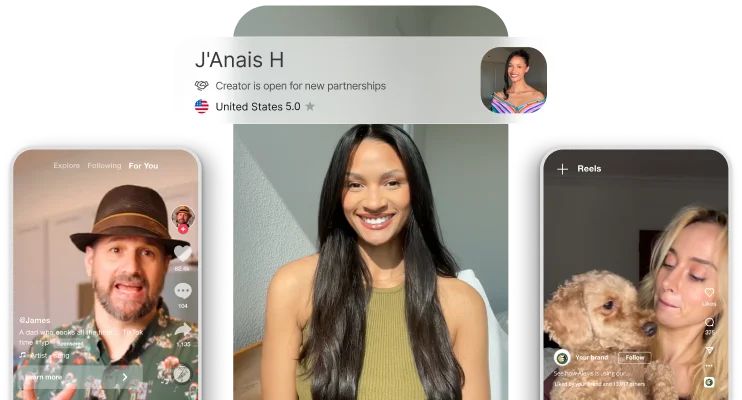
A different kind of content is the fix, not better production. When a real person opens a parcel and holds a dress up against themselves asking “do you think this fits my shape?”, the viewer with the same shape stays. When a creator films themselves building an outfit for a specific event (not a runway, not a set, their actual bedroom and their actual occasion) the viewer in the same situation stays. Authentic context creates curiosity in a way a styled shot cannot.
This is what authentic UGC does that studio content doesn’t. It answers the question the viewer is actually asking before they engage: “does this look good on someone like me?”
What Billo’s data shows about UGC for fashion performance
Billo’s analysis of 88,329 Meta video ads from H1 2026 covers Apparel & Accessories across hook rate, CTR, and ROAS. The data tells a specific story: fashion still converts above the market average, its ROAS is sliding after the click, and the structural problem at the opening hasn’t gone away.
| Metric | Apparel & Accessories | Cross-industry average | What it means for your campaigns |
|---|---|---|---|
| Hook rate | 22.94% | 25.44% | Below average in the most visual product category in e-commerce. Fashion ads look like fashion ads, and the opening is still the weak point. |
| CTR | 1.77% | 1.93% | Slightly below average, but steady. The click held all half while ROAS fell, so it isn’t the bottleneck. |
| ROAS | 2.46 | 2.17 | Above average, but down from 4.11 last half and lower every month of H1 2026, from 2.88 in January to 1.84 in June. The drop is happening after the click. |
The seasonal pattern adds strategic detail. November peaks on both hook rate and CTR as the audience enters holiday party and winter wardrobe mode, because purchase intent is running high independent of the creative. September is the single worst month for hook rates: the audience is mentally post-summer but the fall creative hasn’t clicked in yet. On ROAS, July and August averaged 4.77 before declining through Q4 as brands scale aggressively. December landed at 2.88, still above the cross-industry average, driven by seasonal spend compression rather than creative underperformance.
For a media buyer benchmarking performance: 2.46 is your H1 2026 category baseline, but it’s a moving target. Because Apparel fell every month, compare each month against the same month for the category rather than the half-average. The decline has now run for twelve months, which makes it hard to put down to Q4 scaling alone.
You can explore the full Apparel & Accessories performance data across hook rate, CTR, and ROAS in Billo’s Creative Insider benchmark reports.
The fit question
Fashion’s core conversion question is not “do I like this product?” Viewers can answer that from a product page. The question they’re asking in a video ad is: “will this look good on me?”
It’s an identity question, and it’s one that polished studio content structurally cannot answer. A model wearing a dress is showing you the product, not showing you yourself in the product. The mental translation required (does this translate to my height, my shape, my coloring, my lifestyle) is work the viewer has to do alone. And most viewers don’t do it. They continue scrolling.
Authentic creator UGC answers the question directly, without the viewer having to do any translation. A creator who shares a similar body type, a similar style sensibility, a similar occasion they’re dressing for: their try-on is not aspirational advertising, it’s evidence. The viewer doesn’t have to imagine themselves in the product. They’re watching someone like them in the product.
This is why diversity of creator profiles matters more in fashion than in almost any other category. Each creator you brief represents a specific segment of your audience’s self-image. A tall creator with a lean frame is answering the fit question for one audience. A petite creator or one with a curvier silhouette is answering it for a completely different one. Brands that brief only creators who look like the standard model body are leaving most of their audience’s conversion question unanswered.
The UGC formats that convert in fashion
Try-on haul
The most direct answer to the fit question. A creator trying on multiple pieces from the same brand, reacting genuinely to how each fits (commenting on sizing, proportion, whether it runs true) is doing more conversion work than any product description. Viewers with similar bodies calibrate their own purchase decision in real time while watching.
Haul content also creates cross-sell opportunity naturally. A creator who tries five items and loves three is already surfacing product combinations the viewer might not have considered.
Get Ready With Me (GRWM)
GRWM content places the brand in a real life context: a date, a work event, a trip, a night out. The power of the format is that it answers a question beyond “does this fit?” It answers “when would I actually wear this?” The viewer watching a creator build an outfit for a situation they recognise is having their purchase objection (“but where would I even wear it?”) answered without being asked.
Brief this format with a specific occasion. “Get ready for a first dinner date” produces more conversion-oriented content than “get ready for a night out”, because the specific scenario creates more audience identification.
Styling challenge
One item styled three different ways (casual, smart-casual, dressed up) is one of the highest-value formats for fashion because it solves the versatility objection. Most fashion purchase hesitations include “but I’d only wear it once.” Seeing a creator style the same piece across occasions removes that objection in 60 seconds.
OOTD with context
Outfit-of-the-day content with real context (“what I wore to run errands,” “date night outfit under $100,” “what I packed for a long weekend”) performs well because the context creates audience fit. The viewer who has the same errands, the same budget, the same weekend trip already sees themselves in the content before they’ve consciously decided to engage.
How to brief fashion creators: building for variety without losing the brand
Apparel briefs have a specific tension: too much direction produces stiff, over-produced content that loses the authenticity that makes UGC work. Too little direction produces content that misses the brand’s aesthetic and can’t be used.
The solution is to brief the context, not the execution. For a try-on haul brief, this looks like: “Choose 3-5 pieces from the new collection. Try them on naturally. Tell us how they fit, your honest reaction to each, and which you’d actually wear and when. We want your real take, not a script.”
| Include in the brief | Leave out of the brief |
|---|---|
| Occasion context: “We’re a workwear brand – please style in the context of your work life.” | Shot lists or specific camera angles. These produce content that looks directed, not authentic. |
| Aesthetic guardrails: “Please keep the setting clean and well-lit.” | Scripted lines. The moment a creator reads from a script, the content reads like a brand made it. |
| A do-not list: “Please don’t compare our sizing to other brands by name.” | Requirements to mention the brand name in the first three seconds. Forced placement kills the hook. |
| The format and occasion: try-on haul, GRWM for a work event, styling challenge with three looks. | Requirements to film in a specific location. Real environments are what make UGC feel real. |
For agencies managing multiple clients with seasonal drops, a modular brief template with two variable slots (an “occasion slot” for workwear, eveningwear, or casualwear, and a “challenge slot” for try-on haul, styling challenge, or GRWM) lets you adapt the same framework across drops without rebuilding from scratch. The briefing process stops being the bottleneck.
Seasonal brief strategy: timing matters more in fashion
Apparel & Accessories has the most pronounced seasonal pattern of any category in Billo’s hook rate and CTR data. November peaks on both metrics as the audience enters holiday party and winter wardrobe mode. September is the single worst month for hook rates: the audience is mentally post-summer but the fall creative hasn’t clicked in yet.
The practical implication: brief 6-8 weeks before your seasonal peak, not at it. To have strong November creative running when the audience is at maximum intent, briefs need to go out in September, exactly when apparel hook rates are at their lowest and the temptation is to hold back spend. The brands that brief creators in the September trough for November deployment consistently get ahead of those who scramble at the peak.
The same logic applies in reverse for transitional content: if September is when audiences disconnect from summer creative, brief the seasonal pivot content in July so you’re not caught running poolside imagery at a back-to-school mindset. A creator building a “first-day-of-work outfit” or “back to campus styling” brief filed in July is what softens the September dip instead of letting it become a three-week gap in your creative pipeline.
Getting the volume your fashion campaigns need
The fashion opportunity in Billo’s dataset is specific: ROAS still above the market at 2.46, a hook rate below it at 22.94%, and a post-click drop worth fixing before you scale.
Break the sameness at the opening and the rest of the funnel follows. Four to six creators per product line, three format variants, briefs out 6-8 weeks before peak: that’s the system. For agencies, the same cycle runs across every client account with only the creative direction changing between them.
If you’re running beauty or wellness alongside apparel, the same infrastructure covers all three – the UGC guide for beauty and skincare brands covers how the approach adapts. Browse Billo’s fashion creator pool to find creators with the right fit profile for your audience.
FAQs
Why does fashion underperform on hook rate despite being such a visual category?
What’s the best UGC format for apparel brands?
How many creators do I need for a fashion UGC campaign?
How do I maintain brand aesthetic with UGC without over-scripting?
When should I brief creators for seasonal fashion campaigns?

SEO Lead
Passionate content and search marketer aiming to bring great products front and center. When not hunched over my keyboard, you will find me in a city running a race, cycling or simply enjoying my life with a book in hand.
Make creator marketing a data-backed growth channel

Related from Creative Insider
Billo vs SideShift: a side-by-side comparison
Billo vs Influee: a side-by-side comparison
Best Cohley alternatives: 6 platforms compared for 2026