YouTube Bumper ads: when to use them, and what to track

For performance teams running heavy Meta spend, YouTube is usually the next channel on the diversification lis. While bumpers are the lowest-friction entry point. They don’t require a new creative system, they use CPM pricing that any media buyer already understands, and they produce a measurable signal (recall lift) that’s independent of click-through attribution.
TL;DR
- Bumper ads are 6-second, non-skippable YouTube ads priced on CPM. They’re built for recall and frequency, not direct response.
- They work best as the second or third touch in a campaign sequence, reinforcing messages with warm audiences rather than introducing a brand cold.
- In a Google study of 122 bumper campaigns, 90% drove ad recall lift averaging +30%, and 70% drove brand awareness lift averaging +9%.
- The most effective use case is sequencing bumpers after a skippable in-stream campaign, targeting site visitors, video viewers, and people who engaged with earlier ads.
- Measure bumpers on impressions, reach, frequency, CPM, and Brand Lift surveys. CTR is the wrong signal for this format.
The single biggest reason bumper campaigns get cut prematurely is measuring them on click-through rate. Bumpers are not a click format. Measure them on recall, frequency, and view-through conversions, and set up a 30-day view-through attribution window before you launch, or the channel will consistently look worse than it actually is.
The creative constraint is real too: 6 seconds is not enough to introduce a brand cold. Bumpers reinforce and remind. Understanding when to use them makes the difference between a wasted budget line and a format that materially lifts recall across your full YouTube video ad campaign.
What are YouTube Bumper ads?
Bumper ads are six seconds long, non-skippable, and priced on CPM. You pay per 1,000 impressions regardless of whether the viewer clicks anything.
They run before, during, or after YouTube videos, and because viewers cannot skip them, every served impression is a completed view. Completion rates run 90-95%, the highest forced-view benchmark on the platform, and for reach-focused goals, bumper CPMs are typically the most cost-efficient non-skippable placement YouTube offers.
In a Google-commissioned study of 122 bumper ad campaigns, 70% drove significant brand awareness lift with an average increase of 9%, and 9 out of 10 drove ad recall lift with an average increase of 30%. That’s among the strongest recall data for any digital ad format at this price point. CPMs typically run $3-$6 for broad targeting and rise to $6-$15 in competitive verticals, making bumpers the lowest-CPM non-skippable placement on YouTube.
To put the formats in context:
| Format | Length | Skippable? | Pricing | Best for |
|---|---|---|---|---|
| Skippable in-stream | 12s-3min | Yes, after 5s | CPV | Awareness, consideration, direct response |
| Non-skippable in-stream | Up to 15s | No | CPM | Short brand messages, product launches |
| Bumper ads | 6s | No | CPM | Recall, frequency, retargeting reinforcement |
When Bumper ads work and when they don’t
Bumper ads are not a universal fit for every campaign objective. The format’s constraints make it highly effective in specific scenarios and poorly suited to others.
Bumper ad sequences lift brand recall by 34% compared to single-exposure campaigns, and brands that use bumpers as reinforcement rather than first-touch awareness see 40-60% higher recall than those running bumpers standalone. The pattern is consistent: bumpers perform when the audience already has some familiarity with the brand.
Where Bumpers work:
- Retargeting site visitors, product page viewers, and people who watched 25%+ of an earlier in-stream ad
- Reinforcing a key message after a longer awareness campaign has established the context
- Sustaining brand presence during the consideration window between initial exposure and purchase
- Lower-funnel recall nudges for audiences close to a conversion decision
Where Bumpers don’t work:
- Introducing a complex product or service to a cold audience (6 seconds doesn’t allow for education)
- Direct response campaigns where the goal is clicks or immediate conversions
- Standalone brand awareness without any prior exposure (the format assumes context the viewer doesn’t yet have)
The best path forward? Combining multiple YouTube formats into 1 campaign. Knowing when and where to use each of them.
The sequencing strategy: Bumpers as a retargeting tool
The strongest use case for bumper ads is sequencing. Run a skippable in-stream ad to establish awareness, then follow with bumpers to reinforce the message for everyone who engaged with the first ad but didn’t convert.
A practical three-stage sequence looks like this:
- Stage 1 (Cold audiences): 30-60 second skippable in-stream ad for brand awareness and product introduction
- Stage 2 (Engaged viewers): 15-second non-skippable for audiences who watched 25%+ of the first ad
- Stage 3 (Warm audiences): 6-second bumpers for retargeting site visitors, pricing page viewers, and people who engaged with earlier ads
For the bumper retargeting layer, set up three audience segments in Google Ads: a YouTube engagement audience (viewers who watched 25%+ of your in-stream ad), a website visitor list via Google Tag, and a remarketing list for anyone who visited a product or pricing page. Apply these to the bumper campaign with a frequency cap of 3-5 impressions per user per week.
A prospect who visited your pricing page and sees your bumper ad three times in the following week is meaningfully more likely to return and convert, because the recall function compounds with the intent signal already captured from the site visit.

One move that’s particularly effective for teams coming from Meta: export your existing Meta custom audiences (pixel-based retargeting lists, customer lists, or high-intent segment exports) and upload them to Google Ads as Customer Match audiences.
Apply those lists to your bumper campaign. The result is cross-channel retargeting that reaches the same warm audiences you’re already paying Meta to re-engage, but at bumper CPMs of $3-6 rather than Meta’s retargeting rates. This adds a second frequency layer on top of what Meta has already identified, without building new audience logic from scratch.
For a broader look at how bumpers fit within a full paid video advertising strategy, the channel-level allocation matters as much as any individual format decision.
How to build a 6-second ad that actually works
The most common mistake with bumper ads is treating them as shortened versions of longer creative. A bumper ad is a different creative unit entirely, built around a single thought and delivered with precision. The process starts with one question: what is the single thing you want the viewer to remember? Every visual, audio element, and frame serves that one idea.
A useful framework for allocating those 6 seconds:
- Seconds 1-2: Visual hook or brand signal. Your logo or product should be visible from frame one.
- Seconds 3-4: The one idea: a problem, a claim, or a product moment.
- Seconds 5-6: Brand reinforcement or CTA. The final frames are the recall anchor.
Sound design matters, but every bumper should also work without audio. Use high-contrast imagery, large text overlays, and on-screen captions so the message lands for viewers watching on mute.
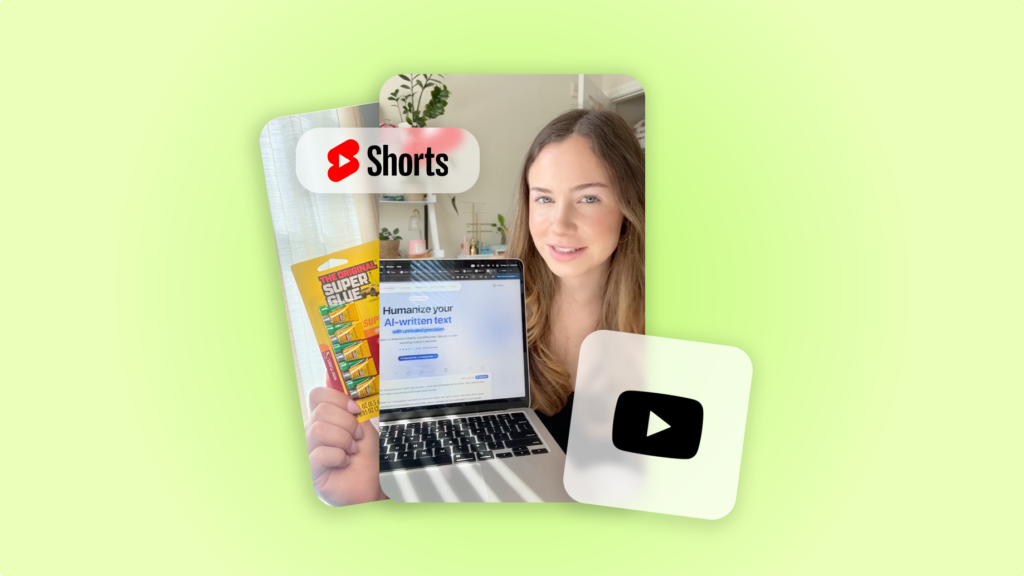
If you’re running creator-led campaigns, brief the 6-second bumper as a distinct deliverable at the shoot stage rather than trying to edit one down from longer creator content afterward. A creator who knows they’re shooting a bumper will frame a sharper single moment: a direct claim, a reaction shot, or a product-in-use visual. That’s more useful than anything you’ll get by cutting a 60-second testimonial down to 6 seconds in post.
For brands already working with creators on YouTube UGC ads, adding a bumper brief to the same shoot adds minimal cost and produces a ready-to-run retargeting asset.
Setting up YouTube Bumper ads in Google Ads
Bumper campaign setup follows the same Google Ads interface as other video formats, but a few configuration choices are specific to how bumpers work.
The campaign objective is Brand awareness and reach, and the ad format selection is Bumper within a Video campaign. Bidding is Target CPM: you set the average amount you want to pay per 1,000 impressions, and Google optimizes delivery toward that target across your audience.
Frequency capping deserves specific attention. Google’s Target Frequency campaigns for YouTube let you set a weekly or monthly frequency goal, and the system optimizes delivery to hit that target while managing reach efficiently. For most bumper retargeting use cases, 3-5 impressions per user per week is the practical sweet spot, enough for recall without triggering fatigue, which tends to set in above 7-8 exposures per week.
Video Reach Campaigns offer an alternative setup that combines bumpers, non-skippable in-stream, and skippable in-stream in a single campaign, letting Google allocate budget dynamically across formats based on reach efficiency. This is useful when you want to maximize unique reach across a full YouTube presence without managing format-level campaigns separately, with the tradeoff being less granular control over which formats receive spend.
What to track and ignore
Bumpers are not a click-driven format, so measuring them on CTR or direct conversion rate consistently produces misleading results and leads to premature campaign decisions.
This is the most common reason bumper campaigns get shut down before they’ve had a chance to work. Before launching, set a 30-day view-through attribution window in Google Ads; without it, you’ll miss the conversions that happen later through direct search, a retargeting ad, or an organic return visit that the bumper impression contributed to.
Track these:
- Impressions and Reach: Total delivery and unique users reached
- Frequency: Average exposures per user. Watch this closely: 3 to 5 per week drives recall; above 7 to 8 starts generating fatigue and pushes CPMs up without corresponding reach growth
- CPM: Cost efficiency benchmark. Compare against target and watch for inflation as frequency rises
- View-through conversions: Bumpers in a retargeting sequence should contribute here. If they’re not showing up, check that your attribution window is set to 30 days, not the default 1-day view-through
Let’s Recap
Bumper ads work as the reinforcement layer of a YouTube campaign, not the foundation.
Their value shows up when a warm audience has already been exposed to your brand through longer in-stream creative, and bumpers keep the message present during the consideration window. At $3-$6 CPM for broad targeting, they’re among the most cost-efficient reach formats on the platform.
Build the creative specifically for 6 seconds: one idea, visible brand from frame one, functional without audio. If you’re working with creators, brief the bumper as its own deliverable at the shoot rather than editing down from longer content. Measure on recall and frequency rather than clicks; the conversion payoff is real but shows up through later touchpoints.
FAQs
Can you skip YouTube bumper ads?
How much do YouTube bumper ads cost?
Are bumper ads good for direct response?
What’s the difference between bumper ads and non-skippable in-stream ads?

SEO Lead
Passionate content and search marketer aiming to bring great products front and center. When not hunched over my keyboard, you will find me in a city running a race, cycling or simply enjoying my life with a book in hand.
Make creator marketing a data-backed growth channel

Related from Creative Insider
Snapchat ads for ecommerce: what works, what doesn’t, and how to start
Social Commerce: Turn A 15-Second Scroll Into A Sale Without The Traditional Funnel