Black Friday Marketing Strategy: Proven Ideas and Ads

A practical Black Friday marketing guide for ecommerce brands: early audience strategy, ad creative types, platform-by-platform tactics, and the metrics that tell you whether it is working.
TL;DR
- A strong Black Friday marketing strategy starts 2 to 3 months before November, not in October. By then, the cheap audience-building window is already closing.
- Build warm audiences early: the BFCM ad auction becomes expensive when every brand enters in November.
- User-generated content (UGC) creator video outperforms brand-produced creative in BFCM retargeting, especially ads that lead with the deal in the first 3 seconds.
- Meta, TikTok, and Google each require a different approach. Knowing which platform fits your audience changes your results significantly.
- The best Black Friday marketing ideas combine emotional creative, custom landing pages, and a sharp retargeting sequence.
- Increase retargeting budgets by 30 to 50% during the BFCM window to capitalize on the warm audiences you built in the weeks before.
Every year, brands scramble to launch their Black Friday marketing campaigns in October. By then, the window to build audiences cheaply is already closing, and the best-performing competitors have been testing creatives since August.
Black Friday is the single highest-revenue period of the year for most ecommerce brands. The difference between a good campaign and a great one comes down to how much groundwork you have laid before November arrives. This guide covers everything in your Black Friday marketing strategy: from early audience building and ad creative to platform-specific tactics, budget allocation, and the metrics that tell you whether it is actually working.

Plan Your Promotion Deals In Advance
The most common mistake in Black Friday marketing is treating it as an event you prepare for in October. By the time most brands start ramping up, ad auction costs are already climbing and your competitors have spent weeks building the retargeting audiences that will determine their results in November.
Plan your deals and tease them before the competition heats up.
Shoppers start building wishlists long before Black Friday weekend. If you finalise your bundle deals, discounts, and featured products in advance, you can tease them early and build anticipation. Point customers toward what is coming rather than keeping them guessing. Early visibility means easier conversions when the sale actually drops.
Boost traffic 2 to 3 weeks before Black Friday.
The BFCM period is a bidding war, and traffic costs surge as every brand enters the auction simultaneously. To gain the upper hand, increase your ad spend early. The more people you attract to your website in the weeks leading up to the sale, the more accurate and effective your retargeting campaigns become. Try new cold, broad, and lookalike audiences while the costs are still manageable.
| Coco Village ran this play with a holiday quiz that helped parents build gift wishlists and rewarded them with a $10 card. It did not push a purchase at all. What it did was collect intent, drive traffic, and create precise retargeting pools that powered their Black Friday, Cyber Monday, and Christmas campaigns. I am sure you will agree: that is a much smarter use of pre-season budget than waiting until November to turn everything on. |
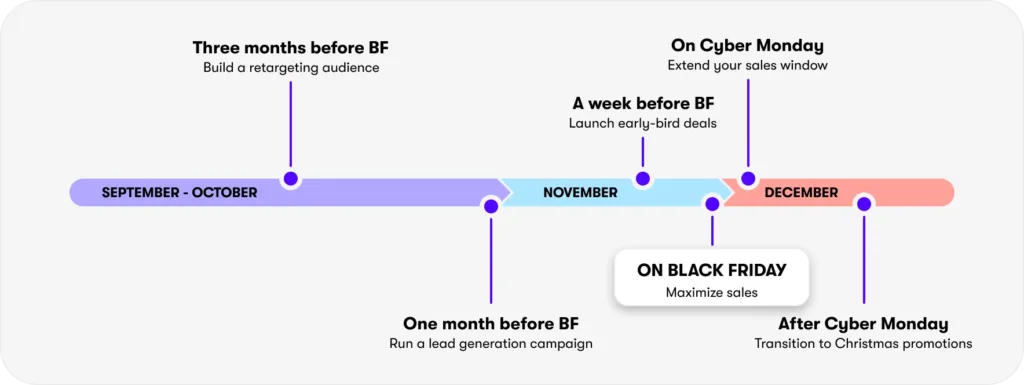
The brands that win Black Friday are not the ones who react fastest in November. They are the ones who have spent the previous months building the audiences everyone else is trying to reach.
With your timeline and audiences in place, the next question is what to actually create.
Build Your Black Friday Ad Creative
Creative is the variable that determines whether your BFCM campaigns pay off or waste away. The right format, the right emotional angle, the right landing page: these decisions compound. Let’s work through them in order.
1. Ad formats that convert during BFCM
Not all ad creative performs equally during Black Friday. The formats that drive results are specific, and the brands that identify them through testing in September and October are the ones that can scale confidently during the sale window.
UGC creator video is consistently the strongest format for BFCM retargeting. What you are paying for is not a creator’s audience: you are hiring for their ability to produce authentic, peer-to-peer content that performs in paid ads. A creator unboxing your product and talking through your Black Friday deal stops the scroll in a feed full of promotional noise in a way that polished brand video simply does not.
For BFCM specifically, the brief matters more than the creator’s profile. You need videos that lead with the deal in the first 3 seconds, create urgency, show the product in use, and end with a direct CTA. Order creator videos at least 4 to 6 weeks before the event so you have time to test and identify what works before you scale spend in November.
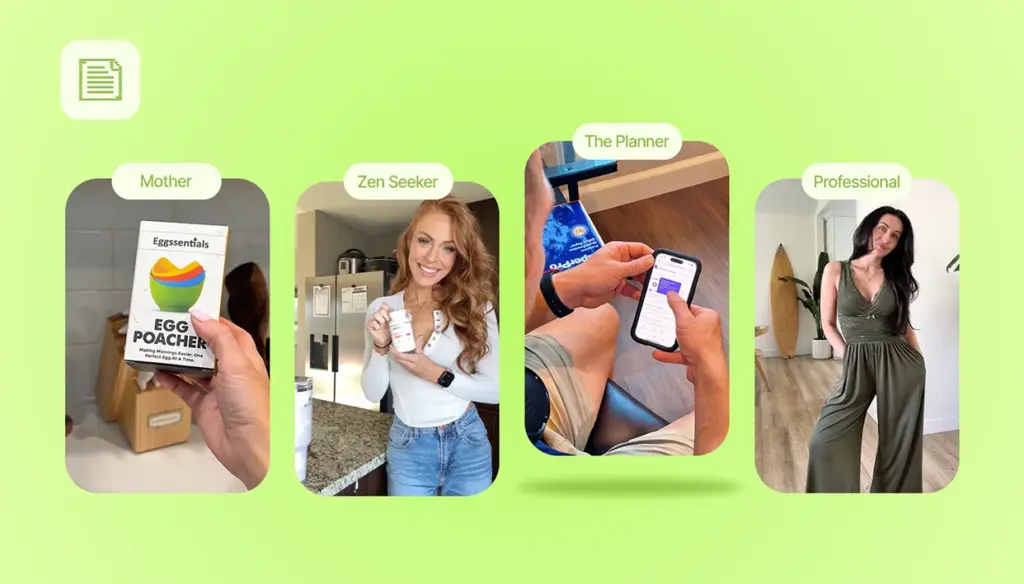
Teasers and anticipation content build the audience you will retarget later. In the weeks before Black Friday, run short videos that hint at your upcoming offers without revealing everything. Mystery and anticipation drive more click-throughs than early deal announcements. Keep teasers under 15 seconds, use Stories and Reels for distribution, and drive viewers to a landing page or email waitlist.
Unboxing and product demo ads give potential buyers a firsthand look at what they are getting. They work especially well for retargeting audiences who have visited your product pages but not yet purchased, because they answer the ‘is this worth it?’ question directly. Show the product being used in a real context, highlight one or two specific features, and acknowledge the deal explicitly.
Urgency and scarcity ads become the dominant format during the BFCM window itself. These ads are short, deal-first, and direct: the offer leads, the product follows. Countdown timers, limited stock callouts, and flash sale mechanics drive the impulse that turns a warm audience into a buyer. Having said that, urgency only works when it is genuine. Evergreen ‘limited time’ claims on products that never run out stop converting quickly.
Test all four formats in September and October, before BFCM costs rise. The data you collect then tells you which creative to scale when it actually matters.
2. Emotional creative and custom landing pages
Beyond the format, the emotional angle of your creative matters as much as the type. Seasonal, emotion-led creative outperforms product-focused ads during BFCM. Think gifting excitement, family moments, the satisfaction of getting a great deal on something you have wanted. The brands that lean into the season consistently outperform those running generic ads with a discount badge slapped on. Billo’s holiday ad creatives guide covers the specific visual formats, copy angles, and seasonal hooks that convert across BFCM and Christmas campaigns.
Custom landing pages are equally important. A themed landing page built specifically for your promotion converts better than your homepage for two reasons: it removes distraction, and it creates retargeting segments. Someone who browses your ‘gifts under $50’ section is a different buyer than someone who explores your premium range. Your follow-up ads should reflect that difference.
| Imagine a shopper who clicks your Black Friday email, lands on your general homepage, and spends three minutes trying to find the deals page. Now picture the same shopper landing directly on a clean sale page with one clear offer, a countdown, and a single CTA. The second path converts. And the data from the second landing page is actually useful for retargeting. |
3. UGC in your retargeting sequence
When it comes to retargeting specifically, UGC creative has a distinct advantage over everything else. People who have already seen your product are now in a decision-making phase. What moves them at this stage is social proof, not more product information. A polished brand ad does not answer the question they are actually asking. An authentic customer video does.
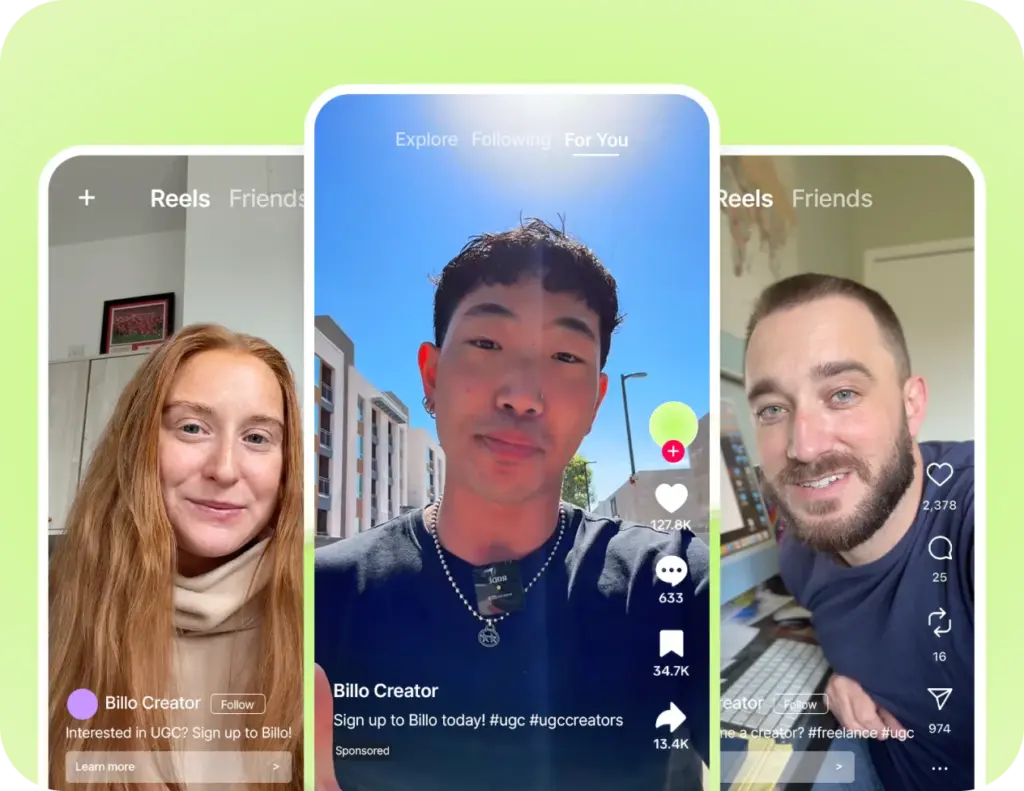
| Imagine a potential customer who saw one of your prospecting ads three weeks before Black Friday, visited your product page, and did not buy. When they are retargeted with a video of a real customer doing an unboxing, showing the product in their actual home, and saying ‘genuinely could not believe the quality for the price,’ that is a different kind of persuasion than another brand ad. It answers the question they were already sitting with. |
Brief your creators to acknowledge the Black Friday deal directly: ‘I got this for 40% off and I am genuinely shocked’ is more persuasive than a generic testimonial. Be specific with the numbers. In Billo’s H1 2026 data, the most repeated close in top-performing beauty ads was a dollar value plus a deadline, such as ‘$150 value for 30% off’. The formats that work best in BFCM retargeting are unboxing videos, authentic product reviews, and before-and-after demonstrations.
If you need fresh creator content for your BFCM campaigns, Billo connects ecommerce brands with vetted creators who produce conversion-focused video built for the BFCM environment. The earlier you start, the more time you have to test and iterate before November.
The creative strategy that wins BFCM is not a single brilliant ad. It is the right format matched to the right audience at the right stage of the funnel.
Once you know what to make, the next decision is where to run it.
Where to Run Your Black Friday Ads
A good Black Friday marketing strategy does not run the same ads everywhere. Each platform has a different role, a different audience mindset, and a different format that works during BFCM. Here is how to approach each one.
| Platform | Best for | Key BFCM format | Audience fit |
|---|---|---|---|
| Meta | Retargeting, catalog ads | Reels, Dynamic / Advantage+ | Broad; strongest for direct-response |
| TikTok | Creator-based discovery | Spark Ads, short-form UGC | 18 to 34, fashion/beauty/lifestyle |
| High-intent buyers | Shopping, Performance Max | Any; captures active searchers |
Meta (Facebook and Instagram)
Meta remains the primary channel for most ecommerce Black Friday campaigns. The key shift in recent years is the move from manual audience targeting toward Advantage+ Shopping Campaigns, which let Meta’s algorithm automatically find buyers across Facebook and Instagram placements.
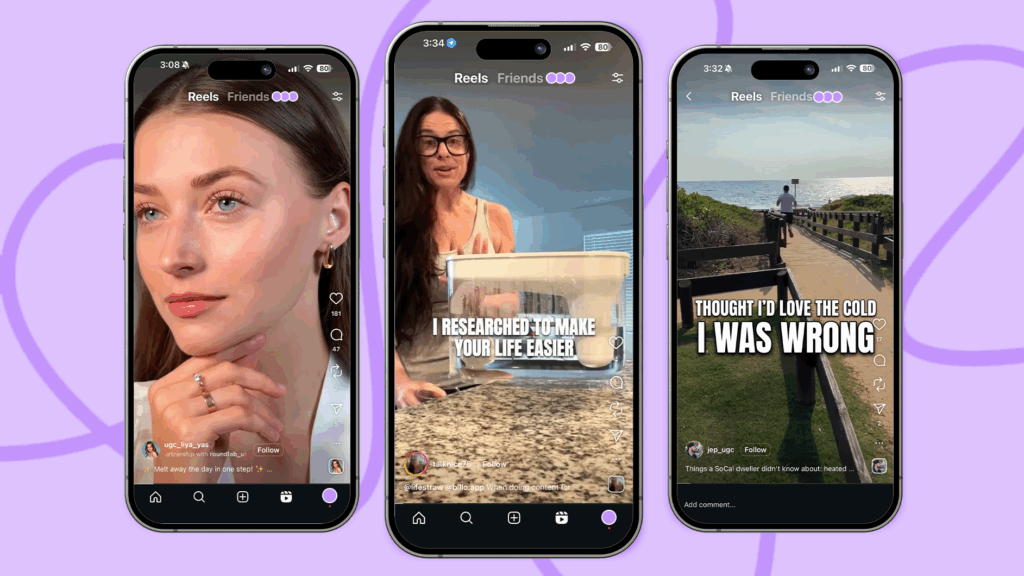
For prospecting: run Advantage+ Shopping Campaigns with a broad audience and let the algorithm optimise. Feed it as many creative variations as you can in September and October, so it has performance signals to work with before the BFCM window opens.
For retargeting: build Custom Audiences from your website visitors (30, 60, and 90-day windows), email list, video engagers, and Instagram profile visitors. Lookalike audiences based on recent purchasers are typically the highest-performing cold audience during BFCM. Dynamic ads automatically serve the most relevant products from your catalog to each viewer, which makes them especially effective for large product ranges.
On format: Reels and video ads receive priority distribution on both platforms during high-competition periods. Going into BFCM with strong video creative is not optional if you are running Meta ads seriously.
TikTok
TikTok’s BFCM opportunity is real, particularly for brands whose customers skew younger or whose products fit the platform’s dominant categories of fashion, beauty, home, fitness, and lifestyle. The most effective approach is Spark Ads: you take your best-performing organic creator content and put paid spend behind it. The ad looks and feels native because it is native.
Brief creators for BFCM specifically. A standard product video will not perform like a video that leads with the deal, creates urgency, and ends with a direct CTA. Order your TikTok creator content with the same lead time as your Meta content: 4 to 6 weeks minimum. If you have TikTok Shop set up, BFCM is one of the strongest windows for product listing promotion.
Keep videos to 9 to 15 seconds during the sale window. Offer first, product second. There is no room for slow builds when every competing brand is doing the same thing on the same feeds.
Google captures a different part of the BFCM buyer journey: the people who are actively searching with intent. Someone who types ‘best [product category] Black Friday deal’ is further down the funnel than someone scrolling Meta. Google Shopping campaigns put your products in front of those buyers at the exact moment they are looking.
Make sure your product feed is optimised before BFCM arrives. Google uses feed quality to rank product listings. The time to fix titles, descriptions, pricing, and images is October, not the week before Black Friday.
Performance Max runs across Search, Shopping, Display, YouTube, and Discover simultaneously. It works best for brands that already have strong conversion data in the account. If you are new to it, start early enough for the learning phase to complete before November.
Adding RLSA (Remarketing Lists for Search Ads) to your search campaigns lets you bid more aggressively for website visitors who are now searching for Black Friday deals. Also worth noting: competitors often bid on your brand name during BFCM. Running a branded search campaign protects your own terms and keeps your cost-per-click low.
The brands that perform best across all three platforms are not the ones who show up on all three with the same creative. They are the ones who treat each platform as a distinct channel with a distinct role in the funnel.
Now you know what to make and where to run it. The last strategic decision is when to spend and how much.
Black Friday Marketing Budget: When to Spend and How Much
Budget allocation is where a lot of otherwise solid Black Friday marketing strategies fall apart. Brands spend too much too early on broad prospecting, not enough on retargeting during the window itself, and nothing on the pre-season audience building that makes both more effective.
Before November: fill your retargeting pools cheaply
Spend the months before Black Friday on building audiences, not converting them. Your goal before November is to fill your retargeting pools at the lowest possible cost per impression. Conversion pressure comes later.
2 to 3 weeks before: shift toward lead generation
People are starting to think about deals and are receptive to anticipation-building campaigns. Shift budget toward lead generation and warm audience nurturing: tease your offers, collect email sign-ups, and get your brand in front of buyers who are preparing their wish lists.
During the BFCM window: concentrate spend on conversion
Retargeting should take the majority of your budget during Black Friday weekend. Supplement with prospecting campaigns when retargeting audiences become saturated, but keep the primary focus on conversion. Refresh creatives at least once during the event: ad fatigue accelerates when every brand is running promotions simultaneously and your audience is seeing dozens of BFCM ads per day.
Most brands increase retargeting budgets by 30 to 50% during this period relative to normal spend. This is not about spending more overall. It is about concentrating spend in the window where purchase intent is highest.
A shopper on Black Friday weekend is substantially more likely to buy than the same shopper two weeks earlier, and your budget allocation should reflect that.
With your strategy set and spend allocated, here is how you measure whether it is actually working.
Measuring Your Black Friday Marketing Strategy Performance
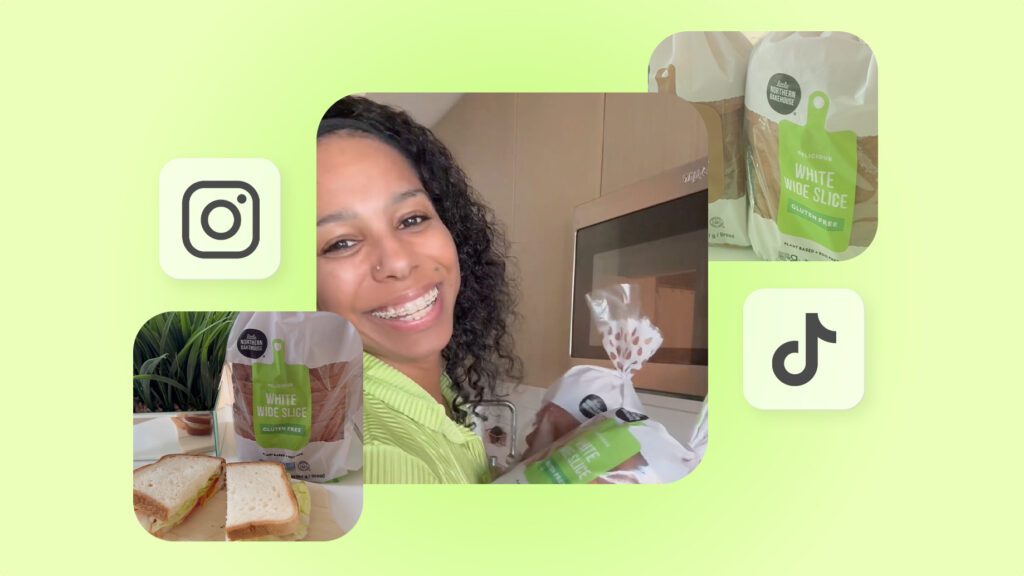
Measuring a BFCM campaign requires separating the metrics that reflect real business outcomes from those that just look good in a dashboard. The right metrics also depend on your campaign stage.
Pre-season metrics (August to October)
Focus on cost per audience member added: CPM, cost per video view, and cost per email capture if you are running lead generation. Track creative performance by hook rate benchmarks and watch-through rate. These tell you whether your audience building is efficient and which creative angles are worth scaling into November.
During the BFCM window
The metrics shift to conversion. Return on ad spend (ROAS) is your primary indicator, followed by conversion rate, cost per acquisition, and revenue attributed to each campaign. Click-through rate matters here too: a high CTR with a low conversion rate usually points to a landing page problem rather than a creative one.
Audience retention tells you where people stop watching your video ads. If retention drops sharply in the first 3 seconds, your hook is not working. If it drops at the 8-second mark, your offer reveal is too slow. These are fixable problems, and having the data before BFCM lets you fix them while you still can.
After the event
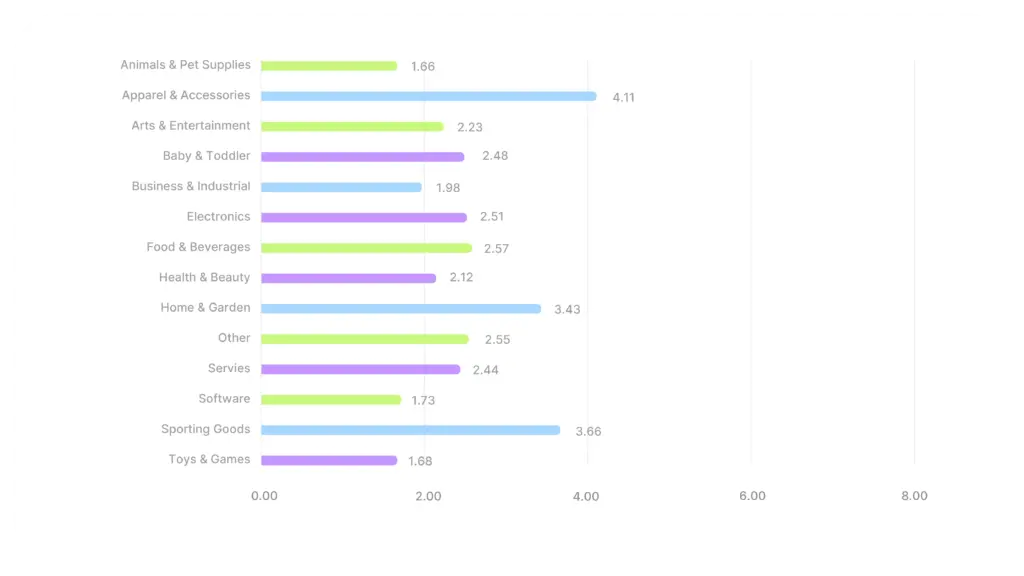
Compare revenue attributed to BFCM campaigns against your spend across the full pre-season and event window, not just the Black Friday weekend itself. Brands that attribute only the sale-week spend regularly underestimate the ROI of their pre-season investment.
ROAS versus ROI: ROAS measures revenue relative to ad spend. ROI measures profitability after all costs. Brands with high product margins can sustain lower ROAS targets; brands with tight margins need to be precise. Know which number matters more for your business before you start scaling.
The purpose of measurement during BFCM is not to report results. It is to catch problems fast enough to do something about them.
Put the Strategy to Work Before November
The brands that make Black Friday their best revenue week of the year are not scrambling in October. They have built their audiences, tested their creatives, and lined up their offers months in advance. By the time November arrives, execution is straightforward because the hard decisions are already made.
If you are planning ahead on creator content for this year’s BFCM, it is worth taking a look at how Billo works. We connect brands with vetted creators who produce conversion-focused video for the BFCM environment: deal-announcement hooks, unboxing retargeting ads, and urgency creative that converts. Start early, and you will have the data you need to scale confidently in November.
And when Black Friday weekend is over, the Cyber Monday marketing guide covers how to extend your campaign through to the end of the BFCM window.
FAQs
How early should I start my Black Friday marketing strategy?
Three months is the right answer for most brands. Starting in August lets you run prospecting campaigns while ad costs are lower, build the retargeting audiences you will need in November, and test creative with enough time to act on the results. By October you should know which angles and creators are working. By November, you are executing, not experimenting.
What are the most effective Black Friday marketing ideas for a small budget?
Focus on retargeting rather than prospecting. If you have been building audiences through September and October, even modest retargeting spend during BFCM is efficient because you are reaching people who already know you. Pair this with UGC creative, which consistently outperforms expensive brand-produced ads.
What type of ad creatives work best during Black Friday?
Seasonal, emotion-driven visuals paired with authentic UGC tend to perform best. Shoppers rely heavily on social proof during holiday buying, making UGC especially powerful.
Should I increase my Facebook Ads budget for Black Friday?
Most brands increase retargeting budgets by 30-50% during Black Friday – Cyber Monday. This ensures you fully capitalize on the warm audiences you’ve built in the weeks prior.
How do I measure whether my Black Friday marketing strategy is working?
Use different metrics at each stage. Pre-season: cost per audience member added, creative hook rate, and email capture cost. During BFCM: ROAS, conversion rate, and cost per acquisition. After the event: compare revenue attributed to BFCM campaigns against your spend across the full pre-season and event window, not just the Black Friday weekend itself.

SEO Lead
Passionate content and search marketer aiming to bring great products front and center. When not hunched over my keyboard, you will find me in a city running a race, cycling or simply enjoying my life with a book in hand.
Make creator marketing a data-backed growth channel

Related from Creative Insider
Snapchat ads for ecommerce: what works, what doesn’t, and how to start
Social Commerce: Turn A 15-Second Scroll Into A Sale Without The Traditional Funnel