UGC at scale: a guide for multi-brand companies and agencies


When you are responsible for paid social creative across five brands and each one needs fresh variations every week, the content problem becomes a systems problem almost overnight. One team fielding briefs from multiple brand managers, sourcing creators for separate campaigns, chasing approvals across different stakeholders, and watching ROAS erode as creatives go stale. That is the operational reality for most multi-brand companies and agencies, and most programs were not built to handle UGC at scale.
The performance case for user-generated content is not in question. 92% of consumers trust peer-created content over branded content, and only 16% say brand content feels authentic. The question for multi-brand is whether the infrastructure behind UGC can keep pace with the volume a real paid social program demands.
This guide is written for growth leads, performance marketers, and agency creative strategists who are past the “should we do UGC?” conversation and are now dealing with the harder question of how to run it well across more than one brand.
TL;DR
- Multi-brand companies and agencies face a compounding UGC problem: creative volume, brand consistency, rights management, and creator coordination all multiply with every brand added to the mix.
- The solution is not more headcount. It is a centralized platform with per-brand workspaces, a shared creator pool, and rights built into creator contracts from day one.
- Brands running significant paid social spend need a steady flow of new creative variations per brand, per week. Without a repeatable system, that volume is unsustainable across a portfolio.
- The companies running multi-brand UGC effectively treat it as an always-on creative operation, not a series of individual campaigns.
Why UGC at scale gets harder with every brand you add
The core problem is one of compounding volume. A single social media manager working a manual UGC program can clear roughly 30 to 60 pieces of creator content per week. For a brand running aggressive paid social testing, that capacity is borderline. Across a portfolio of five or more brands, each with its own weekly creative needs, it is nowhere near enough.
The production gap is only part of it. When ideation, production, review, and performance reporting all live in different tools, teams lose speed and context, and creative decisions get made with incomplete information. The feedback loop that makes UGC programs improve over time breaks down when data is fragmented across brand accounts.
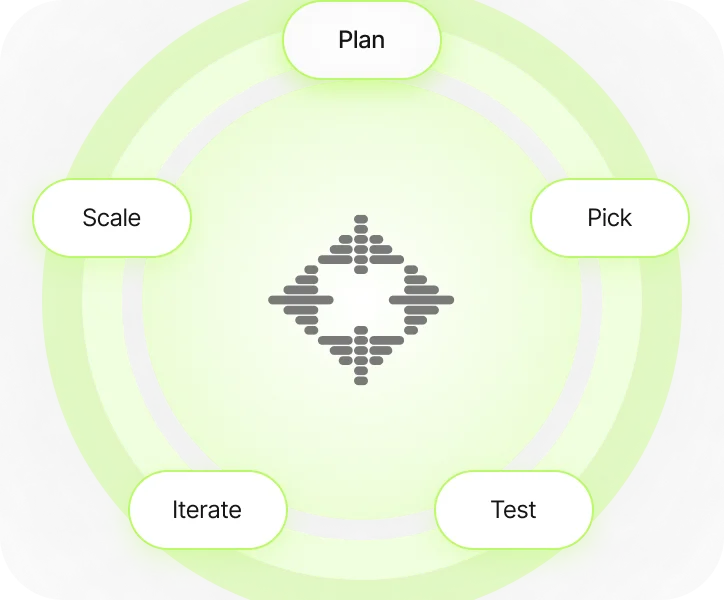
Brand consistency is the most visible failure mode at the portfolio level. When regional or brand-level teams manage UGC independently, the result is often a patchwork of off-brand visuals and inconsistent messaging that creates problems for both brand leadership and paid media performance. A creator briefed differently by two brands in the same portfolio can produce content that contradicts the brand architecture the company has built.
Rights management also multiplies the risk in ways that are easy to underestimate. One shared creator contract that does not specify per-brand usage terms can expose multiple brands simultaneously. A creator who consented to use by one brand has not necessarily consented to use by the others, and most informal UGC processes do not track the distinction at all.
The two types of multi-brand UGC operations
Most multi-brand companies and agencies arrive at scale through the same path: each brand or client manages UGC independently, sourcing its own creators, running its own briefs, handling rights separately. It works when the portfolio is small. It breaks down when headcount stays flat, budgets consolidate, or leadership asks why three brands are independently briefing the same creator pool with no coordination between them.
The alternative is a centralized model: one platform, one shared creator pool, one rights framework, with brand-specific workspaces, briefs, and approval workflows underneath. Agencies running multiple client accounts use this model in practice, with per-client dashboards that hold each brand’s guidelines, approved messaging, and review processes, while bulk purchasing reduces per-asset cost across all accounts.
One vetted creator delivers for client A and is already in the system for client B. One top-performing hook format gets tested across the portfolio rather than rediscovered brand by brand.
The performance difference between the two models is documented. NielsenIQ reduced CPA by 37% across 19 countries using centralized creator-led performance content, and Native produced over 750 UGC assets across four international campaigns, hitting 200% of content targets with a unified creator pipeline. The centralized model produces better economics not because it produces better individual pieces of content, but because it eliminates duplicated effort and allows creative intelligence to flow across brands rather than staying locked inside each one.
For agencies specifically, the centralized model has an additional commercial benefit. When UGC production runs through a structured platform rather than a patchwork of creator DMs and shared Google Drive folders, it becomes a resellable service with a demonstrable ROAS track record. That changes the conversation with clients from “we source creators for you” to “here is the performance lift our creative system delivers.”

Building the UGC at scale workflow
Getting from a fragmented setup to a centralized one does not require rebuilding everything at once. The transition follows a clear sequence.
1. Start with a centralized platform that has per-brand workspaces
The goal is one source of truth, not one login per brand. Each workspace should hold that brand’s specific tone guidelines, visual do/don’ts, approved messaging frameworks, and example content. US spending on UGC content surpassed $10 billion in 2025, with 67% of retailers planning to increase UGC investment. This is a reflection of how central creator content has become to paid social performance and why the infrastructure managing it needs to match the investment being made. Creators and approvers see only what is relevant to their brand, while creative intelligence and performance data are visible across the portfolio to whoever needs them.
2. Build a shared creator pool with brand-specific briefs
Vet creators once at the platform level. Once a creator delivers quality work for one brand, they are already in the system for the next brief. The brief is what makes the content brand-specific, not the creator relationship. Platforms like Billo are built for exactly this workflow: a vetted creator network, a structured briefing and review process, and high-volume creative production for paid social. All delivered across multiple brand accounts from a single workspace.
3. Write commercial rights into every creator contract from the start
A defensible rights trail requires explicit creator consent in a signed record, clear specification of which brands and channels the content can appear on, and a defined usage duration. If your portfolio uses a shared creator pool, the contract needs to name which brands are in scope. Getting rights wrong on one creator relationship can block usage across multiple campaigns simultaneously.
4. Set up approval workflows per brand, not per campaign
Automate basic checks (file type, image quality, policy compliance) and route content to the correct brand approver automatically. Pre-approved brief templates dramatically reduce the volume of ad-hoc review requests that slow multi-brand operations, particularly in agency environments where the same creative strategist may be managing approvals across six client accounts at once.
Creative volume: how much UGC does each brand actually need?
The answer depends on ad spend, but the numbers are higher than most teams expect. Platform algorithms front-load spend toward early winning creatives, which means a strong performer exhausts an audience faster than in previous years. Required testing volume scaling with every brand added to the portfolio.
| Monthly ad spend (per brand) | Recommended UGC testing volume | Multi-brand note |
|---|---|---|
| Under $50K/month | 10-24 videos/month | Practical starting baseline per brand |
| $50K-$100K/month | 25-50 videos/month | Ramp up as algorithms push spend toward early winners |
| $100K+/month | 25-50 new variations/week | A 5-brand portfolio needs 125-250 new variations/week across the operation |
The briefing shortcut that scales well across a portfolio: instruct each creator to film two to three hook variations on the same core video. Media buyers get multiple testable assets per creator engagement without additional briefing cycles. Applied across a portfolio, this means the creative team is not constantly re-entering the briefing process every time a hook stops performing.
With the average UGC deliverable costing around $198, testing 10 to 24 videos per month per brand runs to roughly $1,980 to $4,752. This is comparable to a single studio production that gives you one creative to test rather than a full testing set.
The compounding advantage of centralization shows up most clearly here. When one brand in the portfolio identifies a hook format that drives strong CTR, that intelligence is immediately available to brief creators for other brands. Each brand is no longer learning independently through its own testing spend.
Measuring UGC performance across a brand portfolio
The metrics that matter connect content to commercial outcomes, not just engagement rates. Four KPIs move the business case from a content tactic to a reportable performance asset:
- Conversion rate lift on paid social,
- Cost-per-asset compared to studio production,
- Revenue or ROAS attributed at the creative level,
- Customer acquisition cost by creative type.
UGC-driven conversions increased from 4.27x in Q4 2025 to 6.73x in Q1 2026 – a 57% quarter-over-quarter increase. This perfectly reflects how quickly the performance gap between UGC and polished branded content is widening as platform audiences grow more selective. UGC-enabled pages generate higher overall conversion rates than pages without it and the brands capturing that lift are the ones with enough creative volume to keep testing.
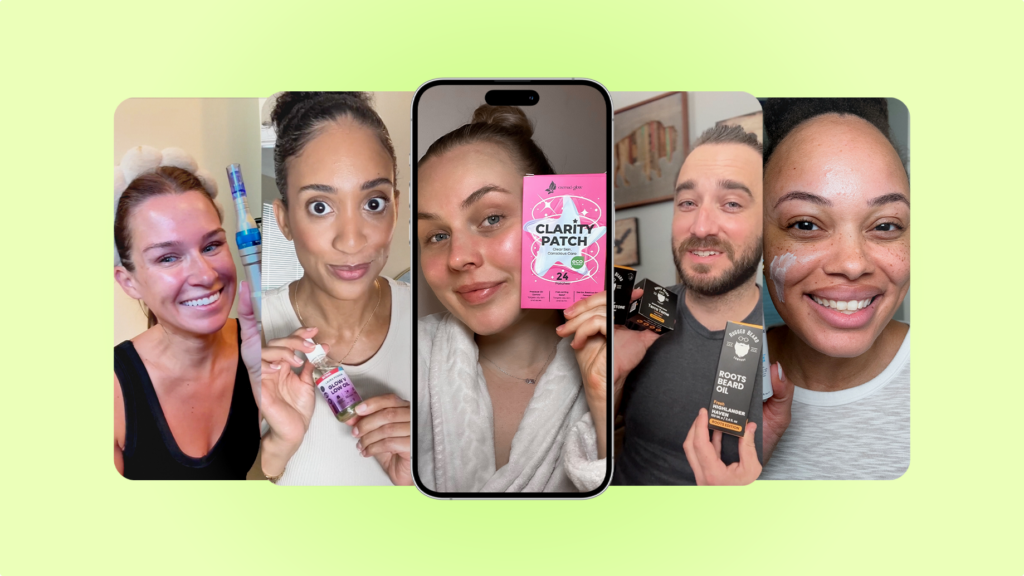
Attribution at the creative level is what makes a UGC program defensible at budget time. Every creator asset should be trackable back to a campaign, a brand, and a performance outcome. So the team can answer which creator, on which brand, produced content that drove results worth repeating. Without that, the program looks like a cost center rather than a performance channel.
For multi-brand reporting, the additional discipline worth building is cross-portfolio learning. Segment performance by brand, channel, and creative format, then surface those results at the portfolio level. When one brand’s test reveals that a specific format or audience angle over-performs, every other brand in the portfolio should have access to that insight before the next briefing cycle.
Summary and next steps
Multi-brand UGC becomes a systems problem the moment you are managing more than one brand. The creative itself is not the hard part. The hard part is the infrastructure underneath it – creator vetting, brief consistency, rights documentation, volume targets, approval routing, and performance attribution. All of these running in parallel across brands that may have different audiences, different tones, and different benchmarks.
The practical starting point is an honest audit of the current state, brand by brand:
- How many cleared assets does each brand produce per week?
- Which brands have no documented rights trail?
- Can the team attribute any UGC asset to a paid social performance outcome?
- Is creative intelligence shared across brands, or does each brand re-learn the same lessons through its own testing spend?
If the answer to most of those questions is “no” or “we do not know,” the program is still operating as a collection of individual campaigns rather than a portfolio-level operation. The infrastructure comes first. The creative volume, the performance lift, and the cross-brand efficiency all follow once the system is in place.
FAQs
What is the best way to manage UGC across multiple brands?
How many UGC videos does each brand need per month?
How do you maintain brand consistency across a UGC portfolio?
Can one creator work across multiple brands in a portfolio?

SEO Lead
Passionate content and search marketer aiming to bring great products front and center. When not hunched over my keyboard, you will find me in a city running a race, cycling or simply enjoying my life with a book in hand.
Make creator marketing a data-backed growth channel

Related from Creative Insider
Billo vs SideShift: a side-by-side comparison
Billo vs Influee: a side-by-side comparison
Best Cohley alternatives: 6 platforms compared for 2026