
UGC rates: what brands pay per video and what changes the price


Ever received two quotes for what looks like the same UGC video and wondered why one is $150 and the other is $900? You are definitely not the first. User-generated content (UGC) rates vary more than almost any other line in a paid social budget, and the published guides rarely agree on what normal looks like.
Demand keeps climbing too. In the Influencer Marketing Hub’s 2026 survey of marketers, 87.49% said they expect their influencer budgets to grow this year, which keeps pressure on creator rates.
This guide walks you through what UGC creators charge right now, which add-ons move the number, how to compare quotes like for like, and a rate card you can reuse for your next brief. If you’re here for Billo’s own prices, Billo pricing has them.
Quick answer: most UGC videos cost brands under $500. Beginners usually charge $75-150 per video, the standard market rate is $200-400, and experienced creators with proven ad results charge $500-1,200 or more, with longer usage rights, partnership ads permissions and exclusivity usually priced on top.
TL;DR:
- Around 80% of brand-reported UGC creator costs fall under $500 per video.
- Paid ads usage typically adds 15-30% of the base fee per 30 days, and running ads from the creator’s handle adds 25-50%.
- Follower count only affects the price when the creator also posts the content.
- Compare quotes line by line: edits, revisions, usage term, raw footage and posting.
- Platforms bundle creator pay, their own fee, revisions and usage rights into one brand price per video. On Billo, that price starts at $99 per video.
What UGC creators charge per video
Let’s start with the number everyone asks about. A good brand-side benchmark comes from the Influencer Marketing Hub’s 2026 benchmark report, based on a survey of 600+ marketers: about 80% of the UGC creator costs they reported sit under $500 per piece, with most of the rest between $500 and $2,000.
Rate guides then split that range by experience. Freelance Nation’s 2026 rate guide puts beginners building a portfolio at $75-150 per video and the standard market rate at $200-400, which usually includes hook variations and 90 days of paid usage. Mid-tier creators charge $300-1,000, and experienced creators whose ads have already scaled charge $500-1,200 or more.
| Creator level | Typical rate per video | What you usually get |
|---|---|---|
| Beginner, building a portfolio | $75-150 | Clean footage, with more direction and revisions needed |
| Standard market rate | $200-400 | Reliable delivery, hook variations and 90 days of paid usage |
| Mid-tier | $300-1,000 | Consistent ad-ready quality, faster turnaround, niche fit |
| Experienced, proven in ads | $500-1,200+ | Creative that has already scaled, strong hook writing |
Within those bands, four things push the base fee up or down: video length, how much scripting and editing the brief asks for, the number of revision rounds, and turnaround time. A 15-second testimonial filmed in one take is a very different job from a 60-second demo with three hooks, a voiceover and on-screen text.
Platform data shows where most budgets go. On Billo, 30-second videos are the most ordered length, at 60% of approved videos over the past 12 months, followed by 60 seconds (25%) and 15 seconds (13%), according to Billo internal data.
Budget by scope first: length, edits, revisions and turnaround decide where in the range a quote lands.
Usage rights and add-ons: where the price really moves
The base fee pays for making the video. Usage rights decide what you can do with it afterwards, and they are where quotes differ the most.
Most creators price rights as a percentage of the base fee for each period of use. Gigapay’s 2026 usage rights benchmarks put standard paid usage at 15-30% of the base fee per 30 days, running ads from the creator’s handle at 25-50% per 30 days, and perpetual buyouts at 150-300% of the base fee.
Creator-side guidance runs a little higher. impact.com’s pricing advice for influencers suggests charging an extra 20-50% of the base rate for usage rights, so expect some quotes to land above the brand-side benchmarks.
| Add-on | Typical price in direct deals | What you are paying for |
|---|---|---|
| Paid ads usage | +15-30% of base per 30 days | Running the video in ads from your brand account |
| Whitelisting, partnership ads or Spark Ads | +25-50% of base per 30 days | Running ads from the creator’s handle |
| 12-month usage | +70-100% of base | A longer licensing window |
| Perpetual buyout | +150-300% of base | Using the video anywhere, indefinitely |
| Exclusivity | Quoted separately | Keeping the creator away from competitors for a set period |
Running ads from a creator’s handle goes through Meta partnership ads or TikTok Spark Ads, where the creator authorizes a specific post with a code. Our partnership ads vs Spark Ads guide explains how the two differ, and the guide to whitelisting on social media covers the permissions.
Demand for these extras is growing fast. On Billo, orders for creator posting, partnership ads and Spark Ads grew about nine times over the past 12 months. Half of active creators earned at least one paid extra on top of the base video in September and October 2026 (Billo internal data).
Price the usage you will actually use: short, time-boxed windows for testing, and longer terms only for proven winners.
Follower count only matters when the creator posts
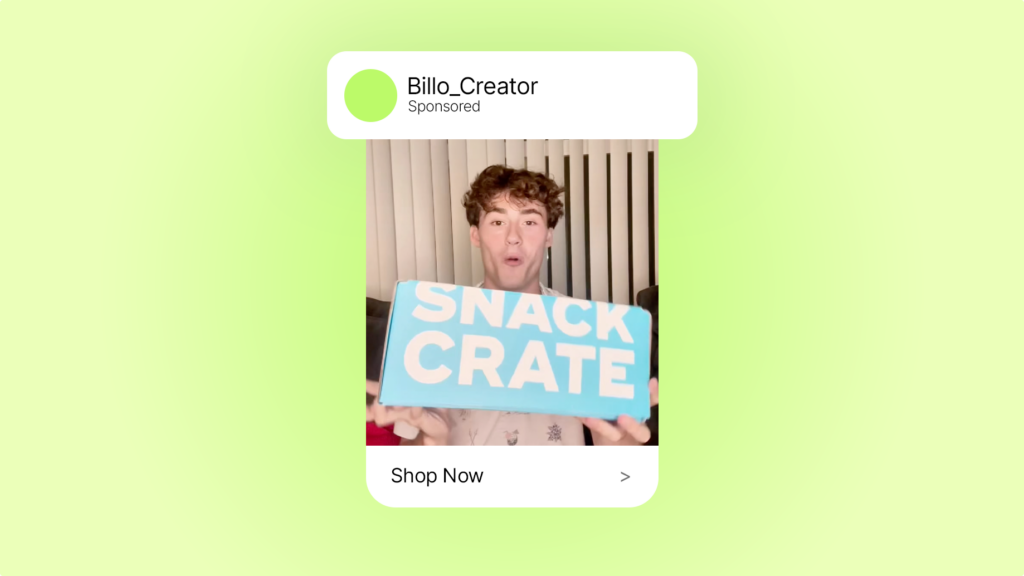
A common misconception is that UGC rates should scale with follower count. When you buy deliverables only, you are paying for a video you can license for your own channels and ads, so the creator’s audience doesn’t come into the price.
That changes when the creator also posts the content. You are then buying reach as well as production, and pricing follows the creator’s audience. Later’s influencer pricing benchmarks note that on TikTok, video rates are usually based on the creator’s average views, with an extra fee for paid amplification rights such as Spark Ads.
Posting also brings disclosure duties. Under the FTC’s Endorsement Guides, a sponsored post needs a clear disclosure of the paid relationship, which adds a review step to your workflow and can add cost in regulated categories such as health or finance.
Imagine a home fitness brand that hires a creator with 80,000 followers. If the brand only needs videos for its own ads, it should pay a UGC rate. If it also wants a post on the creator’s feed, it is buying an influencer deal, and the price should be judged against that creator’s typical views. For more on the skills behind good creator content, see our guide to social media content creators.
If you only need deliverables, leave follower count out of the conversation; if you are buying a post, benchmark against the creator’s typical views.

How to compare UGC quotes like for like
Here is where most comparisons go wrong. Three very different numbers all get called a “UGC rate”, and putting them side by side without adjusting for what they include makes some quotes look cheap and others look expensive for the wrong reasons.
- A freelance creator’s quote to a brand. This usually covers the creator’s time to find and negotiate the work as well as the video, with usage rights bundled or priced on top. At the standard market rate above, $200-400 per video typically buys one finished edit with 90 days of paid ads usage.
- A platform’s price per video. Platforms bundle creator pay, platform fees and usage rights into one price. On Billo, the brand price starts at $99 per video and covers the creator’s pay, Billo’s platform fee, two revision rounds within the brief and full usage rights once you approve the video. Our post on how Billo pricing works breaks down what’s included.
- What the creator takes home. This is lower than the brand price, because the platform’s fee sits on the brand side. On Billo, creators get briefs and paid jobs without having to outreach themselves. They see what each job pays before they apply, and keep that full amount, plus any extras such as posting or partnership ads.
Price per video is also only half the picture, because paid social budgets are judged on cost per result. Billo’s internal analysis of brand-connected Meta ad accounts (January 2025 to August 2026) shows Billo video ads had 11% lower CPA than the other video ads in the same ad accounts.
Imagine you have two quotes on your desk: $250 from a freelancer with 30 days of paid usage, and a platform price with full usage rights and two revisions included. Once you add another 60 days of paid usage to the freelance deal, the gap is wider than the headline numbers suggest. If you are weighing several platforms, the G2 category for UGC platforms lets you compare features and reviews, and our comparison of UGC platforms covers the ones built for paid social.
Before you compare totals, write down what each quote includes: edits, revisions, usage term, raw footage and posting.
A UGC rate card template for comparing quotes
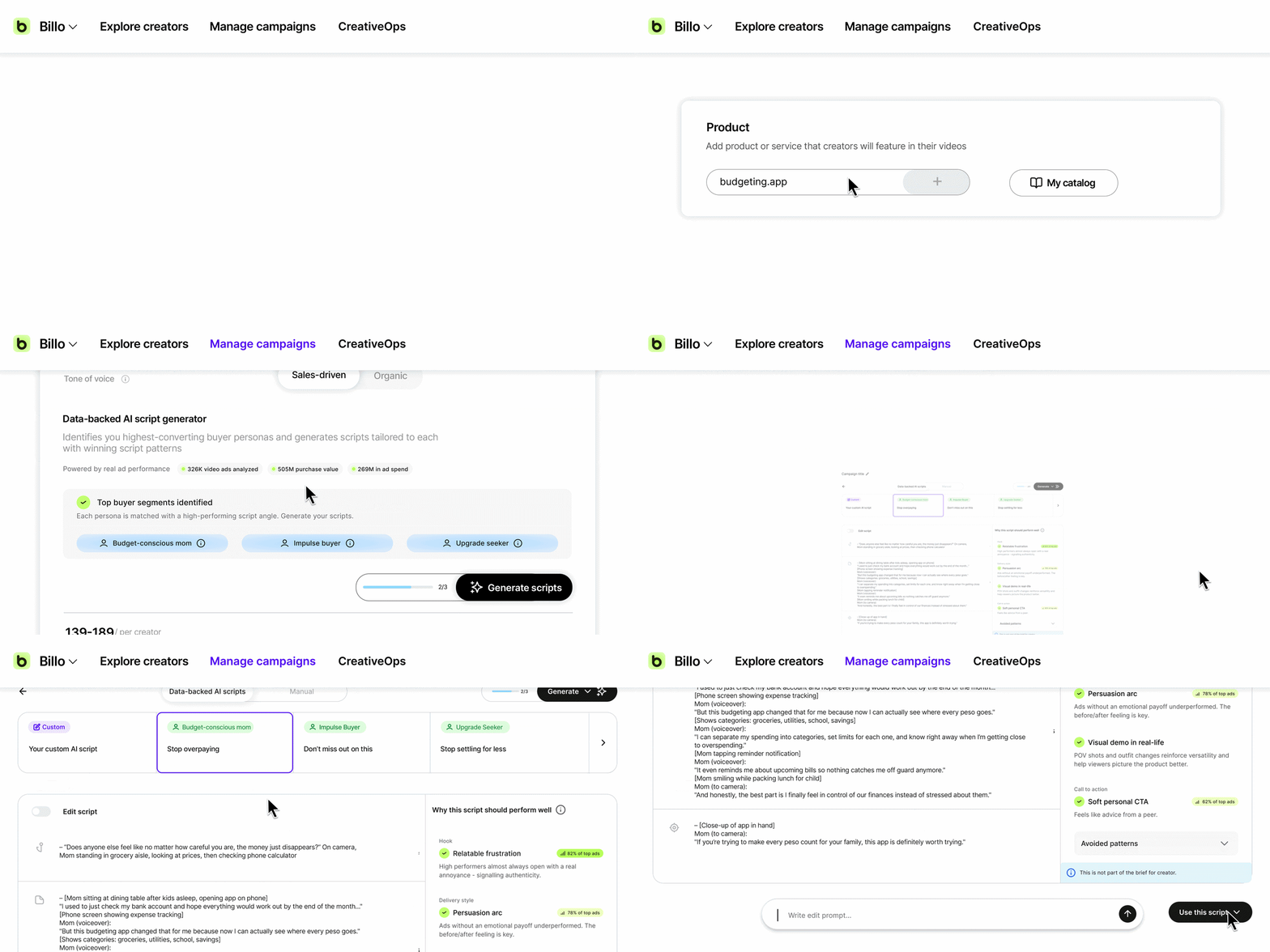
A rate card makes quotes comparable. Ask every creator or platform to price the same line items, and you will see straight away where the differences come from. If you’re a creator, the same line items make a clear rate card of your own.
| Line item | What to ask | Common pricing model |
|---|---|---|
| Base video | Length, format and number of edits | Flat fee per video |
| Extra hooks or variations | How many openings, and is each one a separate edit? | Per hook or per variation |
| Raw footage | Is unedited footage included? | Often extra |
| Revisions | How many rounds are included, and within what scope? | Set number included, then per round |
| Paid usage | Which channels, and for how long? | % of base per 30 days |
| Partnership ads or Spark Ads | Which platform, and for how many days? | % of base per 30 days, or a creator-set price |
| Posting on the creator’s account | Which platform, and is boosting included? | Based on the creator’s audience |
| Exclusivity | Which competitors, and for how long? | Quoted separately |
| Rush delivery | What counts as rush? | Surcharge on the base fee |
| Bundles | What is the price for 5 or 10 videos? | Volume discount |
Bundles are usually the easiest lever. InfluencerFee’s rate calculator list multi-post commitments as one of the most effective ways to bring a quote down, typically by 10–25%.
For partnership ads, check how the permission is granted before you budget for it. On Meta, partnership ads only run once the creator allows your brand to boost their post, story or reel, or to use their existing content in Ads Manager, and that permission is what creators charge for.
Send the same rate card with every brief, so every quote answers the same questions.
Negotiating UGC rates without underpaying creators
Even with clear benchmarks, many brands overpay or under-scope because they don’t package the work well. A few habits make a real difference.
- Package the work. Instead of commissioning one video at a time, ask for bundles such as three 9:16 cuts, alternate hooks or raw footage you can re-edit later.
- Time-box usage. Full buyouts let you use footage indefinitely at a higher price, while 30, 60 or 90-day windows cost less and suit testing. Modash’s guide to usage rights lays out both payment models: a flat fee for each month of use, or a percentage of the creator’s base fee.
- Agree handle access separately. Creator pricing guides such as Xolo’s whitelisting pricing guide advise charging 30-100% or more of the content fee per month for whitelisting, so set the window before the campaign starts.
- Put it in writing. A clear contract sets deliverables, dates, usage terms and the payment schedule. Brands know exactly what to expect, and creators are paid on time and protected from out-of-scope requests.
Imagine your first test video becomes a winner. If you agreed a 30-day window, you can extend usage for that one video instead of paying for long-term rights on every video upfront, which is a much better use of a testing budget.
Clear scope beats a lower rate: define the bundle, the rights and the payment terms before you negotiate the price.

If you’re a creator: direct deals vs platforms
Plenty of people searching for UGC rates are creators working out what to charge, so here is the same picture from the other side of the table.
The ranges above are what freelance creators quote brands in direct deals. They pay more per video, and they also have to cover work that never shows up in the rate: finding brands, pitching, negotiating usage, invoicing and chasing payment. If you go direct, price your base video first, then list usage rights, partnership ads access and exclusivity as separate lines, so the brand can see what each extra costs.
Platforms pay less per video, because the job is usually smaller and the platform does much of that work. A basic job is often short, raw footage, with editing done by the platform’s own team. Briefs come to you, the platform handles payment once the brand approves the video, and on many platforms, including Billo, usage rights come with the job. In short, you trade a higher rate per video for steady work and much less admin.
On a platform, what you earn per job grows with the work. On Billo, longer videos, extra hooks and content, and briefs that need extra effort all pay more, and creators set their own prices for posting on their account and for partnership ads.
If a deal includes posting on your own account, disclosure is part of the job. The FTC’s Disclosures 101 for Social Media Influencers explains when a post needs a disclosure and how to make it clear, and brands will expect you to follow it.
Compare offers by what you earn for the time you put in, and count pitching, admin and waiting to get paid as part of that time.
Summary and next steps
Most UGC videos cost brands under $500, and the base fee is only the starting point. Usage rights, handle access, exclusivity and the number of edits decide what you actually pay, so price the use you need and compare quotes line by line.
If you would rather skip the back-and-forth, platforms bundle creator pay, revisions and usage rights into one price per video. You can browse 5,000+ vetted creators on Billo and brief your first video in a few minutes.
FAQs
What are typical UGC rates?
Do usage rights cost extra?
Do follower counts matter for UGC?
How much should I charge for UGC as a creator?
Is AI UGC cheaper than hiring creators?

Paid Marketing Lead at Billo
I lead the paid marketing team at Billo, focusing on performance, testing, and growth that scales. Over the past 6 years, I’ve worked across digital marketing - from running campaigns to building the strategies and systems behind them. What drives me is problem-solving. I like turning complex questions into simple, testable answers, and making decisions that actually drive impact.
Make creator marketing a data-backed growth channel

Related from Creative Insider
Billo vs SideShift: a side-by-side comparison
Billo vs Influee: a side-by-side comparison
Best Cohley alternatives: 6 platforms compared for 2026


