The Creative Operations Setup Paid Social Actually Needs

If your creative operations stack was built to coordinate brand campaigns, it will not survive paid social. Brand teams ship monthly. Paid social ships weekly, and the auction is in charge of the pace.
The bar keeps moving up too. AppsFlyer’s 2025 State of Creative Optimization report puts the average for top non-gaming apps at 2,365 creative variations per quarter, covering ecommerce, retail, and consumer categories. At that volume, you cannot run paid social creative the same way a brand team plans a campaign.
Most teams know this in theory and run it ad-hoc in practice. A brief gets written in Notion, a creator gets booked in Slack, an asset gets uploaded in Frame.io, and a media buyer pulls the file from a Dropbox link two days late. By the time the analyst reads last week’s hook rates, the team is already three days behind on the next refresh. The seams between tools become the bottleneck, and the bottleneck becomes the CPA.
Let’s see why most creative operations setups break under paid social load, what the workflow actually needs to look like, and how Billo CreativeOps closes the gaps the typical stack leaves open.
TL;DR:
- Creative operations stacks built for monthly brand campaigns break under paid social’s weekly cadence.
- The two breakdowns that matter are the briefing-to-creator handoff and the analytics-to-brief handoff,.
- Creative operations for paid social runs as one integrated stack of brief workflow, creator sourcing, and creative analytics.
- Billo CreativeOps is built around that loop: benchmarks – briefs – creators – analytics.
The Two Breakdowns No One Talks About
Most paid social creative ops setups fail at one of two seams. The first is the briefing-to-creator handoff. The second is the analytics-to-brief handoff. Everything in between usually works fine.
The briefing-to-creator handoff breaks because the brief was written without performance data.
The strategist writes “we want a hook-led video about morning routines.” The brief writer turns that into a one-pager. The creator delivers something on-brand and on-spec. It tests at twenty-two percent hook rate, and the team realises a similar angle ran last quarter and capped out at the same number. The information that would have prevented that test sat in last quarter’s analytics. Stackmatix’s guide to paid-social creative strategy shows a structured one-page brief shrinks revision cycles by up to forty percent, but only when the brief carries the data the team already has.
The analytics-to-brief handoff is the bigger breakdown. The media buyer sees performance on Tuesday. The strategist reviews it on Wednesday. The brief writer drafts a response by Friday. By the time a creator is briefed, the ad that was decaying has fully fatigued. According to Linkrunner’s guide to creative fatigue small retargeting audiences need refreshes every seven to ten days. A workflow that takes five days to route a signal from analytics back to a creator brief is operating at half the cadence the auction expects.
Imagine an agency running paid social for ten DTC clients. If every client’s analytics-to-brief route takes a week, the agency is permanently one refresh cycle behind on every account. That delay is a workflow plumbing failure. The auction’s clock keeps running while the team waits for a manual handoff.
What Creative Operations for Paid Social Actually Requires
The loop has four stages: brief, creator, amplification, refresh.
Briefs go to creators, creators produce assets, assets become paid media, paid media produces performance data, and performance data feeds the next brief. When every stage lives in a different tool, the seams between them are where the workflow loses days.
The requirement that flows from this is one most teams resist: brief workflow, creator sourcing, and creative analytics need to live in one stack. The reason is specific. The handoffs that matter most run between exactly those three categories. When the brief tool sees the creator data and the analytics dashboard routes a signal directly into the brief queue, the workflow runs end to end without the manual re-keying that kills cadence.
The math on this is unforgiving. AppsFlyer’s 2025 creative report shows the top 2% of creatives drive 43% of total ad spend in the non-gaming category. Finding those outliers requires testing at volume, and testing at volume requires a workflow that fires the next brief without a planning meeting.
There is a media-side multiplier too. EMARKETER’s reporting on Meta Partnership Ads shows the format delivers 19% lower CPA and 13% higher CTR than standard formats. Activating creator content as paid media adds another step between asset and impression, and another seam where a disconnected workflow loses days.
How Billo CreativeOps Closes the Gap
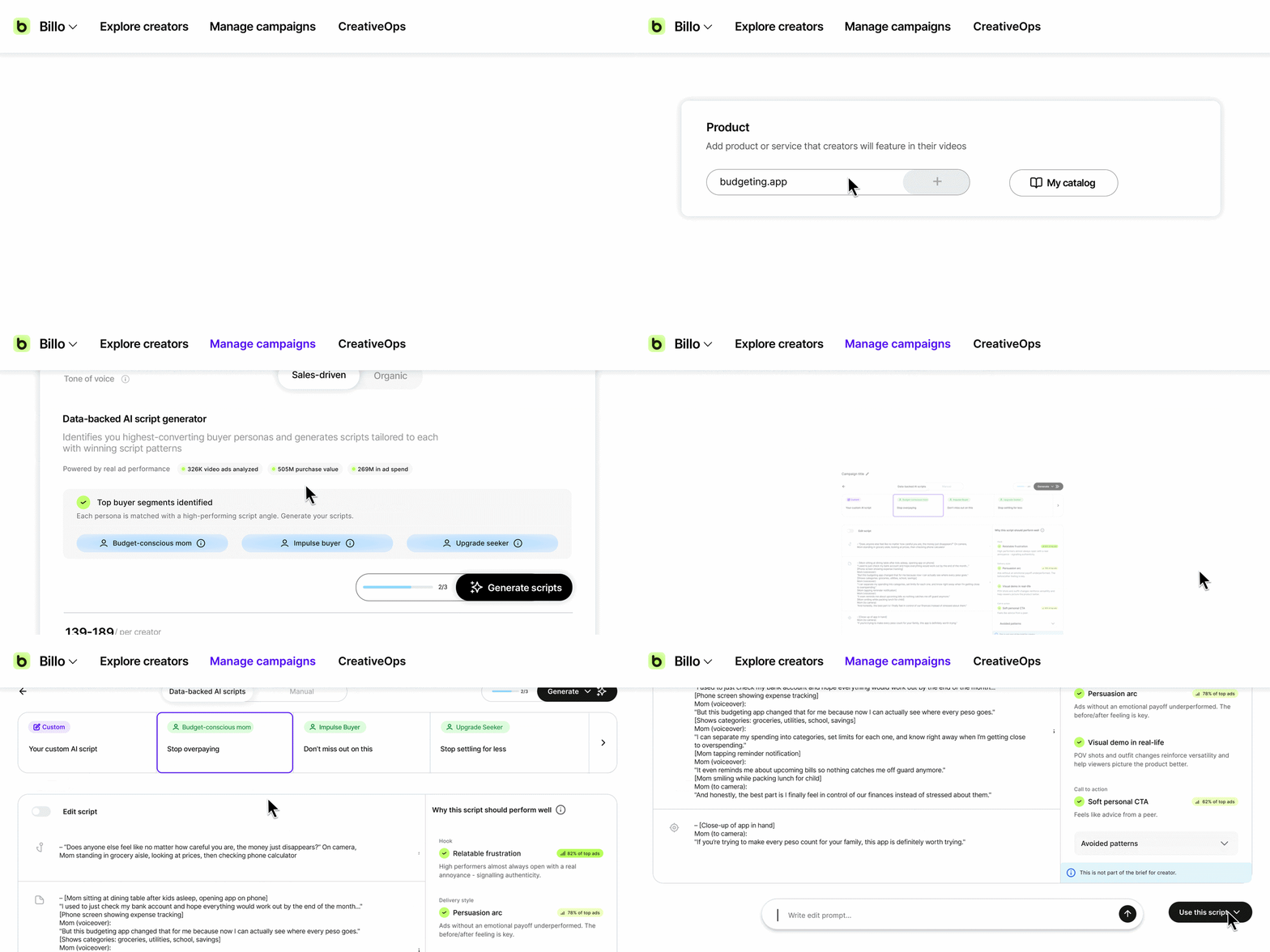
Billo CreativeOps was built around the two breakdowns. It puts brief workflow, creator sourcing, and creative analytics in one stack with the handoffs wired in. The features matter only because each one closes a seam the typical setup leaves open.
Industry top performers. Before a strategist writes a brief, they can see what is working in their category across the Billo network. Hook rates, conversion benchmarks, and angle patterns from competitor and adjacent-vertical campaigns surface in the dashboard, sourced from more than 150,000 tracked ads. The strategist briefs against data the team has already paid to collect.
Billo script generator. The brief workflow carries performance data into the brief at creation. When a brief writer drafts the next variant, the platform shows which hooks, formats, and personas have outperformed in similar campaigns. The briefing-to-creator handoff stops losing days to disconnected references.
Creator performance data. Each creator in the marketplace carries their hook-rate, conversion, and category-fit history. The sourcing lead picks against measurable results, and the rights handoff happens in the same tool. The output of the creator stage hands clean to amplification without leaving the stack.
Creative analytics routed back to the brief queue. This is the piece most stacks miss. When a creative crosses a refresh threshold, the analytics dashboard generates a brief draft for the strategist automatically. The five-day analytics-to-brief route collapses into a single day. Key creative performance metrics are the hook rate, hold rate, and CPA layers a credible analytics dashboard should track, and Billo CreativeOps ties all of them back to the brief that produced each asset.
Ai mashups. Produce variants of multiple proven winners, with the human creator at the center of the concept and AI compressing the production cycle.

Why Now
Two forcing functions tighten the timeline this quarter. The first is the budget shift. EMARKETER’s amplification forecast projects US amplified creator-content ad spending will surpass what brands pay creators to produce content by 2028. The growth team’s creative operations capacity is what catches that budget when it arrives. Teams without a working loop will spend it manually.
The second is compliance. EU AI Act Article 50 goes live on August 2, 2026, requiring AI-generated content in EU campaigns to carry machine-readable provenance marks. New York’s synthetic performer disclosure law takes effect June 9, 2026, with penalties starting at $1,000. The disclosure logic belongs in the brief stage. Teams retrofitting compliance at launch in Q3 will lose days to ad rejections.
The Setup Worth Trying This Quarter
Creative operations for paid social runs as a performance feedback loop with three integrated parts: script workflow, creator sourcing, and creative analytics that route refresh signals back to the brief queue. Setups that keep these three in separate tools lose days at every seam, and the auction does not wait for the handoff.
Billo CreativeOps is built around exactly that loop. The platform is available with a $300 discount over the first three months, which is enough runway to stand up the workflow and measure the difference end to end.

SEO Lead
Passionate content and search marketer aiming to bring great products front and center. When not hunched over my keyboard, you will find me in a city running a race, cycling or simply enjoying my life with a book in hand.
Make creator marketing a data-backed growth channel

Related from Creative Insider

Marketing efficiency ratio: why MER falls when your creative is working

AI Generated Ads vs. Human UGC: What the Performance Data Actually Shows

2026 Black Friday Benchmarks: What Your Hook Rate, CTR & ROAS Should Look Like