How to pitch UGC to clients: performance agency’s playbook

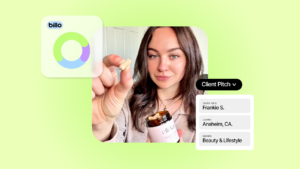
Have you ever watched a low-budget iPhone video outperform a polished, expensive studio shoot in your client’s ad account? It happens more often than most agencies want to admit, and it points to something important: the rules for what makes a great ad have fundamentally shifted.
Your clients’ brand teams still think in terms of production quality. You know the real lever is creative volume, authenticity, and speed of iteration. The challenge is bridging that gap, and doing it in a way that moves a skeptical CMO from “we don’t do UGC” to “when can we start?”
TL;DR
- UGC consistently outperforms studio creative on CTR, CPA, and ROAS across Meta and TikTok
- The strongest pitch frames UGC as a performance investment, not an additional content cost
- Hard data from Meta’s own benchmarks is what moves skeptical CMOs
- The brand guidelines objection is solvable with a strong brief structure, not promises
- A capped, time-boxed pilot with pre-agreed success metrics removes the client’s perceived risk
Frame UGC as a performance investment
When a CMO hears “UGC,” they often hear “cheaper content.” That framing almost always kills the pitch. What CMOs actually care about is CAC, ROAS, and how efficiently their media budget converts, so those are the terms your pitch needs to speak.
The trust gap between branded content and creator content is significant. 60% of consumers consider UGC the most authentic form of content, while only 16% say the same about branded content. That ratio matters to a performance-focused client because trust is the input to conversion. On the marketer side, 93% of marketers who have used UGC say it outperforms traditional branded content, particularly on cost efficiency.
The production economics shift significantly. You can produce 10 to 15 pieces of creator content for the cost of a single polished studio shoot, which means more creative variants, more testing data, and faster winners from the same budget. That reframe, from “we’re spending less on production” to “we’re now able to test more angles,” tends to land well with performance-minded clients.
If your client is running 3-5 studio ad variants per quarter. They’re spending weeks on production and testing a fraction of the creative angles they need to find what actually converts. With a UGC approach, that same quarterly budget could cover 20 or more variants across different hooks, messaging angles, and audience personas. The client gets more signal, faster, at a lower cost per asset.
The pitch comes down to one reframe: Meta’s algorithm data shows creative quality drives 70% of campaign performance, which means creative volume and iteration speed are no longer optional. They are the mechanism through which performance media works.

The data points that close the room
Once you’ve reframed the conversation, the next step is giving clients the specific numbers that back the shift. Three areas tend to be most persuasive in a pitch setting.
Meta Partnership Ads benchmarks. Meta’s own data shows that Partnership Ads deliver 19% lower cost-per-acquisition and 13% higher click-through rates compared to standard brand ads. The same research shows 71% of consumers make a purchase within days of seeing creator content on Meta. These are platform-level benchmarks, not agency projections, which makes them harder to dismiss across the table.
Creative testing velocity and ROAS. UGC-based ads generate four times higher click-through rates and reduce cost-per-acquisition by up to 50% compared to traditional branded content. Part of the explanation is volume: brands testing 20 or more new creatives each month see 65% higher ROAS than those testing fewer than 10. Studio production makes that volume financially impossible for most clients. A UGC program makes it routine.
A real case study. Liquid I.V. sourced hundreds of athlete creators each month and ran their content as paid ads directly from creator handles. The result was a 48% ROAS lift on TikTok and a 9.8% incremental lift in Meta Advantage+ shopping campaigns. This is a useful reference when clients ask whether UGC can actually scale: it can, but the results come from a systematic creator program, not one-off posts.
Let’s say your client is a mid-sized ecommerce brand currently testing 5-8 creatives per month. With a UGC model, the same budget could support 20 or more test variants. The algorithm finds winners faster, your team collects more data on what messaging resonates, and the client’s ROAS compounds over time as losers get cut and winners get scaled.
Handling the “our brand guidelines are too strict” objection
This is the most common pushback you’ll hear, and it is a legitimate concern. Brands with established visual identities, legal review processes, or regulated product claims have real reasons to be cautious about handing creative freedom to someone outside their team. A well-built brief structure is what resolves it, and more reliably than reassurance ever will.
The mistake most agencies make is asking creators to interpret the brand guidelines on their own. Effective UGC briefs define the non-negotiables precisely, including product visibility requirements, prohibited claims, and competitor restrictions, while leaving creative execution entirely to the creator. Specific guardrails actually feel less restrictive than vague direction, because they tell the creator exactly where the lines are rather than asking them to guess.
A brief built around video reference examples rather than written tone descriptions does more work in five seconds than two paragraphs of brand guidelines. Sharing three videos that nail the right feel gives the creator something concrete to calibrate to, and it removes the friction that leads to off-brand submissions. For brands with compliance requirements in regulated categories, a UGC style guide that lists approved phrases, banned claims, and visual dos and don’ts gives creators a compliant lane to operate inside without compromising their authenticity.
Brief for outcomes, not scripts. Over-directing creators produces content that reads as promotional, and it performs like it, too.
How to propose a UGC pilot
The most effective way to get a hesitant client to commit is to remove their financial risk. A capped, time-boxed pilot with pre-agreed success metrics does exactly that.
Pilot structure
| $1,000 pilot | $2,500 pilot | |
|---|---|---|
| Creators | 2-3 | 3-4 |
| Videos | 3-5 | 5-8 |
| Best for | Testing a single angle or hook | Testing multiple messaging angles and audience segments |
| Timeline to live | ~2 weeks from brief | ~2 weeks from brief |
| Video turnaround | 3-5 business days per asset | 3-5 business days per asset |
For Partnership Ads, the starting point is 20-30% of the existing Meta budget allocated to creator-led ads, with 10-15% held back for ongoing creator testing.
Pre-agree on success metrics before briefing a single creator
This is the step most agencies skip, and it’s the one that protects both parties. On Meta, roughly one in eight creatives will scale – set that expectation upfront. The pilot’s job is to identify that one and understand why it works.
| Metric | Benchmark | What it tells you |
|---|---|---|
| Thumbstop ratio | >30% | Hook is working |
| CTR | >1% | Creative compelling enough to click |
| CTR | >1.5% | Strong signal to increase spend |
| CPA | Within client target | Economics make sense |
| Minimum data threshold | 3 days + 2,000 impressions per creative | Don’t call it early |
A minimum viable pilot structured this way gives you enough signal to make a real decision without asking the client to take a large financial risk to get there.
A B2B SaaS company that ran a structured creator pilot found tutorial-style content from implementation consultants converted 3.2 times better than standard testimonial videos. That finding reduced their blended CAC by 31% while doubling demo volume, the kind of result that only comes from measuring the right things from day one.
Making the case for long-term UGC strategy (studio → UGC-led transition)
Once the pilot delivers results, the next conversation is about what a sustained UGC program looks like. At this point, the case is about creative infrastructure, not just individual assets.
UGC is testable creative inventory, and the brands that win in performance media are the ones with the best creative system. A studio shoot delivers 3-5 assets. A well-run UGC strategy delivers a continuous pipeline of tested variants, organized by angle, archetype, and platform, with each round of testing informing the next.
Three content archetypes are worth anchoring your long-term pitch around:
- Testimonial-Driven: Real users explaining what changed after using the product. High trust, high credibility, and particularly effective for mid-funnel audiences who are already aware of the category.
- Problem/Solution-Driven: A relatable opening hook that surfaces a pain point, followed by a demonstration or transformation. Consistently effective with cold audiences.
- Lifestyle-Driven: Day-in-the-life content that builds brand familiarity without a hard sell. Best for awareness campaigns and retargeting sequences.
A fourth angle worth introducing once a pilot expands into a full program: retention-focused UGC, briefed for onboarding, feature adoption, and win-back rather than the initial click. Our guide to UGC for retention marketing lays out how that brief differs from the acquisition-side content covered above.
The transition from studio-only to UGC-led creative works best as a parallel process, not a replacement. Run studio creative while launching UGC as a separate test stream, analyze which angles outperform, and gradually shift budget toward the formats producing results.
The creator economy is projected to reach $528 billion by 2030, and platforms are actively expanding the infrastructure to support creator-led advertising at scale. For your clients, this is a structural shift in how performance creative works, and the agencies helping them get ahead of it now will be the ones they trust with larger budgets later.
Summary
The strongest UGC pitch combines a performance reframe, hard platform data, a brief structure that resolves the brand guidelines concern, and a low-risk pilot proposal. Clients who push back on UGC are usually pushing back on uncertainty. A structured approach, with pre-agreed metrics and a capped test budget, removes most of that uncertainty before the meeting ends.
If you’re preparing to pitch UGC to a client this quarter, start by pulling their current CPA and ROAS data. Then build your case around what a 19% CPA reduction or a 38% CTR lift would mean for their specific account. That specificity, tied to their actual numbers, is what turns the conversation from exploratory to actionable.
FAQs
How many UGC videos do we need to start?
Won’t UGC look cheap compared to our studio creative?
What if the client has strict compliance requirements?
How long before we see results?

SEO Lead
Passionate content and search marketer aiming to bring great products front and center. When not hunched over my keyboard, you will find me in a city running a race, cycling or simply enjoying my life with a book in hand.
Make creator marketing a data-backed growth channel

Related from Creative Insider
Inside Canvas UGC: the new model for brand-owned social accounts

UGC for Retention Marketing: Same Creators, Different Brief
How to repurpose UGC: turn creator videos into a full-funnel content engine