Authentic moment hooks are the workhorse of the category
This hook opens with a real, mundane, first-person moment, told with no trick attached. The viewer recognizes themselves in it before the product is even mentioned, and that recognition is what earns the click.
Here are some of the top-performing examples in this category:
- “When your joints hurt, it’s not just uncomfortable, it wears on your emotions too.”
- “Every year when my allergies hit alongside my asthma it makes me absolutely miserable.”
- “Ugh, I always thought that waking up exhausted was just part of getting older.”
None of them make a claim or mention a benefit. Each names an ongoing, low-grade misery in the register a person would use talking to a friend. “Absolutely miserable” and that opening “Ugh” aren’t copywriting; they’re what someone sounds like when they’re tired of something. The third line was one of the strongest performers in the entire set.
Notice that the middle one speaks in “you” and still belongs here. It isn’t addressing the viewer the way an ad does; it describes the experience closely enough that the viewer fills in their own version, which does the same work as first person.
None of these hooks are announcing anything. They describe a condition the viewer already lives with, and the recognition lands before there’s anything to be sceptical about.

If you’re briefing this one: don’t ask the creator to sound authentic. Ask what the problem is actually like on a bad day, in their own words, and let them keep the false starts.

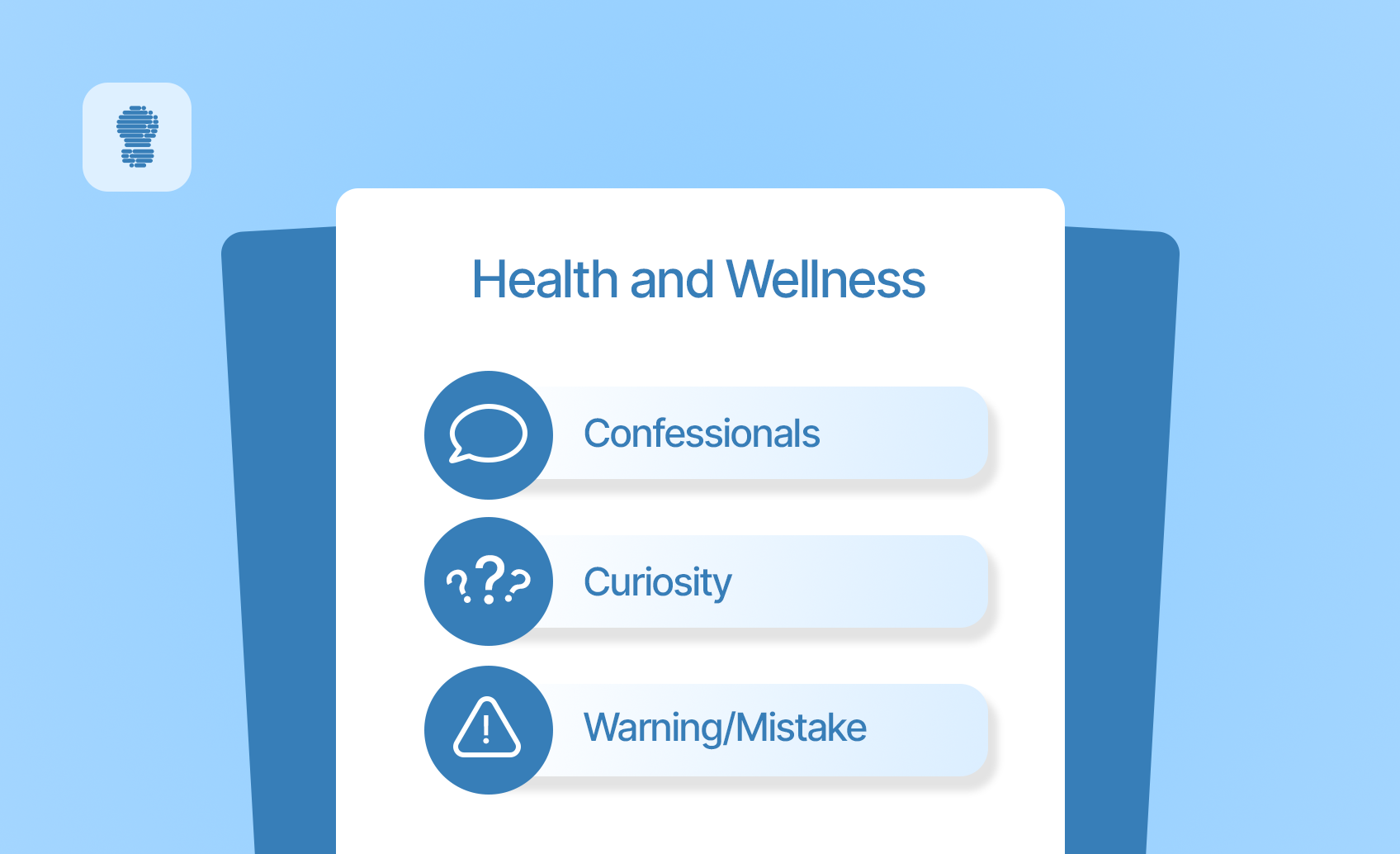
Confessional hooks convert without needing a standout hook rate
Admitting something a little vulnerable or embarrassing buys instant credibility with the viewer.
The top performers in this category:
- “Yall I gotta share something because it has been such a journey for me.”
- “I’m 35 and I just found out I’ve been using the wrong condoms my whole life.”
- “Alright, don’t judge me. But this is what I used to sleep with every night.”
What’s notable is that these converted even without a standout hook rate. Confession isn’t clickbait. It filters for the right person rather than trying to stop everyone.
That inverts how most teams read the numbers. A confessional hook is supposed to have a narrower top of funnel. “I have alopecia” isn’t written to stop a general audience. It stops the person the video is actually for, and it arrives having conceded something, which is what makes what follows land as a recommendation rather than a pitch.
The condoms line shows how much work the specifics do. “I’m 35” and “my whole life” turn a product category into an admission with a cost attached: the speaker isn’t sharing a tip, they’re telling you they got something wrong for two decades. That’s a harder thing to say and a much easier thing to believe.
The practical risk is a review process that kills confessional hooks early for unimpressive hook rates. On this data, that’s exactly backwards.

Mistake and warning hooks work on the thing you haven’t noticed yet
This hook tells the viewer something has been going wrong out of view. The top performers:
- “M, story time. So how about I almost got scammed by one of those weight loss companies?”
- “Alright, listen up. I think my pillow has been secretly ruining my life and I just didn’t know.”
- “You’re probably wasting your money on [product category] right now and don’t even realize it.”
Read the ends of those three lines together: “and I just didn’t know”, “almost got scammed”, “don’t even realize it”. Every one lands on the same idea. The warning isn’t that the viewer did something stupid, it’s that the information wasn’t available to them.
That distinction is what lets the third line point at the viewer and get away with it. “You’re probably wasting your money” would be a telling-off on its own, but “and don’t even realize it” hands over an excuse in the same breath. The viewer isn’t careless, they were kept in the dark, and the video is about to let them in.
The other two do the same work from the speaker’s side. The pillow line takes a low-grade, unexplained annoyance and blames an object nobody would think to suspect. The weight loss line has a near miss inside it, and the near miss is what makes it a story rather than a lecture. Something almost happened to this person, so it could happen to you.
If you’re briefing this one: name what was hidden, not what the viewer failed to do. The warning needs something concrete going wrong behind it, and the viewer needs an out.

Curiosity hooks name a question the viewer wants answered
Top performers here included:
- “20 bucks. I’ll tell you the best way to spend this.”
- “This is the biggest and most expensive thing I bought off TikTok shop. Did I waste my money?”
- “This is one of those topics that we rarely bring up, but we should.”
The first two have a purchase baked in. The TikTok line tells you a transaction happened and then hangs a verdict on it. “Did I waste my money?” is a question the viewer wants answered because they have hovered over the same purchase themselves. “20 bucks” names the price before the product, which pre-qualifies the viewer and makes the payoff feel like a tip.
The third works differently and is the one worth studying. Its gap isn’t commercial, it’s social. In health, the topics people rarely bring up are the ones they’re embarrassed by, and “but we should” reads as permission as much as tease. The viewer carrying that exact unspoken problem knows within a second that the video is for them, which is the same filtering a confession does.
What all three share is a promised answer rather than a withheld one. Each makes it obvious that something specific is coming, and that is what separates curiosity that holds attention from curiosity that only delays it.

Three angles stopped the scroll just as hard and rarely sold anything
Three other formats stopped the scroll just as hard as the ones above, but rarely sold anything.
Question hooks only worked when they named a specific symptom: “Do you ever finish a workout and your elbow just feels on fire?” and “Have you ever dealt with nagging shoulder pain?” both sold well. The broader version, “If we can do banking and groceries online, why are prescriptions still so complicated?”, earned a huge scroll-stop with no revenue behind it. It’s a great top-of-funnel line with no buyer attached.
The distinction is between a question about the viewer’s body and a question about the world. Only someone whose elbow hurts can answer the first, and that person is a buyer. The prescriptions line is a question everyone can nod along to, and agreement isn’t intent.
Bold claims ran into the same problem in a different shape. A punchy line with no personal moment behind it reads as an ad, and people bounce once they hit the landing page. “It smells like a spa, works like a painkiller” and “Everyone has a night routine, but this is the one thing that fixed my sleep” both got attention without the revenue to match.
These lines aren’t bad writing. They’re good copywriting, which is the issue. In a feed, polish is a tell.
Secret-or-insider hooks were the worst offenders of the three, and the ones worth watching most closely, since this was the most expensive category in the entire set and the weakest performing. “Ain’t nobody gonna tell you this, but as we age…” and “I’ll let you in on a little pickleball secret” both open a curiosity gap, and both pull in skeptics rather than buyers. The protein payoff, “…as we age protein absorption becomes more difficult,” was the single biggest spend in the category and one of its worst returns.
On the surface these look like curiosity hooks, which is part of why they keep getting made. They aren’t.
How to apply this to your next health creator brief
Judge a creative on results, not hook rate. Hook rate is a diagnostic: it tells you whether you stopped anyone, and how broadly. It doesn’t tell you whether you stopped anyone worth stopping.
One small pattern runs through the winners. “Ugh.” “Y’all.” “Alright, don’t judge me.” “Alright, listen up.” “M, story time.” The formats that converted keep the throat-clear a scripted line would edit out. The ones that didn’t convert are the ones that sound finished.
If you’re weighing a health creative brief, lean toward first-person, specific, problem-aware formats: authentic moment, confessional, mistake or warning, and curiosity with a real answer behind it. Those are the four that actually converted in this data.
Keep spend disciplined on secret/insider, comparison, and product test formats until they’ve earned it. They’re the ones most likely to look good on scroll-stop metrics and lose money in the account.
And if you see a high-hook ad that made nothing, don’t read it as a near-miss worth scaling. It isn’t a partial success you can optimise away with a better landing page. It’s a flag that the message, product, and audience aren’t matched. The ad is stopping the wrong person. Fix the hook, not the funnel behind it.