55+ UGC Statistics (2026): Consumer Trust, Conversions, and Market Data

Passionate content and search marketer aiming to bring great products front and center. When not hunched over my keyboard, you will find me in a city running a race, cycling or simply enjoying my life with a book in hand.
User-generated content has moved from a nice-to-have marketing tactic to an absolute necessity for growth. The global UGC market nearly doubled in the past year, with brands investing heavily in authentic customer voices rather than polished corporate messaging. This shift reflects a fundamental change in how consumers shop: they trust what other people say far more than what companies claim about themselves.
Retailers, ecommerce brands, and digital marketers now build entire strategies around UGC. The data is clear: UGC converts better, costs less than traditional content creation, and builds genuine trust with audiences. Whether you’re running paid ads, optimizing for SEO, or building email campaigns, UGC outperforms conventional approaches across nearly every metric.
TL;DR:
- Global UGC platform market projected to reach $8.48 billion in 2026, on track for $64 billion by 2034
- UGC drove 6.73x higher conversions in Q1 2026
- 92% of consumers trust recommendations from other people over branded content
- UGC generates 6.9x more engagement than brand content on social media
- $4 return for every $1 invested in UGC
- 78% of all online content is predicted to be UGC by 2033
This comprehensive collection of 55+ statistics organizes the latest research by theme: market growth, consumer psychology, conversion performance, social media engagement, generational preferences, and the AI-driven future of UGC. Use these insights to justify your UGC investments, benchmark your performance, and plan your content strategy for the rest of 2026.
UGC Market Size and Growth
The UGC market has transformed from a niche channel into a multi-billion dollar industry. The global UGC platform market reached $7.6 billion in 2025, up 69% from $4.5 billion in 2024, signaling explosive adoption by brands across sectors. This growth reflects both increased marketer sophistication and consumer demand for authentic content.

Projections show this momentum accelerating. Fortune Business Insights projects the market will reach $8.48 billion in 2026 and $64.31 billion by 2034, growing at a 28.8% CAGR. US spending on UGC alone exceeded $10 billion in 2025, representing a fundamental reallocation of marketing budgets toward user voices. The broader creator economy is projected to hit $480 billion by 2027, with UGC as a core component.
Since 2021, UGC spending has grown 100%, and this acceleration shows no signs of slowing. 67% of retailers plan to increase UGC investment in the coming year, confirming that this is not a temporary trend but a permanent shift in how brands allocate marketing resources.
Key Growth Metrics:
- Global UGC platform market: $7.6B (2025) MarketingLTB
- Year-over-year growth: 69% MarketingLTB
- Projected market size by 2034: $64.31B Fortune Business Insights
- US UGC spending: $10B+ (2025) MarketingLTB
- Creator economy forecast: $480B (2027) MarketingLTB
- UGC spending growth since 2021: 100% MarketingLTB
- Retailers increasing UGC investment: 67% Bazaarvoice
Explore how to build a comprehensive UGC strategy that capitalizes on this growth.
Consumer Trust and Authenticity
Authenticity is the foundation of UGC’s power. 84% of consumers trust brands more when they use UGC, while 92% trust recommendations from other people over branded content according to Nielsen’s Global Trust in Advertising study. This gap between brand trust and peer trust explains why UGC consistently outperforms traditional advertising.

Broader trust data reinforces this pattern. Edelman’s 2025 Trust Barometer found that 80% of consumers now look to peers rather than brand experts as the gold standard for accurate brand information. Meanwhile, Forrester research shows 68% of consumers identify UGC as the most authentic content format, up from 60% the previous year. UGC registers as 9.8x more authentic than influencer content, a critical distinction in a market oversaturated with sponsored partnerships.
The impact on purchasing decisions is dramatic. 55% of shoppers hesitate to buy without UGC, and 40% won’t purchase at all if no UGC appears on the product page. This behavior shift means that UGC is no longer supplementary content but a prerequisite for conversion. Brands that curate authentic customer reviews and real-world UGC examples are best positioned to meet these expectations.
Trust and Authenticity Snapshot:
- 92% of consumers trust peer recommendations over any form of advertising Nielsen
- 84% of consumers trust brands more when they incorporate UGC EnTribe
- 80% of consumers look to peers (not brand experts) as their gold standard for brand info Edelman
- 68% of consumers identify UGC as the most authentic content format online Forrester
- UGC is rated nearly 10x more authentic than influencer content Forrester
- 55% of shoppers hesitate to buy a product without UGC present Bazaarvoice
- 40% of shoppers won’t complete a purchase if the product page has no UGC MarketingLTB
Learn more about why UGC matters and how it builds brand credibility at every touchpoint.
UGC Conversion and ROI
UGC drove 6.73x higher conversions in Q1 2026, making it one of the highest-impact marketing levers available. Social posts with UGC drive 10.38x higher conversion rates, a performance gap that no other content type can match. These aren’t marginal improvements; they represent fundamental shifts in purchase intent.
The conversion boost extends across the entire customer journey. On-site product reviews increase conversions by 74%, while revenue per visitor climbs 154% with UGC implementation. UGC delivers $4 return for every $1 invested, making it an extraordinarily efficient marketing channel. Brands also save up to 70% on content creation costs compared to traditional production methods.
Even when controlling for traffic volume, brands using UGC see 29% more web conversions. This lift comes from multiple mechanisms: increased product page engagement, reduced purchase friction from peer validation, and improved time-on-site metrics that compound into higher conversion rates. The impact is especially visible in ecommerce environments where product pages with UGC consistently outperform those without. Brands looking to increase their ROAS often find UGC integration to be the fastest lever.
ROI and Conversion Performance:
- 6.73x higher conversions for UGC content vs. non-UGC (Q1 2026) Yahoo Finance
- 10.38x higher conversion rates on social posts featuring UGC vs. non-UGC posts Emplifi
- 74% conversion increase on product pages with customer reviews Bazaarvoice
- 154% higher revenue per visitor on pages with UGC vs. pages without Bazaarvoice
- $4 return for every $1 brands invest in UGC Bazaarvoice
- 70% lower content creation costs using UGC vs. traditional production MarketingLTB
- 29% more web conversions for brands using UGC vs. those without MarketingLTB
See real-world UGC video examples that demonstrate these conversion patterns in practice.
UGC Ad Performance
In paid advertising, UGC outperforms branded creative across every standard metric. UGC ads generate 4x higher click-through rates compared to traditional ads, while CPC drops 50% for UGC-based campaigns. Cost per acquisition ranges 25-40% lower across major platforms when brands leverage customer content.
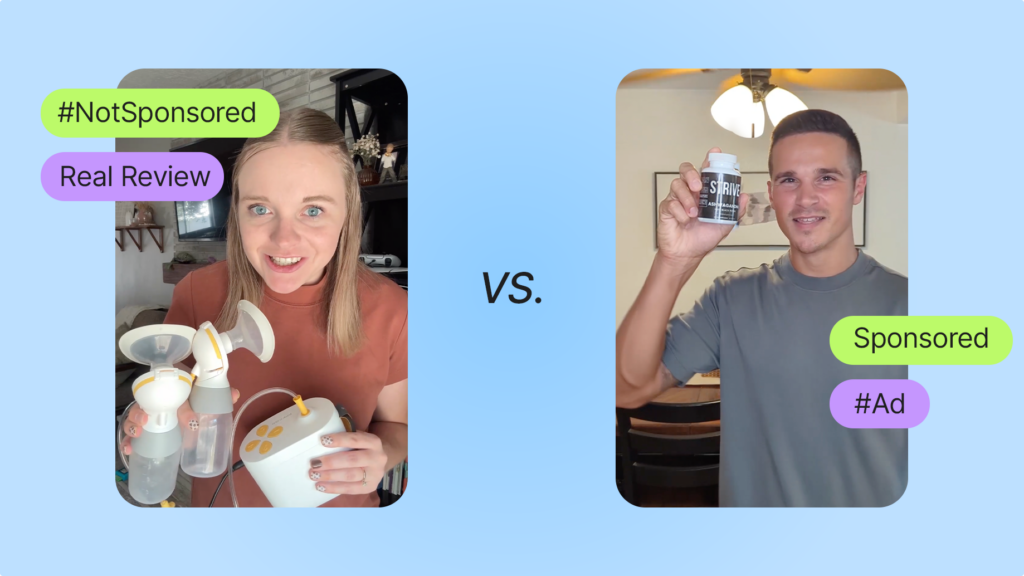
93% of marketers say UGC outperforms branded content, and this consensus reflects real performance data from millions of ad impressions. 86% of brands believe UGC would improve ad performance, suggesting significant opportunity for brands still relying primarily on branded creative.
Budget allocation is shifting toward UGC as a result. 82% of brands are moving paid media budgets toward UGC-leveraging content, a structural shift that will reshape the advertising landscape. Consumer perception amplifies these results: 31% of consumers find UGC ads more memorable than branded ones, meaning the performance advantage compounds with brand recall benefits. For a full breakdown of what makes these ads work, explore our guide on what UGC ads are and how to use them. If your existing creatives are losing steam, creative fatigue is likely a factor, and UGC rotation is the most effective antidote.
Ad Performance Metrics:
- 4x CTR uplift vs. traditional ads MarketingLTB
- 50% CPC reduction MarketingLTB
- 25-40% CPA reduction MarketingLTB
- 93% of marketers say UGC outperforms traditional branded content Forbes
- 86% of brands believe incorporating UGC would improve their ad performance Bazaarvoice
- 82% of brands are moving or considering moving paid media budgets toward UGC MarketingLTB
- 31% of consumers find UGC-based ads more memorable than branded ads MarketingLTB
UGC and Social Media Engagement
Social platforms reward UGC with algorithmically driven engagement. UGC generates 6.9x more engagement than brand content, a performance gap that drives visibility and reach across all major platforms. On average, UGC posts achieve 28% higher engagement rates than brand-created alternatives, reflecting algorithmic preferences for authentic, user-centric content.
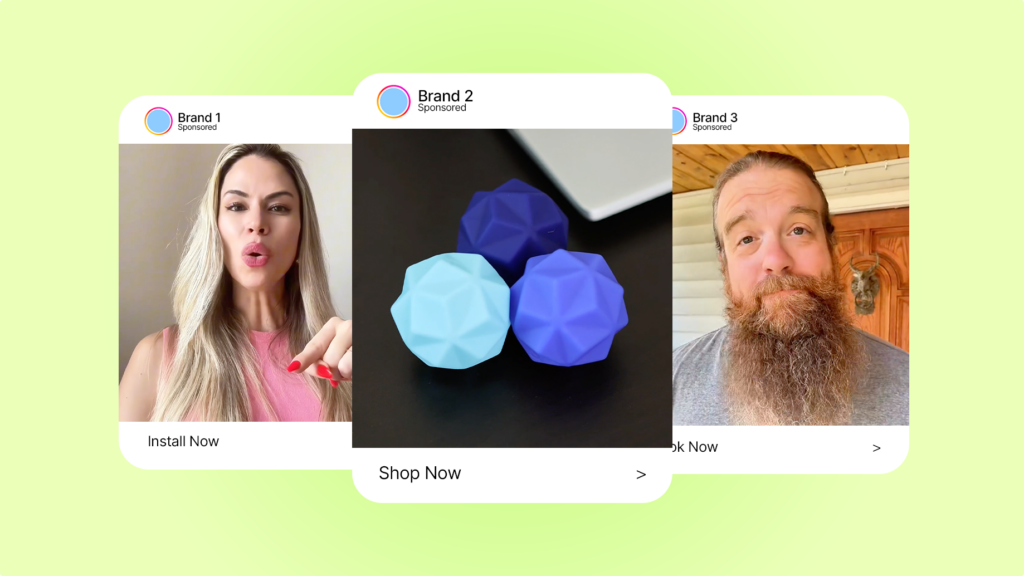
Platform-specific performance varies but universally favors UGC. Instagram UGC posts get approximately 70% more engagement than traditional brand posts. On TikTok, UGC proves 22% more effective than brand content, aligning with the platform’s cultural preference for creator-style authenticity. YouTube data shows an even more dramatic pattern: UGC content receives roughly 10x more views than branded videos.
This engagement advantage creates a multiplier effect. 28% of ecommerce marketers say Instagram generates the most engaging UGC, followed by Facebook at 23%, TikTok at 19%, and YouTube at 17%. The distribution reveals that UGC success isn’t platform-dependent but rather a universal principle: authentic voices outperform corporate ones everywhere.
Video commerce is accelerating this trend further. The global live commerce market reached $172.86 billion in 2025 and is projected to hit $2.5 trillion by 2033 at a 41% CAGR, with social media platforms holding 42.1% of that revenue. The frictionless journey where a user watches a UGC video and buys within the same app is now a primary driver of social sales.
One behavioral pattern bears note: 45% of people unfollow brands that are too self-promotional, creating a penalty for over-branded content that UGC strategies naturally avoid.
Social Media Engagement Lift:
- 6.9x more engagement on UGC posts vs. brand-created content Nosto
- 28% higher engagement rate for UGC posts vs. standard brand posts on social Nosto
- 70% more engagement on Instagram posts featuring UGC vs. brand-only posts MarketingLTB
- 22% higher effectiveness for UGC vs. brand content on TikTok MarketingLTB
- 10x more views on YouTube UGC videos vs. branded videos MarketingLTB
- 45% of people unfollow brands that post too much self-promotional content MarketingLTB
- 28% of ecommerce marketers say Instagram generates the most engaging UGC Nosto
- $172.86B global live commerce market size in 2025, projected to reach $2.5T by 2033 Grand View Research
Learn how to go viral on TikTok by leveraging UGC formats that the algorithm rewards. For your next campaign, explore proven UGC hooks that capture attention in the first three seconds.
UGC by Generation: Gen Z and Millennials
Generational preferences reveal why UGC has become essential. 97% of Gen Z use social platforms for shopping inspiration, making social proof fundamental to their purchase journey. 84% of Gen Z trust brands showcasing real customers, while 61% prefer UGC over other content formats entirely. This isn’t a slight preference but a structural shift in how the largest consumer demographic evaluates brands.

Platform behavior reinforces these preferences. 77% of Gen Z use TikTok for product discovery, meaning UGC on TikTok functions as a direct social commerce channel rather than just engagement content. 80% of Gen Z have shared or are willing to share purchases on social, creating an organic content generation cycle that brands can amplify.
Gen Z also participates more actively in UGC creation. 55% of Gen Zers want to be featured on brand social pages, suggesting strong demand for creator opportunities and brand partnership. This willingness to participate represents both a content supply advantage and a community engagement lever that traditional marketing cannot replicate.
Millennials contribute disproportionately to overall UGC volume: they produce over 70% of all user-generated content and find UGC 35% more memorable than traditional advertising. This generational dominance means that brands optimizing for Millennials automatically gain scale advantages in UGC production.
Generational UGC Preferences:
- 97% of Gen Z use social media platforms for shopping inspiration EnTribe
- 84% of Gen Z trust brands that showcase real customers in their ads EnTribe
- 61% of Gen Z prefer UGC over all other content formats MarketingLTB
- 77% of Gen Z use TikTok for product discovery EnTribe
- 80% of Gen Z have shared or are willing to share their purchases on social media EnTribe
- 55% of Gen Z want to be featured on a brand’s social media pages EnTribe
- 70%+ of all UGC is created by Millennials MarketingLTB
- Millennials find UGC 35% more memorable than traditional advertising MarketingLTB
For a deeper look at reaching this demographic, read our guide on marketing to Gen Z. Formats like unboxing videos resonate particularly well with younger shoppers seeking authentic product experiences.
UGC in Email Marketing
Email remains a high-ROI channel, and UGC amplifies its effectiveness further. UGC in email boosts click-through rates by 78%, translating directly into higher engagement and conversion within one of the most measurable marketing channels. Despite this performance advantage, only 50% of marketers currently use UGC in email campaigns, representing a significant optimization gap.

62% of consumers prefer clicking on content featuring real customers, suggesting that non-adopters are leaving substantial performance on the table. This preference extends to every type of email: newsletters, promotional campaigns, abandoned cart sequences, and post-purchase engagement all benefit from UGC integration.
The straightforward mechanism here is psychological: emails displaying peer behavior and authentic customer stories feel less like advertising and more like genuine recommendations, triggering higher click rates and subsequent conversions.
Email Performance with UGC:
- 78% higher click-through rates in emails that include UGC Meetanshi
- 50% of marketers currently use UGC in email campaigns (significant gap remains) MarketingLTB
- 62% of consumers are more likely to click on marketing that features real customers Meetanshi
For practical implementation guidance, read our full guide on incorporating UGC into email marketing.
UGC and SEO
Search results are being reshaped by UGC. 31% of first-page search results are now user-generated content, up from 25% the previous year, reflecting Google’s algorithmic preference for authentic, diverse content sources. UGC boosts blog organic traffic by 45%, with reviewable content and customer commentary often outranking branded pages for product-related queries.
The competitive dynamic is stark: customer review pages and Reddit threads outrank brand pages in 44% of product keyword searches. This means that brands without a robust UGC and review strategy are surrendering organic search visibility to third-party and community sources. Shoppers rank specific UGC types as most impactful: reviews (78%), question-and-answer sections (77%), and user photos (69%) drive the highest engagement and influence.
The SEO opportunity extends beyond traditional rankings. With the rise of AI search, UGC has become a critical signal for visibility in AI Overviews (formerly SGE). Brands cited in AI Overviews see a 35% higher organic CTR than those that are not, because AI search engines prioritize real-world evidence like reviews and customer content to validate their answers. UGC-rich pages also benefit from longer session duration and lower bounce rates, factors that both traditional and AI-powered search use to evaluate page quality.
UGC Impact on SEO:
- 31% of first-page results are UGC MarketingLTB
- 45% organic traffic boost from UGC MarketingLTB
- 44% of product searches where reviews outrank brands MarketingLTB
- 78% of shoppers say reviews are the most impactful type of UGC Bazaarvoice
- 77% of shoppers say Q&A sections influence their purchase decisions Bazaarvoice
- 69% of shoppers say photos from real users influence their purchase decisions Bazaarvoice
- 35% higher CTR for brands cited in AI Overviews Yotpo
Explore the full connection between UGC and SEO to understand how reviews and customer content drive organic rankings.
AI, Creator Costs, and the Future of UGC
The future of UGC is being shaped by artificial intelligence and evolving creator economics. 78% of all online content is predicted to be UGC by 2033, a projection that underscores the fundamental shift in content production from corporate to distributed. AI-enhanced tools are projected to produce 35% of UGC by 2030, automating metadata, thumbnails, captions, and other production elements while humans retain creative control.

Creator compensation has become more efficient as the market scaled. The average UGC creator cost dropped 44% year-over-year to $198 per deliverable, democratizing UGC production for brands of all sizes. For a detailed breakdown of current pricing tiers, see our UGC rates guide. This price compression reflects increased supply, better platforms for matching creators with brands, and standardization of deliverable formats.
AI-generated UGC is gaining traction, but the trust gap between human and AI content is significant. Traditional human-created UGC maintains an 81% authenticity rating, while AI-generated UGC sits at 63%, giving brands that use real creators a nearly 20-point trust advantage. AI-assisted metadata does demonstrate measurable impact on content performance: when creators revise video metadata with AI assistance, views increase by 7.1%, suggesting that the winning formula combines human creativity with AI optimization tools. Despite these advancements, most brands remain unprepared: only 16% of brands have a dedicated UGC strategy, leaving enormous opportunity for strategic advantage.
The maturity level of UGC adoption creates an interesting paradox. 87% of brands already use UGC in marketing, suggesting widespread awareness, yet 48% of marketers believe UGC humanizes marketing, implying that many brands don’t fully appreciate its strategic value. This gap between usage and strategic understanding represents a competitive opportunity for brands that build UGC into core brand strategy.
Future of UGC Metrics:
- 78% of all content predicted to be UGC (2033) MarketingLTB
- 35% of UGC produced by AI tools (2030) MarketingLTB
- $198 average creator cost (2026, down 44% YoY) Superscale
- 81 vs. 63 – consumers rate human-created UGC at 81/100 on perceived authenticity; AI-generated UGC scores 63/100 Superscale
- 7.1% more views when creators revise video metadata with AI assistance MarketingLTB
- 16% of brands with dedicated UGC strategy MarketingLTB
- 87% of brands use UGC in their marketing in some form MarketingLTB
- 48% of marketers believe UGC humanizes their brand’s marketing MarketingLTB
Compare features and pricing across the top UGC platforms to find the right fit for your brand’s production needs.
How to Act on These UGC Statistics
These statistics represent more than interesting data points: they’re a roadmap for brands looking to maintain competitive advantage in 2026 and beyond. The clearest takeaway is that UGC is no longer optional. With 40% of shoppers refusing to purchase without UGC on product pages and 6.73x conversion uplift, the question is not whether to invest in UGC but how to scale it effectively.
Start by auditing your current UGC presence. Which product pages have customer reviews? Which social profiles regularly feature customer content? Which email campaigns include UGC? These audits typically reveal significant gaps. Prioritize high-traffic, high-revenue pages first, then expand systematically. Our UGC best practices guide covers the fundamentals. When briefing creators, a solid UGC brief template keeps deliverables on-brand and reduces revision cycles.
Budget allocation should shift toward UGC creation and platform management. 82% of brands are already moving paid media budgets toward UGC, meaning inaction is falling behind baseline market practice. Consider whether your current creator partnerships, review platform investments, and social content strategies prioritize UGC sufficiently. The 44% creator cost reduction makes UGC production more accessible than ever, so budget constraints are becoming less defensible.

Partner with platforms or agencies that specialize in connecting brands with UGC creators, who can manage the logistics of sourcing, producing, and rights management at scale. This approach reduces internal overhead while accelerating production velocity.
Understanding the difference between UGC and influencer marketing can help you decide where to allocate budget for maximum return.
FAQs
What is UGC and why does it matter in 2026?
UGC stands for user-generated content (UGC): any content created by customers rather than brands. This includes product reviews, unboxing videos, customer testimonials, social media posts featuring products, and photos of items in use. It matters because consumers trust other customers 9.8x more than influencers and demonstrably more than brand messaging. Nielsen found that 92% of consumers trust peer recommendations over any form of advertising, and Edelman’s research confirms 80% now look to peers as the gold standard for brand information. The statistics show that UGC drives higher conversions, lower ad costs, better SEO rankings, and stronger social engagement than branded content.
How much does UGC improve conversion rates?
UGC drives 6.73x higher conversions overall, with social posts featuring UGC reaching 10.38x higher conversion rates. On individual product pages, reviews and customer photos increase conversions by 74%. The mechanism is straightforward: customers are more willing to purchase when they see evidence that other people similar to them have already bought and are satisfied. 55% of shoppers specifically hesitate to buy without UGC, and 40% won’t purchase at all if the product page lacks customer content.
Which social platform generates the most effective UGC?
The data shows platform variation but universal UGC effectiveness. Instagram is the top platform for ecommerce marketers (28%), followed by Facebook (23%), TikTok (19%), and YouTube (17%). However, platform selection should align with your target audience: Gen Z gravitates toward TikTok and YouTube, Millennials use all platforms, and older demographics concentrate on Facebook. YouTube UGC delivers 10x more views than branded content, while TikTok UGC performs 22% better than brand content. Rather than choosing one platform, most brands benefit from a multi-platform UGC strategy.
What does UGC cost in 2026?
The average UGC creator commands $198 per deliverable in 2026, down 44% from the previous year. Costs vary by creator experience level, deliverable type (video is more expensive than photos), and turnaround speed, but this benchmark represents typical market pricing. At this cost, a brand can produce UGC at roughly one-quarter the cost of professional video production, while achieving superior performance metrics. The ROI is $4 for every $1 invested, making UGC one of the most cost-efficient marketing channels available.


Authentic creator videos, powered by real performance data
22,000+ brands use Billo to turn UGC into high-ROAS video ads.



UGC Brief Template: How to Write a Video Brief T...
Key takeaway: Most UGC comes back unusable because the brief [...]...
Read full article
Tech UGC: Use Creators To Sell Software, Apps, A...
Tech UGC, short for user-generated content focused on technology products, [...]...
Read full article
How To Maintain Brand Consistency with At Scale...
When creator videos roll in fast, brand consistency can break [...]...
Read full article