What the data told us
1. Partnership Ads won when the video was the creator’s own story. A creator walking through her own results and reviews won on every metric from her handle. A creator retelling a client’s results lost on every metric.
2. A video that switched to our data partway through lost viewers. A creator opened with a personal take on polished brand videos, then read out our data. As a Partnership Ad, its hold rate fell 21%.
3. The combined result was close because two big swings cancelled out. Cost per link click was 11% higher for the Partnership Ads overall, too small a gap to call a winner. Link click-through rate rose 56% on the creator’s own story and fell 48% on the client’s.
Hypothesis: the same video does better from the creator’s handle
Partnership Ads let you run an ad from a creator’s handle instead of your brand’s page, with your brand shown as the paid partner. They’re one of the strongest tools for creator content.
In a June 2025 Meta experiment with about 2,400 advertisers, campaigns with Partnership Ads added had 19% lower cost per acquisition and 13% higher click-through rates on average.
On Billo, you decide which videos run as Partnership Ads. Add them to the brief when you create it, and only creators who offer them can apply. Each creator sets their own fee for the permission, which covers at least 30 days and can be extended.
The common advice is to run every creator video as a Partnership Ad.
We’re putting more of our own ad budget into Partnership Ads in 2027, so we wanted to know how to get the most out of them. Does the creator’s handle change results on its own? And if it does, which videos does it help most?
Before launch, we set cost per link click as the main metric, since Meta’s A/B test picks its winner on a single number. A lower cost per link click for the Partnership Ads would have counted as a win.
How we set up the test
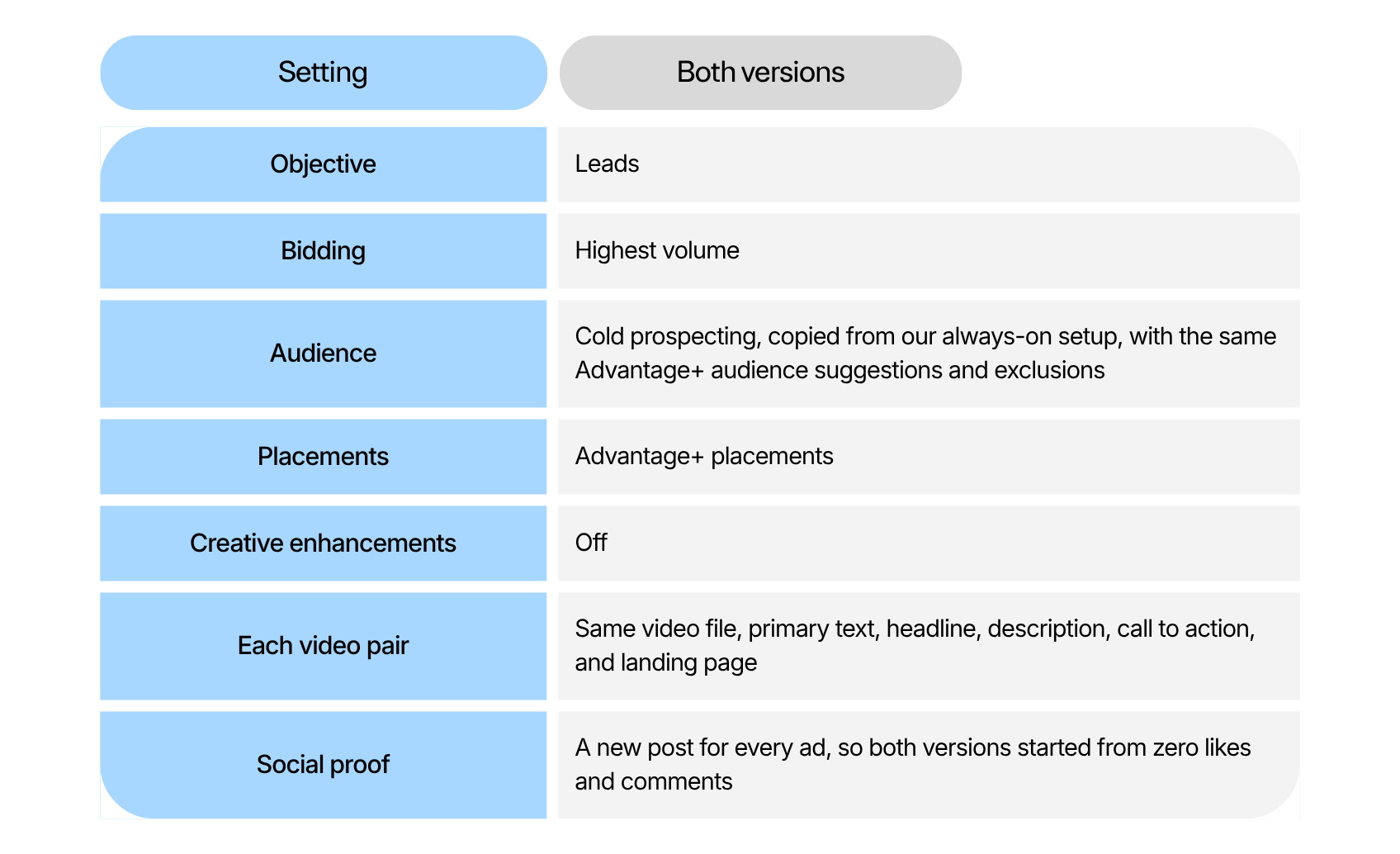
We used Meta’s built-in A/B test, which splits the audience between two campaigns so nobody sees both versions of the same ad. The two campaigns were identical except for whose name the ads ran under.
- Billo page. The ads ran from Billo’s Facebook page and Instagram account.
- Partnership Ads. The same ads ran with the creator’s handle as the main identity and Billo shown as the paid partner.
Each campaign had three ad sets, one per video, with one ad in each, so every video got its own budget.
With all three videos in one ad set, Meta would have pushed most of the spend to one of them. It might have picked a different one in each campaign, and we’d have ended up comparing creators instead of handles.
Every ad set had the same daily budget, and all six ads spent within 0.2% of each other.
The test ran for ten days, from 22 to 31 October 2026, and we didn’t change anything while it ran.
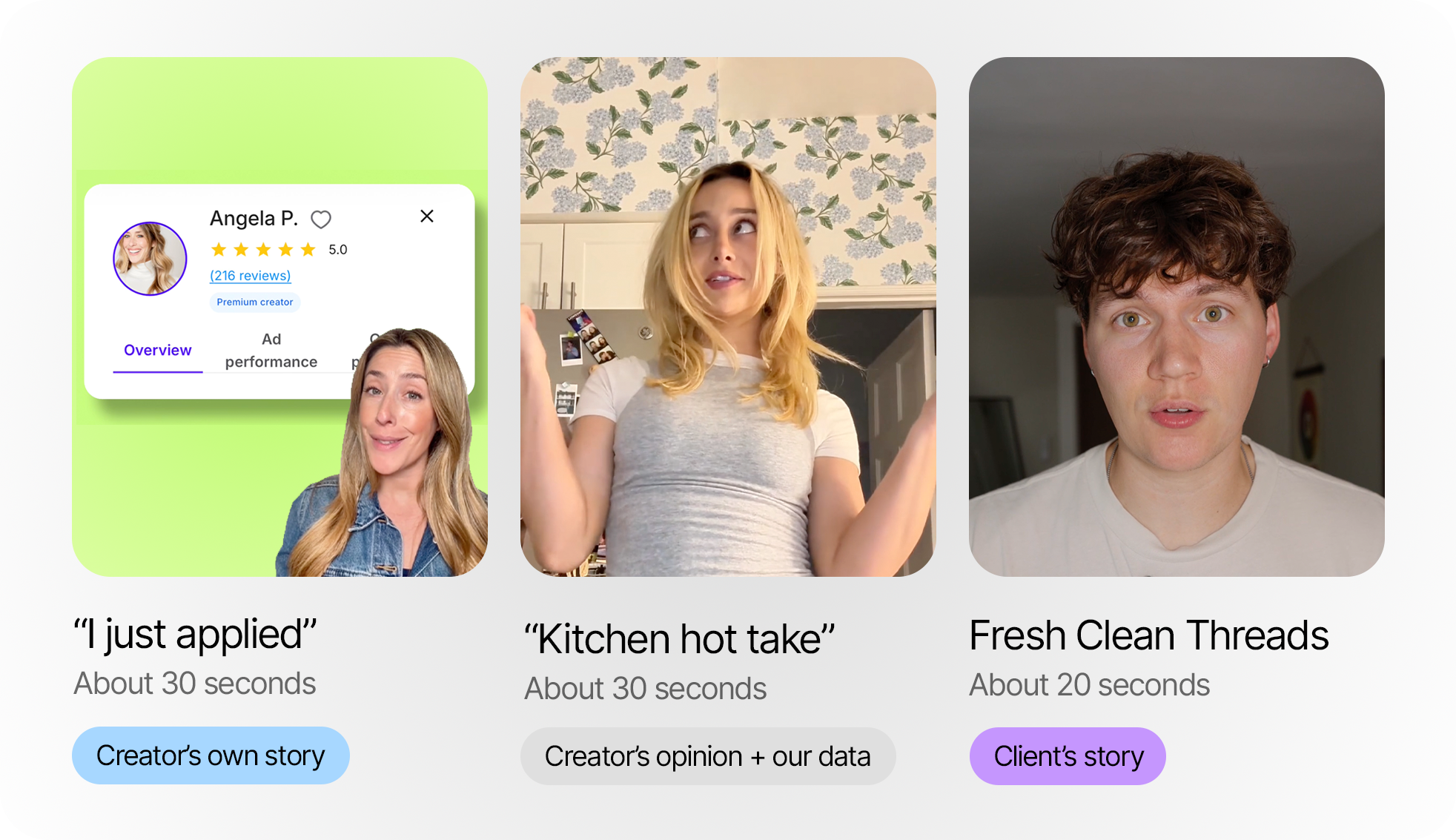
We picked three videos that range from the creator’s own story to a client’s:
- “I just applied” (about 30 seconds). A creator opens with “I just applied to make your next video ad,” then shows her Billo profile. It lists how her past videos performed as Meta ads next to the industry average, plus reviews from brands she’s made ads for. It’s her own story.
- “Kitchen hot take” (about 30 seconds). “Hot take from somebody who films ads for a living. Your polished brand video is probably losing to something I filmed in my kitchen.” The creator then backs it up with our data on creator ads beating brands’ other ads. The opinion is the creator’s, and the evidence is ours.
- Fresh Clean Threads (about 20 seconds). “This brand ran an ad telling people not to buy their shirts on purpose.” The creator then explains how our client Fresh Clean Threads got a ROAS of about 2 from that ad, when their account usually sat around 1.3. The creator narrates, and the story is a client’s.
We ordered all three on Billo like any brand would, and only invited creators who offer Partnership Ads.
Tip: Not every creator offers Partnership Ads, so add them to your brief when you create it. Only creators who offer them will be able to apply. If you’re inviting creators instead, filter Explore Creators for the ones who offer Partnership Ads.
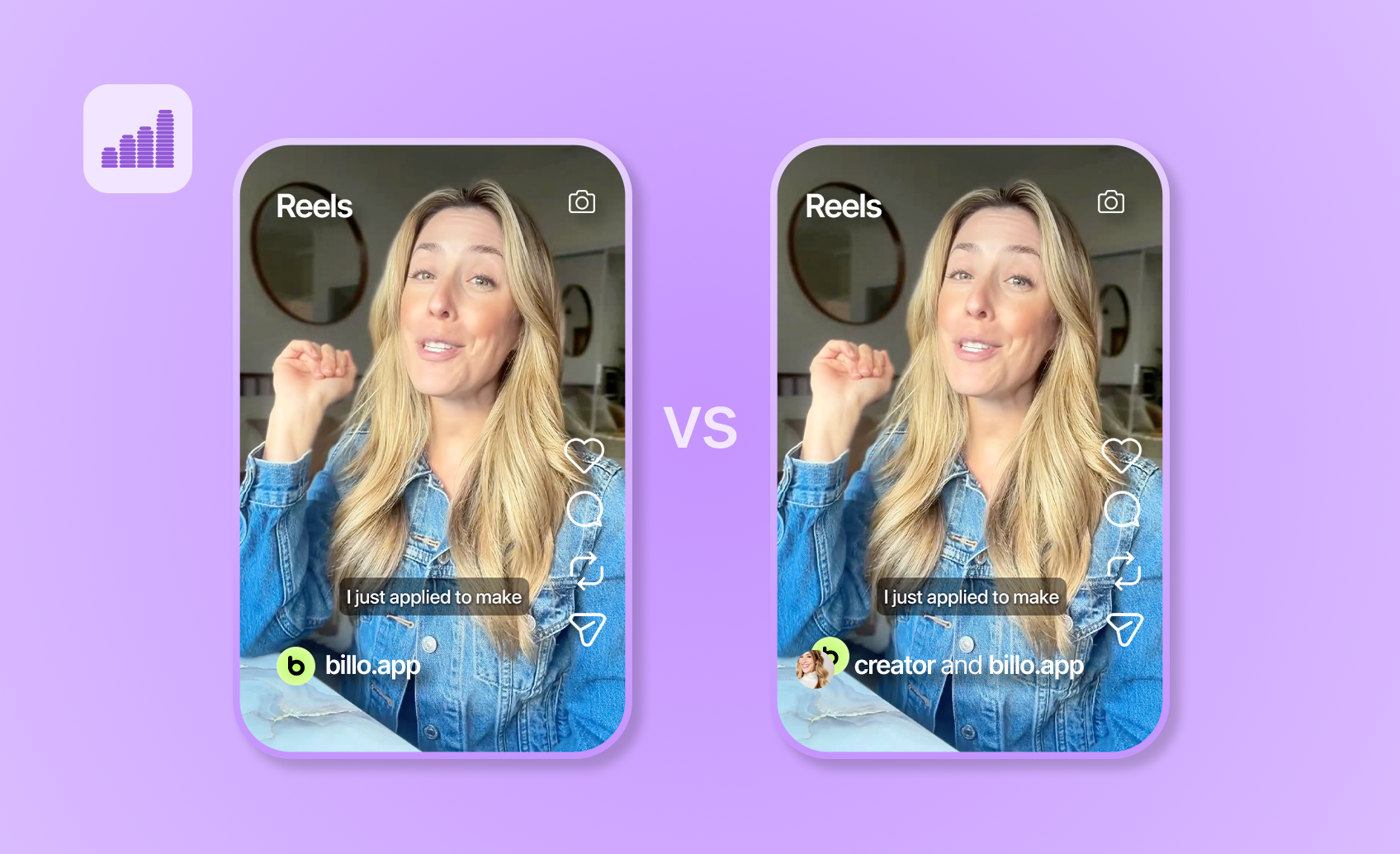
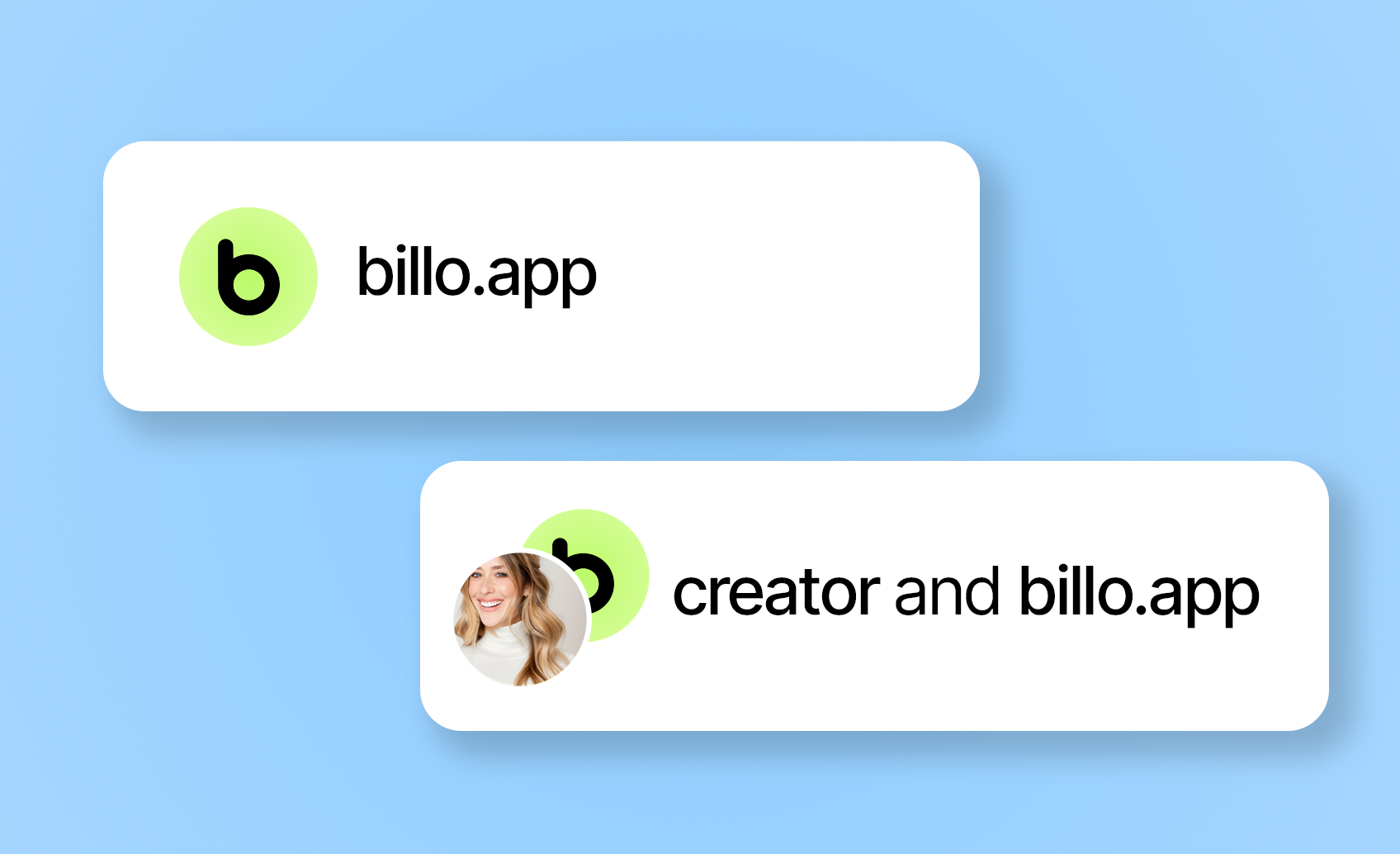
The two versions looked the same except for the name on the ad. The Billo page version showed billo.app, and the Partnership Ad showed the creator’s name and billo.app together, with both profile photos.
We compared them on four numbers:
- Cost per link click, the metric Meta used to pick a winner
- Link click-through rate, link clicks divided by impressions
- Hook rate, the share of impressions where someone watched at least three seconds
- Hold rate, the share of those people who kept watching
Results
All figures compare the Partnership Ads with the Billo page version, from Meta Ads Manager.
Combined, it was too close to call
Both versions paid the same for impressions, so the gaps below aren’t down to price.
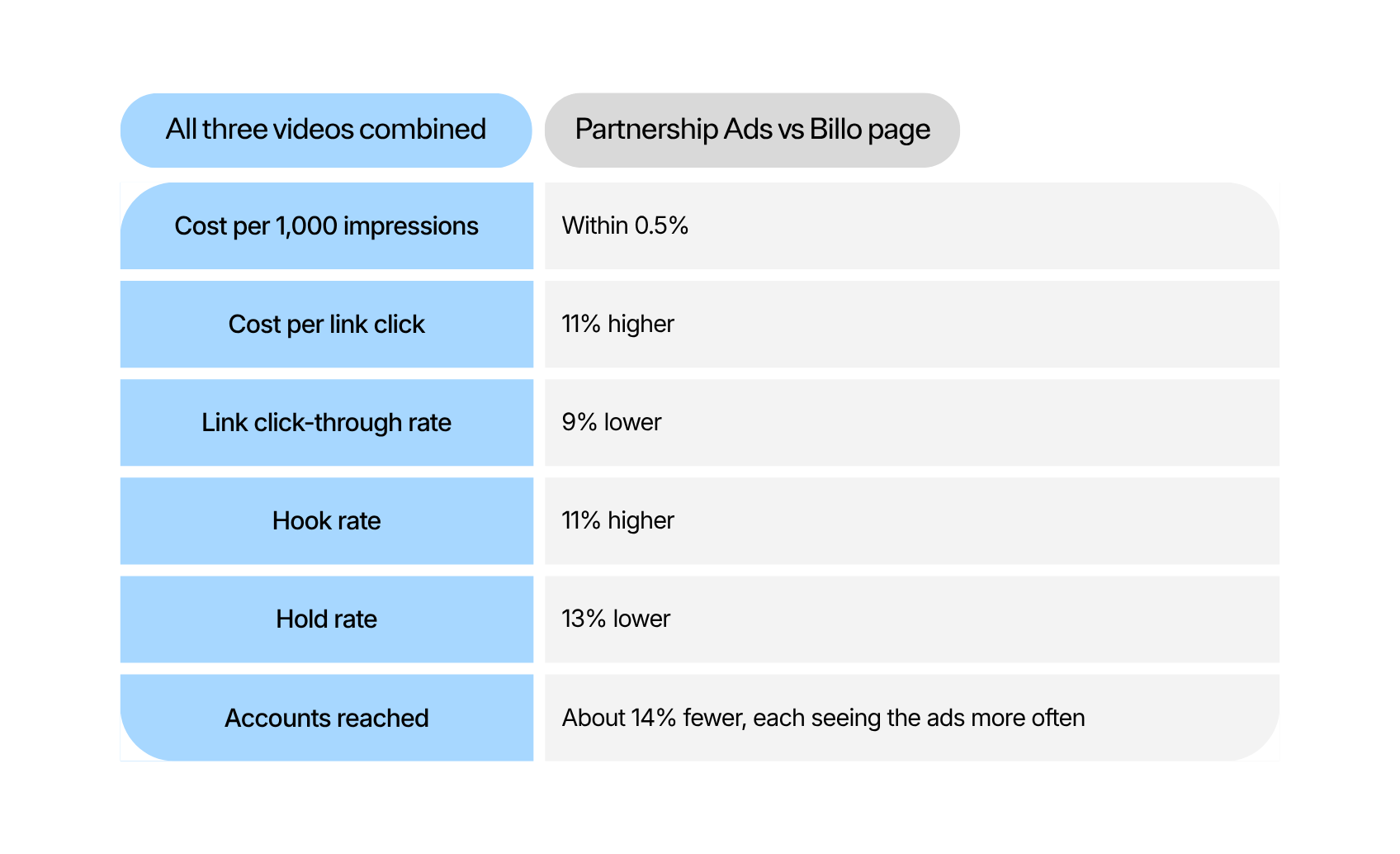
- Clicks were close. Cost per link click, the test’s main metric, was 11% higher for the Partnership Ads, because their link click-through rate was 9% lower. That’s too small a gap for us to call a winner.
- A larger share stopped to watch, and a smaller share kept watching. The Partnership Ads had an 11% higher hook rate and a 13% lower hold rate. As the table below shows, almost all of the hook gain came from “I just applied”, and the hold drop came from the other two videos.
- Meta showed the Partnership Ads to fewer people, more often. For the same spend, they reached about 14% fewer accounts.
Video by video: one win, one level result, and one loss
Each video got a third of the budget, so treat these as directional.
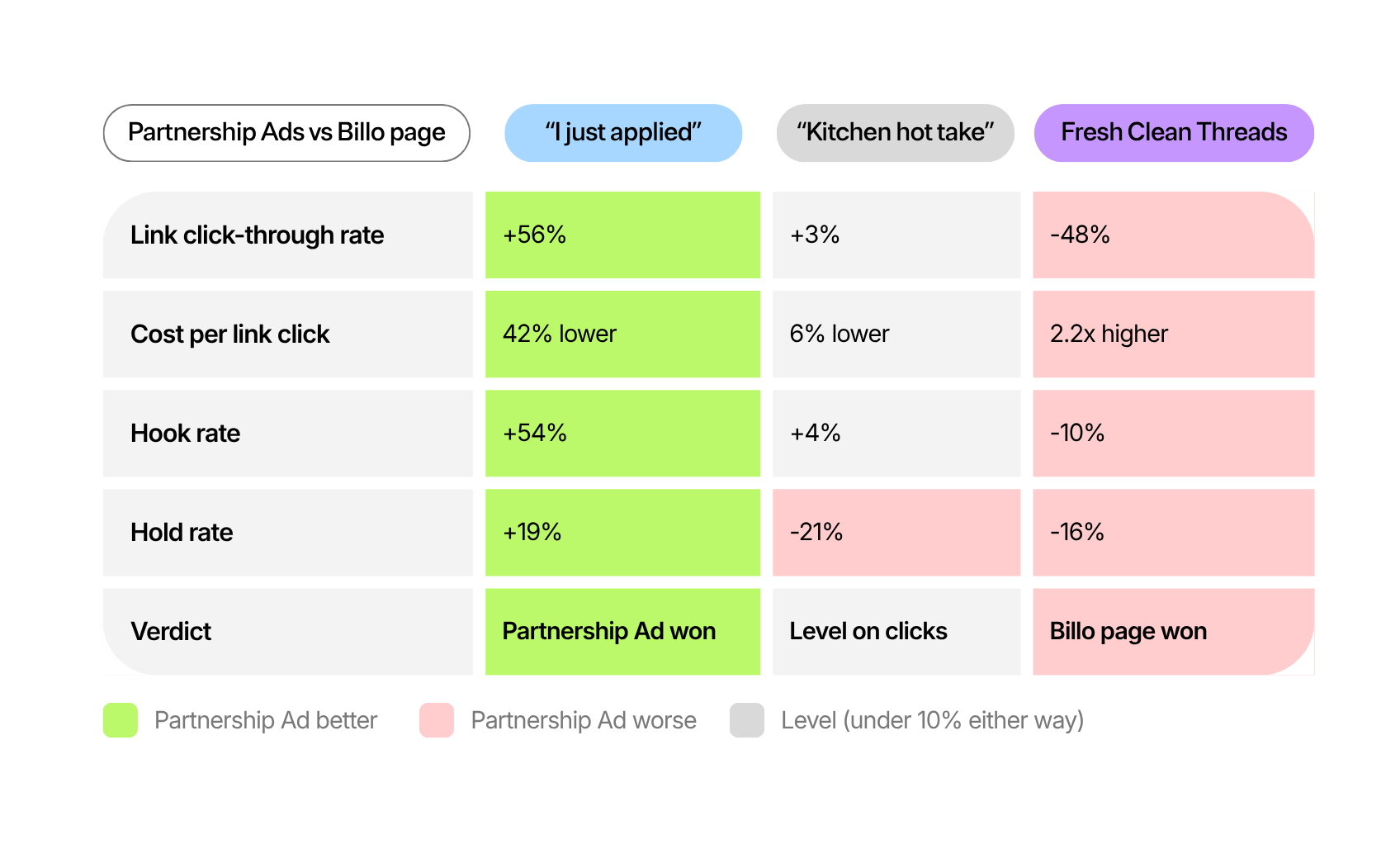
Big gaps from small tests usually shrink when the test runs again, so expect the real differences to be smaller than these.
- “I just applied” won on every metric as a Partnership Ad. The creator talks about her own profile and track record, so her own handle backs up what she’s saying. Meta’s quality ranking for the ad rose from average to above average.
- The Fresh Clean Threads video lost on every metric as a Partnership Ad. From Billo’s page, a creator retelling a client’s results reads as our proof. Our read is that from the creator’s own account, it’s harder to see why this person is telling you about another brand. Meta’s quality ranking for the ad fell from above average to average.
- “Kitchen hot take” was level on clicks as a Partnership Ad. But its hold rate fell 21%, and its quality ranking stayed average in both versions.
What the results mean
Match the handle to whose story the video tells
All three videos had a creator talking to camera, so a creator’s voice alone doesn’t explain the results. What differs is whose story each video tells.
- “I just applied” tells the creator’s own story, with her profile, her numbers, and her reviews. Her handle is part of the proof, and the Partnership Ad won.
- “Kitchen hot take” gives the creator’s opinion with our evidence. The Partnership Ad was level on clicks.
- The Fresh Clean Threads video tells a client’s story. The Partnership Ad’s link click-through rate fell by almost half.
The more the story was about the person named on the ad, the better the Partnership Ad did.
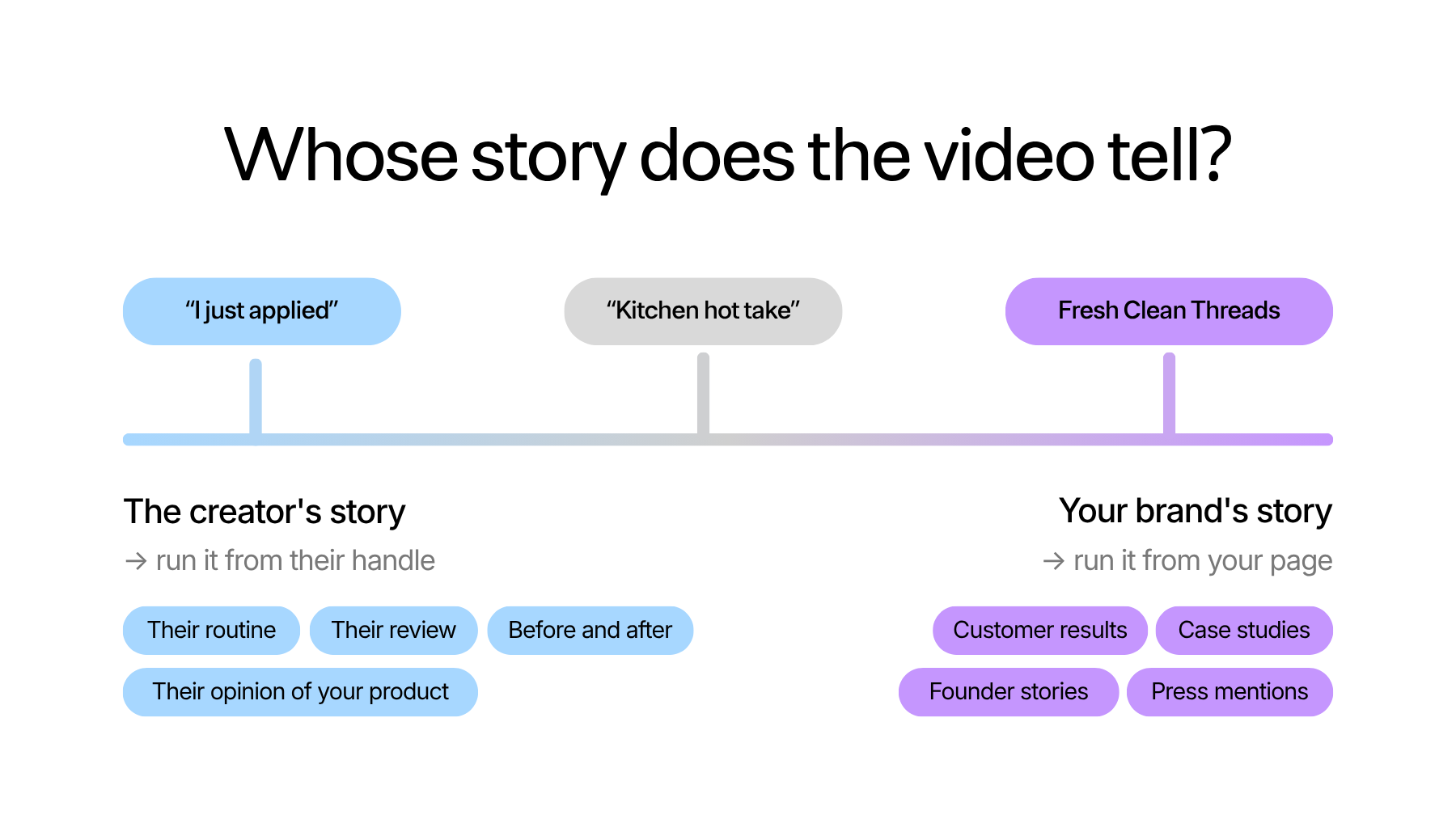
You can sort your own videos the same way before you pick a handle. A creator’s routine, review, before-and-after, or opinion of your product is their story, so run it from their handle. Customer results, case studies, founder stories, and press mentions are your brand’s story, so run them from your page.
The same idea applies to casting, though it goes beyond what we tested. The handle helps most when the creator is believable for the product, such as a nurse who works 12-hour shifts talking about compression socks, or a six-foot-five creator who’s finally found a T-shirt that’s long enough.
Keep it the creator’s story until the last line
A Partnership Ad puts the creator’s name on the ad, so viewers expect to hear from that person. The video that did best here sounded like the creator’s own post from start to finish.
“I just applied” never stops being personal. The creator talks about her own profile, her own results, and her own reviews, right up to her last line, “I’ll be sure to apply.” It’s still a sales pitch, since it walks through a Billo profile and asks you to sign up. As a Partnership Ad, its hold rate went up 19%.
“Kitchen hot take” starts the same way, with the creator’s own opinion. About eight seconds in, it switches to “Billo analyzed brands’ own ad accounts,” and from there the creator is reading out our data.
As a Partnership Ad, its hold rate dropped 21%. Its hook rate barely moved, up 4%, so about the same share of people started watching, and fewer of them stayed.
Tip: When you brief a video for Partnership Ads, ask the creator to talk about their own experience all the way through, such as what they tried, what they noticed, and why they’d use it. If the video needs to present your brand’s results, claims, or data, run it from your own page.
Break every test down by video before you call it
If we’d stopped at Meta’s verdict, we’d have decided the creator’s handle barely matters.
Meta’s A/B test leaned toward Billo’s page, but that combined number mixed a 56% gain in link click-through rate on one video with a 48% drop on another. So the handle made a big difference on two of the three videos, just in opposite directions.
Looking past the main metric mattered too. “Kitchen hot take” was level on cost per link click, and only its 21% lower hold rate showed it was losing viewers.
To get a result you can act on, break every creative test down by video, look past the one metric it was scored on, and test any split you find on its own.
What this test doesn’t cover
This test measured how the creative performed, so a few questions are for later tests.
- Revenue, return on ad spend, and signups. We judged the creative on hook rate, hold rate, and link click-through rate. Ten days doesn’t produce enough conversions to compare the two versions fairly.
- Whether the result holds across more videos. Three videos gave us a clear pattern, and a follow-up Lab test will check it with more pairs of each kind.
- Accounts unlike ours. We tested cold audiences on Meta in one market, with a B2B product sold to brands and agencies.
How to apply this to your next Partnership Ads test
- Run the creator’s own stories from their handle. In our test, the video about the creator’s own track record won on every metric as a Partnership Ad.
- Keep case studies and brand stories on your page. Our client case study lost almost half its link click-through rate from the creator’s handle.
- Brief Partnership Ads videos around the creator’s own experience, start to finish. The video that switched to our data partway through lost a fifth of its hold rate.
- Cast creators who’d plausibly use the product. The handle helps most when the person behind it is believable.
- Add Partnership Ads to your brief. Only creators who offer them will be able to apply.
- Test the handle on its own. Use Meta’s A/B test with one ad per ad set and equal budgets. Keep the copy and landing page identical, publish new posts, turn creative enhancements off, and leave it for at least ten days.
- Read the result video by video, and on more than one metric. Check link click-through rate, hook rate, and hold rate alongside the metric Meta picks a winner on.
If you want to run this test yourself, you can find creators who offer Partnership Ads on Billo, brief them to talk about their own experience, and add Partnership Ads when you post your brief.
Methodology
Data source: Meta Ads Manager, Billo’s own ad account, 22 to 31 October 2026.
How we judge Lab tests: On how the creative performs, using hook rate, hold rate, and link click-through rate. Signups matter to us just as much, but they also depend on how good the landing page is, so we track them as secondary.
What we don’t publish: Spend, budgets, impressions, reach, clicks, signups, and the absolute hook and hold rates. Every test figure here is a difference between the two versions.
A note on interpretation: Each video got a third of the budget, so the video-by-video results are directional. Big gaps from small tests usually shrink when the test runs again.