Trusted-source framing showed up more than any other structure
More of the top health ads were built around where the product came from than around anything the product does. Lines like “elite standards,” “expert curated,” and “clinically backed” did the persuading, and the feature list came second.
The clearest version came from a creatine ad aimed at over-40s, where the creator said “I already knew creatine was one of the most researched tools for supporting strength, but I didn’t want underdosed or questionable quality from random sellers. GNC’s elite creatine standards made me feel confident in what I was buying.”
A protein ad made the same point about where the creator bought it. They described choosing “from expert curated elite quality options that you can actually trust” instead of “grabbing protein from a shelf.”

The pitch in both is less “this product works” than “this seller can be trusted, so what it sells can be too.” That shifts the burden of proof off a single feature claim and onto a reputation, which is a harder thing for a skeptical viewer to argue with.

In the brief, that means handing creators the actual trust words, such as the standard, the sourcing, or the credential, instead of asking for a general endorsement. It only works where those things are real differentiators for the product.
Chronic-discomfort hooks name a problem the viewer lives with
Another group of top health ads went straight to the pain, and specifically to pain that keeps coming back. These hooks point at something the viewer lives with, not a single bad day.
One creator opened on “After a workout, I always feel it the very next morning. A tight and aching feeling around my knees and shoulders makes simple movements feel heavier than they actually should.”
Two others opened on menopause symptoms. One started with “Perimenopause and menopause look very different for everyone, and no one ever really prepares you for it,” and the other with “A lot of women’s symptoms are treated as an afterthought, and yet they’re very real.”

The recognition in these ads comes first. They describe a condition the viewer has been living with, often without a name for it or any sense that anyone else understands it, and the product shows up only once that recognition has clicked.
The joint cream ad stays that specific past the hook, with the creator applying it “usually my knees or shoulders, but sometimes my wrists and elbows,” which sounds like someone describing their own body rather than a product’s use cases.
In the brief, ask the creator to say how often the discomfort shows up and where in the body. This ad does both, with “the very next morning” and “my knees and shoulders.” That’s the level of detail to push for, not a general complaint like “I get sore sometimes.”
Confessional hooks reframe the product as one small change
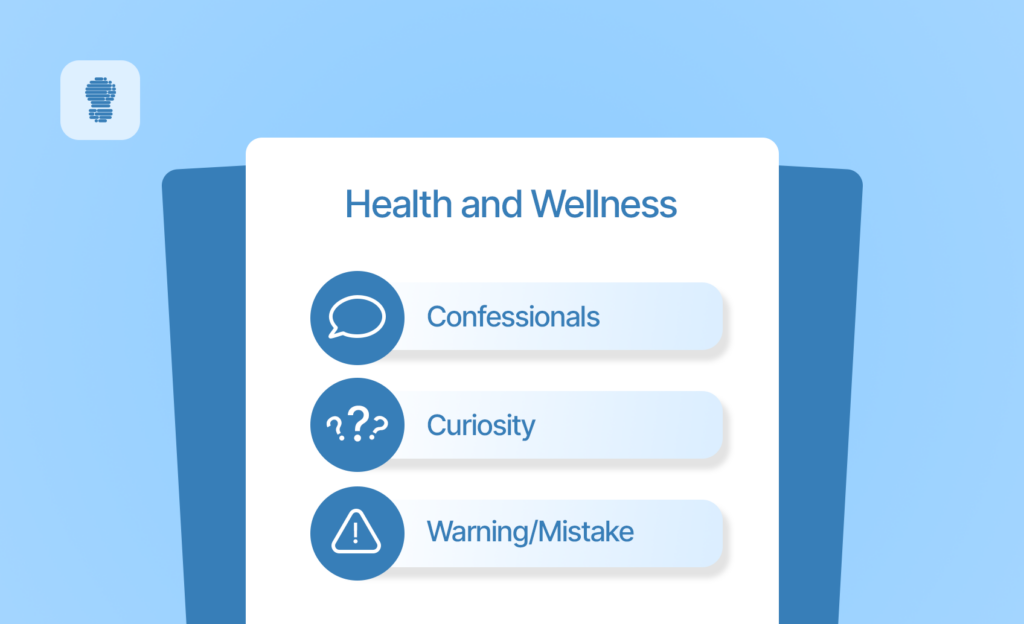
Several top-performing health ads opened with a confession about a habit or a past mistake, then reframed the product as a change in behavior rather than a new purchase.
“I didn’t change my workouts, I changed where I bought my protein” is the clearest example of this shape.
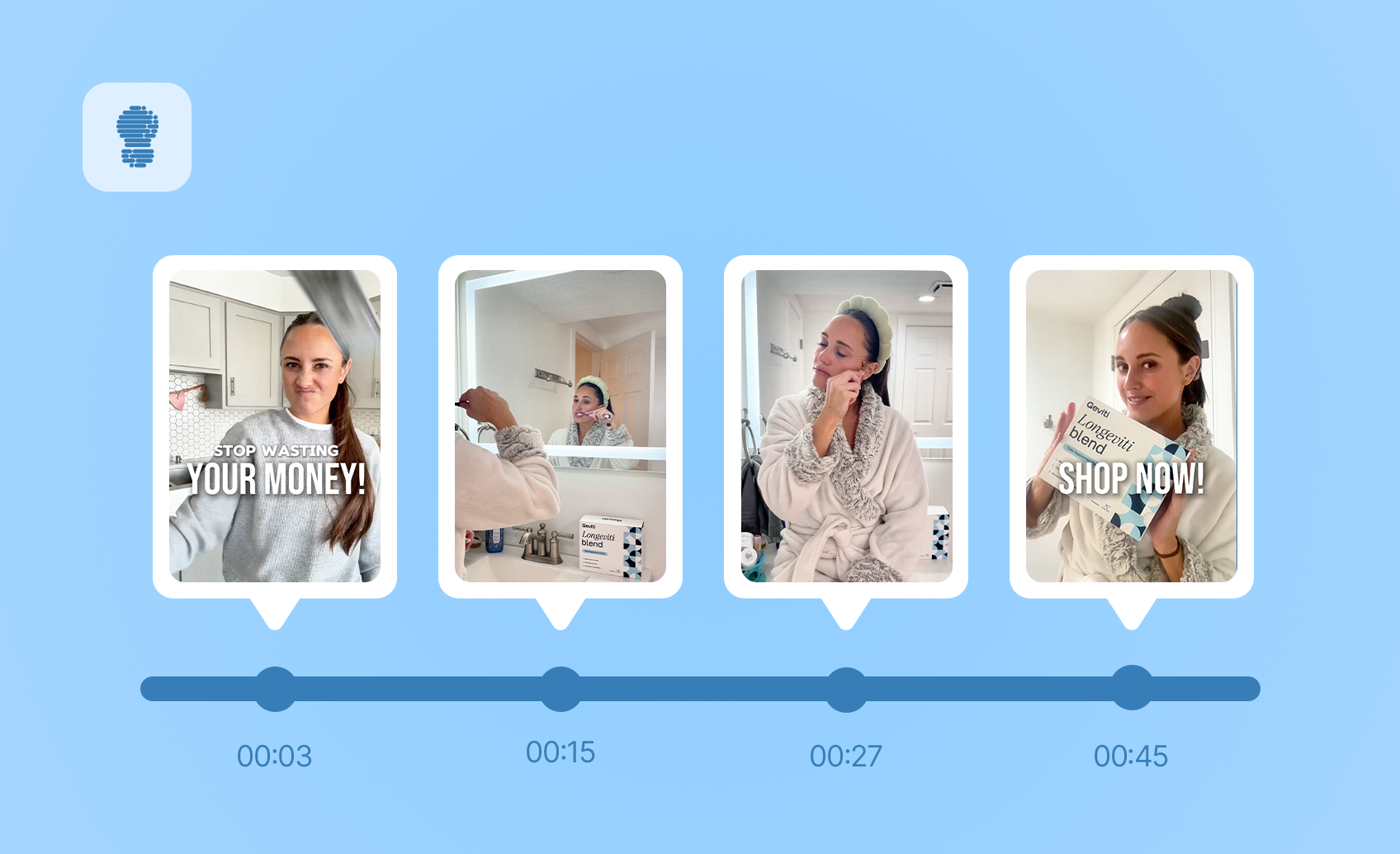
Another opened with “Hey you, you might literally be throwing away money with all those supplements you buy. Trust me, I’ve been guilty of it, too,” before pivoting to a specific fix.
A third health ad used a lighter version of the same move, opening with “So the other day I was looking for the strongest gummies you could legally buy because sometimes you gotta test your limits.”

The mechanic here is different from a standard confessional hook. The creator isn’t admitting a problem so much as a past mistake, one that a single change corrected.
That framing makes the product feel like a small adjustment rather than a big ask, which lowers the resistance to trying something new. The supplement ad closes on the same idea, asking “who wants to start their day or end their day with a fistful of supplements that aren’t actually working?”
In the brief, ask the creator to name the one thing they changed, not the general problem they had. “I changed where I bought my protein” is one specific change the viewer can copy.
Simplify-the-overwhelm hooks make the decision feel easy
A different set of top supplement ads sold relief from having too many options. The creator says the category is crowded and confusing, then points at one product, or one place to buy it, as the shortcut.
One creatine ad names four formats and then makes one pick. “There are a million types. HCL, blends, buffer, gummies. It can be overwhelming. But here’s what actually matters. Just go with a clean monohydrate.”
Another made it personal, “I decided it was time to simplify my bedtime routine. So, I did a little research. That’s when I found [product].”

Skepticism is one barrier in supplements, and too much choice is the other. There are too many formats, too many brands, too many claims, and a viewer who can’t choose doesn’t buy anything. An ad that names the confusion and then removes it does something a discount can’t, which is to make the viewer feel able to decide.
The first pattern answers “can I trust this,” and this one answers “which one do I pick.”
In the brief, ask the creator to say that the category has too many options, and then to name the one product or store they’d choose. The order matters. The recommendation only comes as a relief if the viewer has just been reminded how confusing the choice is.
Routine-framed CTAs closed on a personal habit, not a command
The closing lines across the top-performing health ads consistently framed the product as part of the creator’s own routine, and where there was a direct instruction, it came wrapped in that.
Endorsement-wrapped closes were the strongest CTA pattern in the original breakdown, and in health the endorsement almost always came as a description of a habit.
Five of the top health ads closed on these lines:
- “I shop at GNC because their elite standards take the worry out of it.”
- “Clean, straightforward, and vetted. It fits right into my daily routine.”
- “So yeah, when it’s just that easy and you know you’re getting something good, you just stick with it.”
- “I definitely keep a few of these with me on the go now, especially in my gym bag.”
- “Try [product] to get some actual answers for your bedtime routine.”

Each of these lines describes an ongoing habit rather than a one-time transaction, and even the one that gives an instruction frames it as getting answers rather than buying something.
For the close, the brief should ask where the product now fits in the creator’s routine, and leave the generic buy-now line out.
How to apply these patterns in your next health UGC ads brief
None of the five patterns is a product claim. Each one is something the top health UGC ads put around the claim to make it believable: a trusted source, a problem the viewer recognizes, a mistake the creator admits, one pick in a crowded category, or a habit the creator already keeps.
Each of those is a single instruction in a brief:
1. The trust words, before any feature.
Give the creator the actual standard, sourcing, or credential to say, wherever quality is a real differentiator, and skip the general endorsement.
2. How often and where it hurts.
For anything tied to a recurring physical issue, the hook names the frequency and the location, not a general complaint.
3. The one thing they changed.
The confession hook is the lighter option. Ask for the one change, not the whole problem.
4. Name the confusion, then make one recommendation.
Ask the creator to say there are too many options in the category, and then to name the one product, or the one store, they would choose.
5. Where it fits in their routine.
Make this the default close, since health purchases are routine decisions as much as one-time ones. The creator says where the product now fits in their day instead of telling the viewer to buy.