DTC marketing: what it is, how it works, and examples

Have you ever looked at a brand like Warby Parker or Gymshark and wondered how it grew so fast without starting on a department store shelf? Both started by selling straight to customers online.
That model now accounts for a large share of online retail. eMarketer’s 2025 D2C ecommerce forecast put US D2C ecommerce sales at $239.75 billion for 2025, which is 19.2% of all US retail ecommerce sales.
This guide covers what DTC marketing is, how it differs from B2C, the channels DTC brands rely on, current examples, and what Billo’s data from more than 88,000 Meta video ads says about creative. Let’s dive in!
Key highlights
- DTC marketing means selling straight to customers through your own website, app or stores.
- DTC is a subset of B2C. Selling through a retailer or marketplace is still B2C, because someone else owns the checkout and the customer.
- Paid social is where most DTC brands find new customers, and creative is the part of those ads a brand controls most.
- Creative volume grows with ad spend. Billo’s creative volume guide recommends 32 to 60 new creatives a month for brands spending $15K to $50K on ads.
What is DTC marketing?
DTC marketing, short for direct-to-consumer marketing, is how a brand promotes and sells its products straight to end customers through channels it owns, such as its website, app, email list and social accounts. There is no wholesaler, distributor or retailer between the brand and the buyer, so the brand controls the price, the experience and the customer data.
You will also see it written as D2C, and the two terms mean the same thing. A brand’s own stores still count as direct, which is why Warby Parker can run hundreds of shops and remain a DTC brand.
Imagine you run growth at a skincare brand that sells a $40 serum on its own Shopify store. Every sale starts with an ad, an email or a creator video you paid for, and it ends with a customer whose email address, order history and review now belong to you. That loop, from the first ad to the repeat order, is what DTC marketing covers.
In short, DTC marketing is everything a brand does to win and keep customers without a middleman, and the brand owns every step of it.

DTC vs B2C: who owns the customer
Think of B2C as the category and DTC as one way of selling inside it. B2C covers every sale from a business to a consumer, including sales through retailers and wholesalers, while DTC covers only the sales a brand makes through its own channels.
| DTC | B2C through retailers or marketplaces | |
|---|---|---|
| Who sells to the customer | The brand, through its own site, app or stores | A retailer, wholesaler or marketplace |
| Who owns the customer data | The brand | Mostly the retailer or marketplace |
| Who controls price and presentation | The brand | Shared with the retailer, or set by it |
| Where the margin goes | The brand keeps more per sale but pays to acquire each customer | The retailer takes a cut but brings its own traffic |
In practice, the line between the two terms keeps blurring. eMarketer’s 2026 analysis of D2C commerce found that nearly all of the most-visited digitally native D2C brands also sell through retailers.
Let’s say your supplement brand sells on its own site and is also stocked by a national pharmacy chain. The pharmacy orders are B2C sales through a retailer, while your site orders, subscriptions and email list make up your DTC business. Most brands run both, so the real question is which channel you want to own.
Treat DTC as the part of your business where you own the customer, even if you also sell through retailers.
Why brands go the DTC route
Brands move to DTC for more reasons than margin. McKinsey’s research on DTC ecommerce found that consumer brands want direct relationships with end customers “to generate deeper insights about consumer needs” and “to maintain control over their brand experience.”
Here is what that looks like day to day:
- Higher margin per sale. Shopify’s comparison of DTC and wholesale points out that selling via DTC means “you sell products at their recommended retail price,” so the retailer’s cut stays with you.
- First-party customer data. Every order, email sign-up and review tells you who buys, what they buy again and which message brought them in.
- Faster testing. You can test a new product, offer or ad angle with real customers within days.
- A relationship after the first order. You can keep talking to customers once they have bought, which is where repeat orders and referrals come from.
If your team wants to test an unscented version of your best-selling deodorant. As a DTC brand, you can launch it to your email list and run a few ads in the same week, then read the sales and reviews before you commit to a full production run.
The trade-off is that every one of those customers has to be found and paid for, and that is where DTC marketing does most of its work.
How DTC brands market: the core channels
A DTC marketing strategy usually rests on four channels, and each one does a different job.
Paid social
Paid social is usually the engine for finding new customers. Modern Retail’s reporting on DTC brands and Meta describes direct-to-consumer brands as “dependent on Meta for customer acquisition, because it allows startups to reach more customers, for less than virtually any other ad platform.”
Creator content and UGC
User-generated content (UGC) is video or photo content made by real people, often paid creators, showing a product the way a customer would. DTC brands use it as ad creative on paid social and as organic posts, because it lets them test many angles, faces and hooks without booking a studio shoot.
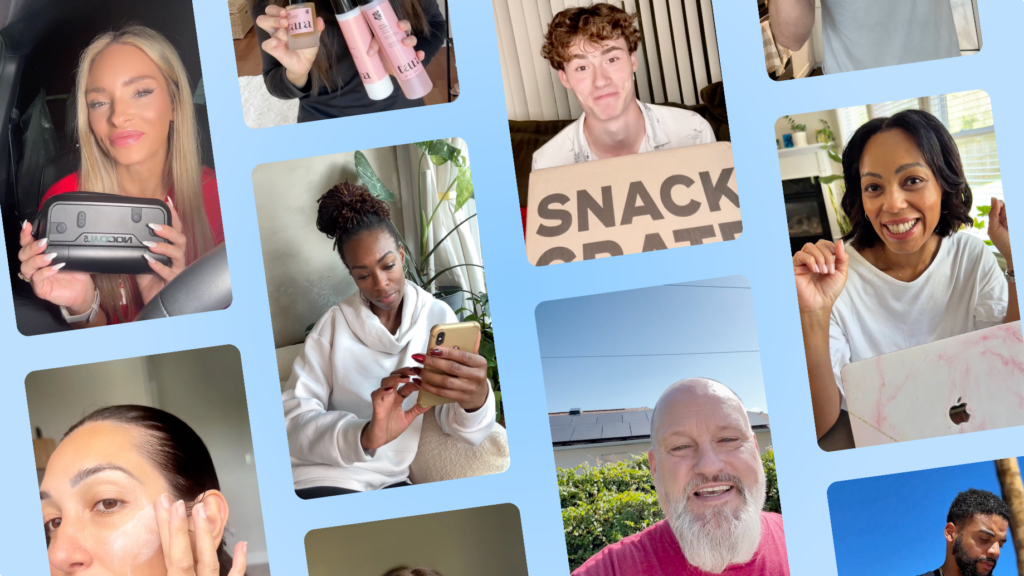
Influencer marketing is the close cousin of UGC, and many DTC brands use both. An influencer publishes content to their own audience, so you pay for access to their followers, while a UGC creator makes content your brand runs on its own channels and ad accounts, so you pay for the video itself. A simple way to split them is to use influencers when you want reach inside a specific community, and UGC creators when you need a steady supply of ads.
Email and SMS
Email and SMS are where DTC brands turn a first order into a second one, and automated flows do most of that work. In Klaviyo’s 2026 email benchmarks, flows generate “nearly 41% of total email revenue from just 5.3% of sends.”
Text messages follow the same pattern, and Klaviyo’s 2026 SMS benchmarks show SMS flows making up 7.6% of sends while driving 45.2% of SMS revenue. If you only set up a few automations, start with a welcome series, an abandoned cart flow and a post-purchase flow.
Organic social and community
Organic social and community keep the brand visible between ads. That covers the brand’s own TikTok and Instagram posts, reposted customer content, creator collaborations and in-person events.
Let’s say a customer posts an unprompted video of your product on TikTok. With their permission, you can repost it, ask them to film a paid version for ads, and borrow their wording as the hook in your next creator brief.
Why creative is the bottleneck in DTC paid social
Paid social keeps getting more expensive per impression. Meta’s Q2 2026 earnings release reported that its average price per ad rose 12% year over year, while ad impressions rose 14%. That figure covers all Meta advertisers, but it shows which way DTC ad budgets are being pushed.
When each impression costs more, the ad itself has to work harder. Nielsen’s research on creative quality found that creative “contributes as much to a brand’s in-market success as all other factors combined.”
Billo’s H1 2026 benchmarks show what this means in practice. Across 88,329 sales-objective Meta video ads that ran from January to June 2026, covering 14 categories and $122 million in spend, hook rate rose from 24.42% to 25.44% compared with the previous half-year, while ROAS fell from 2.41 to 2.17.
Ads got better at stopping the scroll but worse at turning that attention into sales.
Category matters as well. Health & Beauty had the best CTR of any category, peaking at 2.67% in February, yet its ROAS sat at 1.82, and Apparel & Accessories ROAS fell every month of the half, from 2.88 in January to 1.84 in June.
The most reliable answer is volume, and Billo’s guide to creative volume ties the number of new ads a brand needs to its monthly spend:
| Monthly ad spend | New creatives per month | Refresh creatives every |
|---|---|---|
| $5K-$15K | 12-20 | 3-4 weeks |
| $15K-$50K | 32-60 | 2-3 weeks |
| $50K-$150K+ | 80-120+ | 1-2 weeks |
The reason is simple: industry creative benchmarks suggest that only 1 to 3 of every 10 creatives tested become strong winners.
Putting it to the test
Imagine your brand spends $30,000 a month on Meta and your team produces eight new videos a month. The guide puts you at 32 to 60, so most weeks your ad sets run on tired creatives. Two signs you have reached that point are a CTR drop of more than 20% over two weeks, or a frequency above 4.0.
Seasonal peaks raise the bar further. If you increase budgets for Black Friday and Cyber Monday, the guide above means you also need more new creatives and faster refreshes, so brief creators several weeks before the sale starts.
The same math applies to each brand if you run paid social for several DTC brands, whether as an agency or a multi-brand company. A portfolio of five brands, each spending $15K to $50K a month, needs 160 to 300 new creatives every month.
Plan creative as a monthly production target tied to your spend, and treat every new batch as a test. A creator marketplace can cover the gap between what your team can shoot and what your budget needs, with UGC videos briefed around the hooks your data says work.
DTC marketing examples
These DTC (or D2C) marketing examples start with three well-known brands that kept ownership of the customer as they grew, followed by brands that scaled their paid social with creator content.
Warby Parker
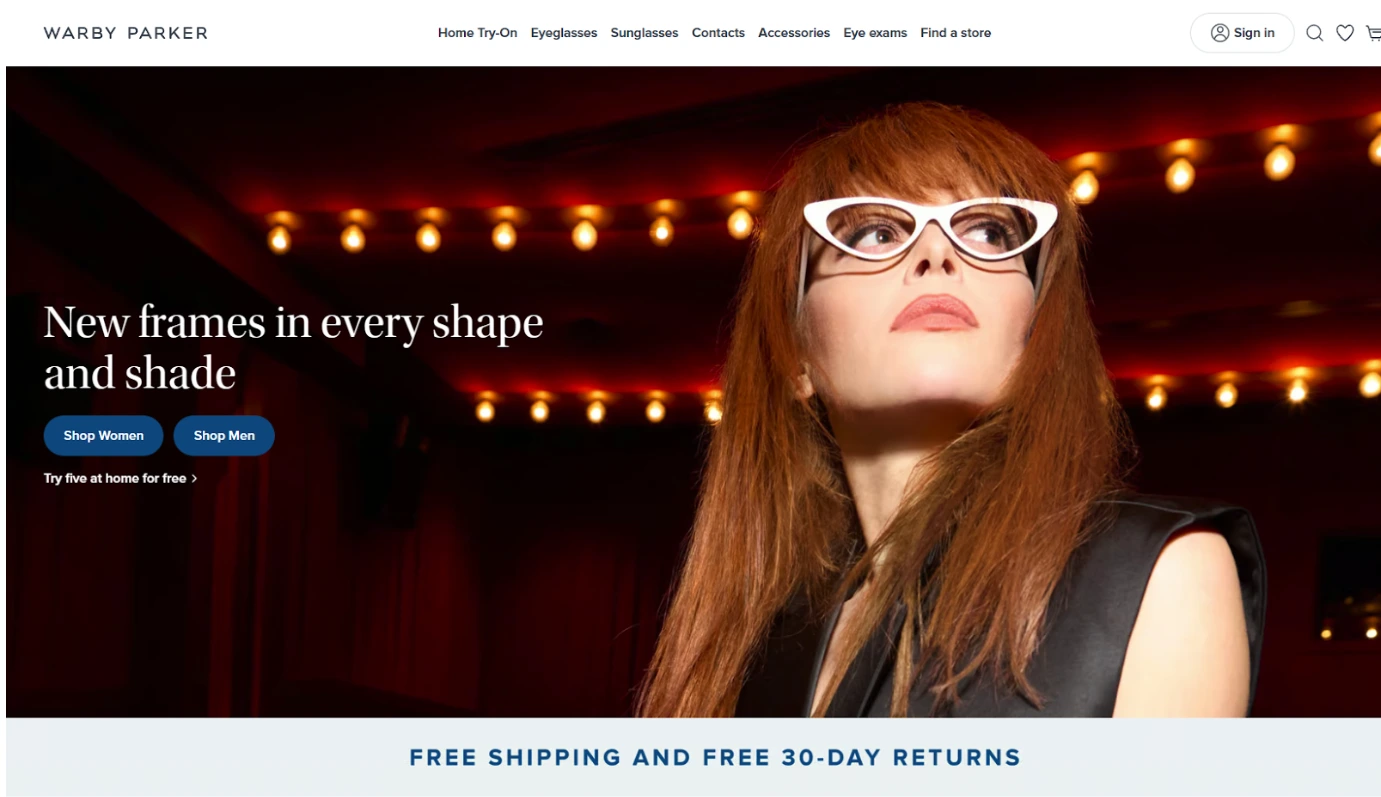
Warby Parker started by selling glasses online and still describes itself as “a direct-to-consumer lifestyle brand.” Warby Parker’s Q2 2026 results show revenue up 9.8% to $235.5 million, 352 stores, and 2.71 million active customers over the trailing 12 months.
Its marketing has shifted with its channels. The brand grew on a free Home Try-On program that mailed frames to customers, but Retail Dive’s interview with co-CEO Neil Blumenthal explains that most of those users lived within 30 minutes of a Warby Parker store, so it ended the program at the end of 2025 in favor of stores and virtual try-on. Even its shop-in-shops at Target are run by Warby Parker’s own staff.
Gymshark
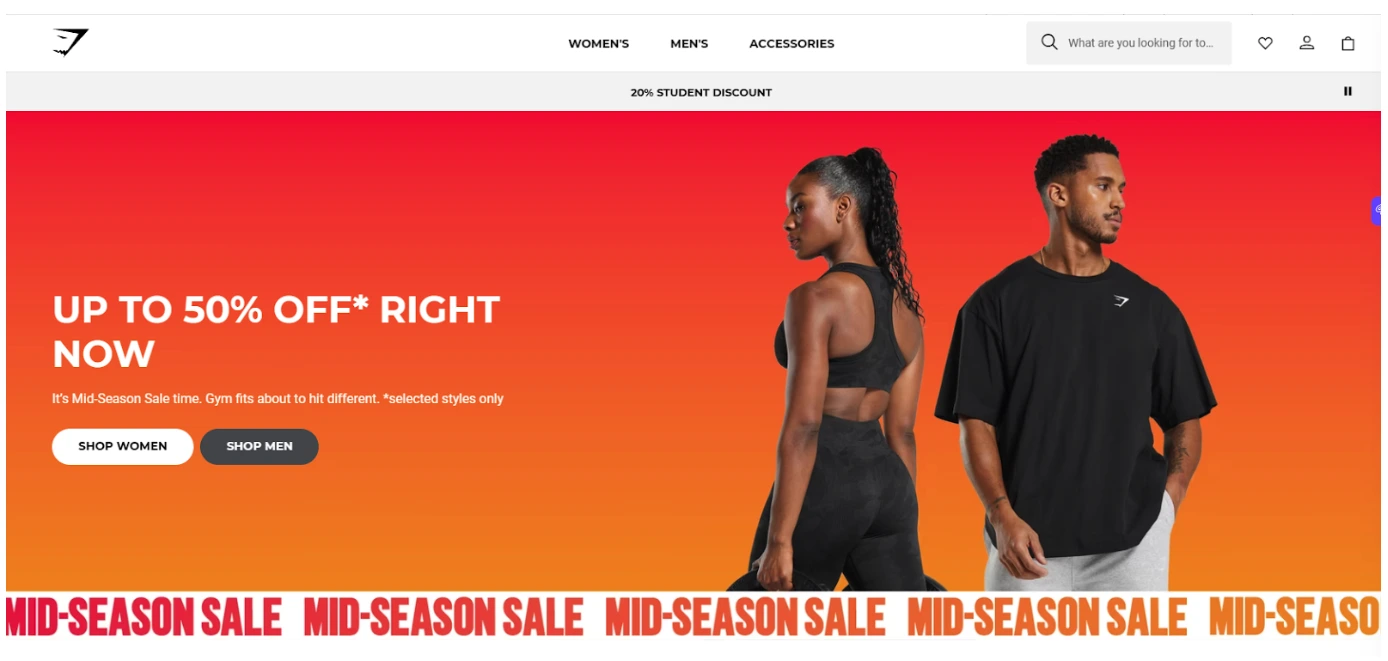
Gymshark’s FY25 results show sales of £646 million in the year to 31 July 2025, up from £607.3 million, and the opening of its first US flagship store in New York. The brand also keeps investing in community events that “cost our customer nothing, but really bring our community together.”
Its marketing started with fitness creators on YouTube. Founder Ben Francis’s interview with Thought Economics traces early growth to “reaching out to our heroes on YouTube to see if they liked our kit,” and he adds that today “we’re very careful about who we work with.”
FIGS
FIGS sells scrubs and apparel to healthcare professionals, and FIGS’s Q2 2026 earnings release describes it as “a founder-led, direct-to-consumer healthcare apparel and lifestyle brand.” It reported net revenues of $196.6 million for the quarter, up 28.8% year over year, with 3.1 million active customers.
FIGS markets through the same audience it sells to. Modern Retail’s look at the FIGS ambassador program counted about 250 ambassadors in 2021, and co-CEO Trina Spear said “all of our ambassadors are medical professionals, not professional influencers who earn a living by posting selfies.” Many of them share discount codes on their social profiles.
DTC brands using creator content with Billo
These brands used Billo to keep their paid social supplied with UGC videos:
- Fresh Clean Threads sells basics in extended sizes. Its top Billo videos reached 2.0+ ROAS during BFCM, a lift of about 50% on its usual account benchmarks.
- Adore Me, a lingerie and swimwear brand, saw 25% higher CTR and 13% lower CPA for Billo video ads on TikTok compared with its other ads.
- Bloomers Intimates used Billo videos on Meta for product launches and took ROAS from under 1 to an average of 2 or higher. Its slip shorts launch sold out within a month using only Billo-produced ads.
What these brands share is ownership of the customer relationship, plus a steady supply of new content that keeps that relationship going.
The downsides of going DTC
DTC gives you control, but you pay for it in three ways:
- Acquisition costs. Every new customer comes from marketing you pay for, and that cost rises with ad prices.
- Operations. You own fulfillment, returns and customer service, which a retailer would otherwise handle.
- Reach. Some shoppers only buy in stores or on marketplaces, and a DTC-only brand misses them.
That is why many well-known DTC brands now sell through other channels as well. Glossy’s report on Glossier’s Sephora partnership linked the brand’s move into Sephora stores in the US and Canada to advertising costs that “continue to rapidly increase.”
Allbirds’ January 2026 announcement said it would close its remaining US full-price stores by the end of February 2026 and focus on its “e-commerce platform, wholesale partnerships and international distributorships.”
Even the largest brands rebalance, and Nike’s fiscal 2026 results show NIKE Direct revenue down 6% to $17.7 billion while wholesale revenue grew 6% to $27.5 billion.
Let’s say your cost to acquire a customer on Meta climbs above the value of an average first order. At that point, a stronger repeat-purchase program or a carefully chosen retail partner may do more for growth than another increase in ad spend.
DTC works best as the part of the business you own and learn from, with retail or marketplaces added where they bring customers you cannot reach on your own.
Summary
DTC marketing comes down to owning the customer relationship, from the first ad to the repeat order. That gives you better margins, better data and more control, but it also means you pay for every new customer, and on paid social that cost depends heavily on your creative.
If you are building out your DTC channels, the logical next step is to work out how much creative your ad spend needs each month and where it will come from. When you are ready to scale that part, Billo connects DTC brands with vetted creators who produce UGC videos for Meta, TikTok and YouTube ads.
What does DTC stand for?
Is Amazon a DTC company?
How many ad creatives does a DTC brand need each month?
What’s a good ROAS for DTC brands on Meta?

SEO Lead
Passionate content and search marketer aiming to bring great products front and center. When not hunched over my keyboard, you will find me in a city running a race, cycling or simply enjoying my life with a book in hand.
Make creator marketing a data-backed growth channel

Related from Creative Insider

How to Find Micro Influencers for Your Brand’s Next Campaign

Beyond the Ad: Influencer Marketing Services for Brands in 2025